



The Allure of Winter by Rail
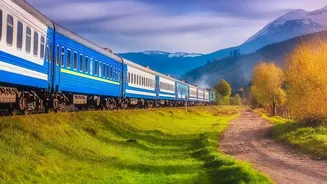
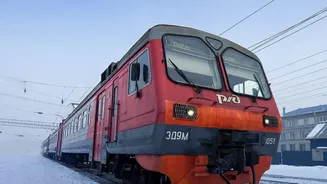
There's a unique magic to an Indian winter train journey. Unlike the rush of a flight, it’s a deliberate, unhurried experience. The rhythmic clatter of the wheels, the endless supply of chai, and the ever-changing scenery make the journey itself a destination.
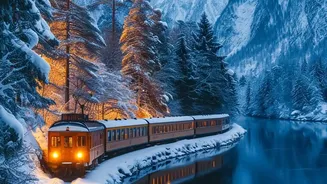
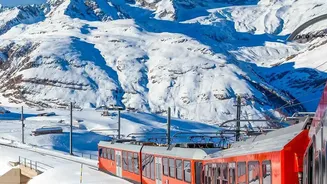
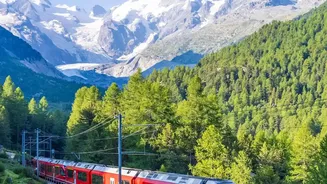
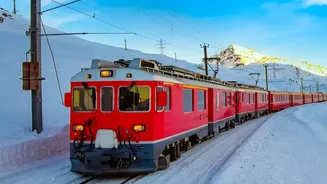
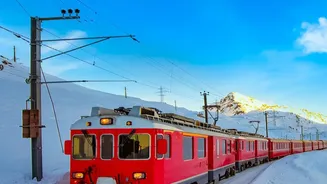
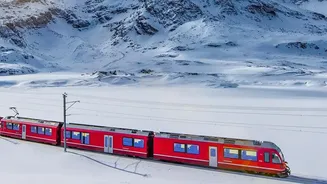
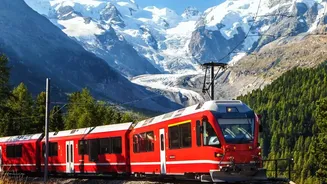
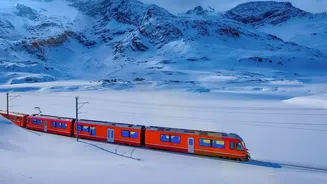
In winter, this experience is elevated. The air is crisp, the light is soft, and familiar landscapes are transformed by mist and, in the northern states, a blanket of snow. From the heritage toy trains climbing into the Himalayas to the valley railways of Kashmir, winter offers a perspective that summer crowds and monsoon clouds often obscure.
The Gulmarg Connection: Where Rail Meets Road
The dream of taking a train directly to the snowy meadows of Gulmarg is a common one, but the reality on the ground is different. No railway line runs directly to Gulmarg itself. The journey by train takes you into the heart of the Kashmir Valley, but the final leg of the adventure is a road trip. Historically, the main railhead for the region was Jammu Tawi, a long 290 kilometres away. However, the expansion of the Jammu–Baramulla line now brings travellers much closer. The most practical approach is to take a long-distance train to Jammu Tawi or Katra, and from there, connect to a train that runs through to Srinagar. The operational Banihal-Baramulla section of the line serves stations like Srinagar and Baramulla, which are significantly closer to your final destination.
The Final Climb to Gulmarg
From Srinagar railway station, Gulmarg is about 60 kilometres away, a drive that typically takes around two hours. This final stretch from the valley floor to the high-altitude meadow is a journey in itself. The route passes through scenic towns like Magam and Tangmarg. The last 13 kilometres of the drive, from Tangmarg to Gulmarg, is a steep, winding ascent through pine forests. During winter, this is the most critical part of the trip. After heavy snowfall, local authorities may restrict this road to only 4x4 vehicles or those fitted with anti-skid chains to ensure safety on icy patches. Travellers should be prepared for the possibility of needing to switch to a local, specially-equipped taxi at Tangmarg for this final climb.
Planning Your Winter Journey
A successful winter rail trip to Kashmir requires planning. Train services in North India, particularly on the plains leading to Jammu, can be affected by dense fog, leading to delays or even cancellations between December and February. It is wise to check your train's status before travelling and build buffer days into your itinerary. Recently, Indian Railways has upgraded its Fog Safety Device (FSD) systems to provide loco pilots with advance information about signals, aiming to reduce delays and improve safety. For the road portion, it's best to hire an experienced local driver who is aware of the current road conditions, which can change quickly. The road to Gulmarg is rarely closed for long, but short delays for snow clearing are possible after a heavy storm.
Beyond Gulmarg: Other Snowy Train Adventures
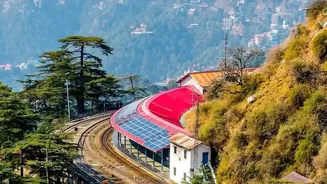
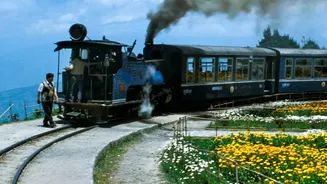
While the journey to Gulmarg is a unique rail-and-road combination, India offers other spectacular winter train experiences. The most iconic is the Kalka-Shimla Railway, a UNESCO World Heritage site. This narrow-gauge 'toy train' slowly climbs over 96 kilometres, through more than 100 tunnels and across 800 bridges, offering panoramic views of the frosted Shivalik hills. Similarly, the Darjeeling Himalayan Railway in West Bengal provides a charming, steam-powered journey with views of tea gardens and, on clear days, the Kanchenjunga range. These heritage lines offer a different kind of winter magic, where the slow, deliberate pace of the train is the main attraction.