




India’s homegrown navigation capabilities received a major boost as ISRO confirmed its NVS-03 satellite has reached its final orbit. This success is more than just a technical milestone; it's a story of resilience and strategic course correction.
Mission Accomplished: A New 'Eye in the Sky'
On October
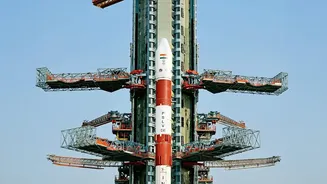
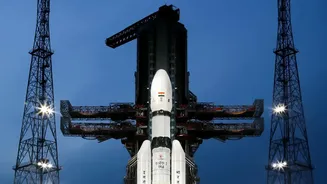
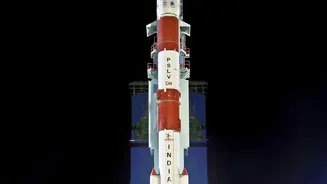
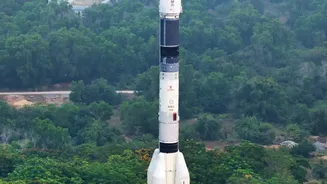
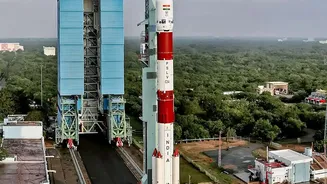
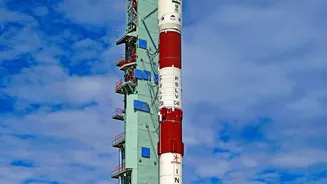
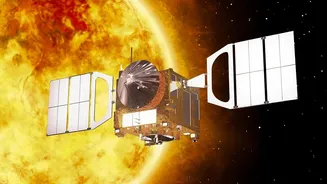
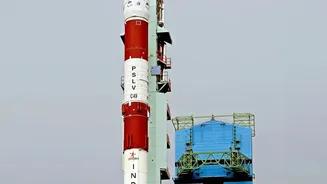
30, 2026, the Geosynchronous Satellite Launch Vehicle (GSLV) successfully launched the NVS-03 satellite. Following the launch, the Indian Space Research Organisation (ISRO) performed a series of four precise orbit-raising manoeuvres. These engine burns carefully guided the satellite into its designated geosynchronous orbit, approximately 36,000 km above Earth. ISRO Chairman V. Narayanan confirmed on November 5 that the satellite is 'fully healthy' and will now undergo a series of in-orbit tests before it is officially commissioned into service. This successful placement is a critical step forward, especially considering the challenges faced by some of its predecessors.
The Ghost of Past Troubles: A Clockwork Problem
The 'reliability improvements' mentioned in the mission are a direct response to a persistent issue that plagued India's first generation of navigation satellites (the IRNSS series). Several of these satellites, which rely on hyper-accurate atomic clocks to provide positioning data, suffered from premature clock failures. These clocks, sourced from a European company, were not fully optimised for the harsh radiation and temperature cycles in a geosynchronous orbit. An atomic clock failure renders a navigation satellite unable to perform its primary function, even if other systems are working perfectly. By early 2026, failures had reduced the number of fully functional NavIC satellites to below the minimum of four required for independent and accurate 3D positioning, creating a critical gap in India's sovereign navigation capability.
The Solution: An Indigenous Heartbeat
To solve this problem, ISRO's Space Applications Centre in Ahmedabad developed its own Rubidium Atomic Clock. This move towards self-reliance is the most significant reliability improvement in the new NVS series of satellites. The first indigenous clock was successfully tested in space aboard NVS-01, launched in May 2023. The NVS-03 satellite continues this strategy, carrying both the new homegrown atomic clock and procured ones for redundancy. Developing this technology inhouse gives ISRO greater control over the manufacturing process, allows for design refinements based on performance data, and eliminates dependence on foreign suppliers for such a critical component. This ensures the long-term health and robustness of the entire NavIC constellation.
Why NavIC is a National Imperative
Navigation with Indian Constellation (NavIC) is India's answer to the American GPS, Russia's GLONASS, and Europe's Galileo. It is a regional system designed to provide highly accurate position, navigation, and timing services for India and a 1,500ndkilometre area around its borders. This has vital strategic importance. For the military, it enables self‐reliant navigation for troops, aircraft, and precision munitions without depending on a foreign‐controlled system, which could be denied during a conflict. For civilians, NavIC is crucial for disaster management, vehicle tracking, timing for financial transactions and power grids, marine navigation for fishermen, and increasingly, integration into smartphones. The new NVS satellites also broadcast on the L1 frequency band, which is widely used by civilian devices, enhancing compatibility and adoption.
With NVS‐03 now stable in its orbit and its health declared normal, ISRO engineers will spend the coming weeks testing its payloads, including the crucial navigation signals and atomic clocks. Once these tests are complete, the satellite will be integrated into the NavIC constellation, strengthening the network and restoring its full operational capacity. The successful deployment of NVS‐03 is a significant victory, especially after a previous next‐generation satellite, NVS‐02, failed to reach its intended orbit. The plan is to continue launching more NVS‐series satellites to replace the aging first‐generation fleet and build a resilient, modern, and truly self‐reliant navigation system for the nation.