




The Astronaut with a Doctor's Bag
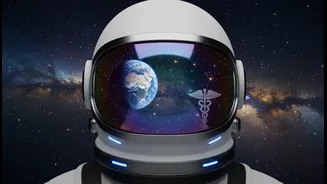
Anil Menon is not a typical astronaut, if such a thing exists. He is a US Space Force colonel, an emergency medicine physician, and a veteran flight surgeon. Before being selected as a NASA astronaut in 2021, his job was to keep other astronauts safe.
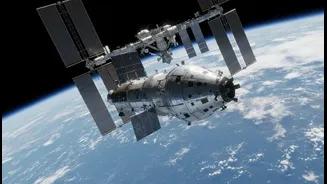
He was SpaceX's first-ever flight surgeon, helping to launch the first private crewed mission to the International Space Station (ISS) and building the medical systems to support future human flights. His extensive experience includes serving as a first responder in disasters on Earth, like the earthquakes in Haiti and Nepal, and treating wounded soldiers in Afghanistan. Born to an Indian father from Kerala and a Ukrainian mother, Menon's journey to the stars, which began with his first launch to the ISS on July 14, 2026, is a source of immense pride and inspiration.
The Perils of the Final Frontier
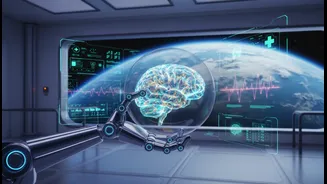
When we dream of travelling to the Moon, Mars, and beyond, we often think of rocket science. But the science of the human body is just as critical. Long-duration spaceflight, the kind necessary for missions "beyond Earth orbit," is incredibly harsh. Without Earth's gravity and protective magnetic field, astronauts face a barrage of health risks. Their bones can lose density at a rate of 1-2% per month, similar to advanced osteoporosis. Muscles wither, fluids shift in the body causing vision problems, and the cardiovascular system deconditions. Perhaps most dangerous is the constant exposure to galactic cosmic radiation, which increases the risk of cancer and can damage the central nervous system. Adding to this is the profound psychological stress of isolation and confinement, millions of miles from home. Menon's mission onboard the ISS will involve studying these very effects.
Solving for Space, Innovating for Earth
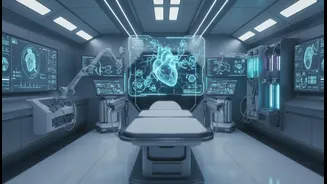
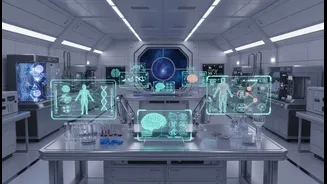
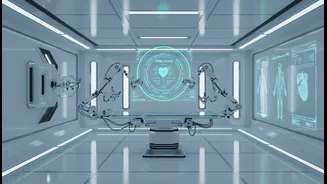
The challenges of space medicine force incredible innovation, and the solutions often have profound benefits back on Earth. Research into preventing bone loss in astronauts leads to new treatments for osteoporosis. The need to diagnose and treat medical issues with significant communication delays drives the development of telemedicine and portable diagnostic tools, which can revolutionise healthcare in remote and underserved areas on our own planet. The compact, durable, and lightweight medical devices built for space have direct applications in terrestrial clinics and ambulances. Even the study of how the immune system weakens in microgravity gives us new insights into aging and disease processes on Earth. Every problem solved to keep an astronaut healthy is a potential breakthrough for all of us.
India's Ambition and the Medical Hurdle
Anil Menon's work is especially relevant as India accelerates its own human spaceflight ambitions through the Gaganyaan programme. ISRO's goal to send Indian astronauts into orbit means the nation must develop its own expertise in space medicine. Understanding how to select, train, and medically support 'vyomanauts' is not a secondary concern; it is fundamental to mission success and safety. Recognizing this, ISRO has forged partnerships with top medical institutes like AIIMS and Sree Chitra Tirunal Institute for Medical Sciences & Technology (SCTIMST) to build this capacity. These collaborations will focus on everything from astronaut health monitoring to developing life support systems, ensuring India is prepared for short-duration flights and, eventually, long-duration missions to a future Bharatiya Antariksh Station.