




The Current Navigation Problem
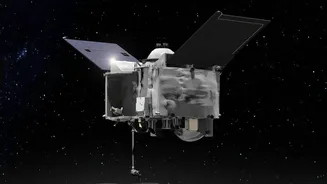
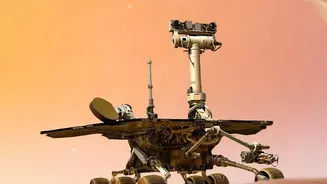
For decades, navigating in space has been a complex conversation with Earth. A spacecraft, lander, or rover sends a signal to a ground station, which then calculates its position and sends instructions back. This process is slow, cumbersome, and requires
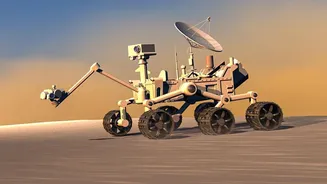
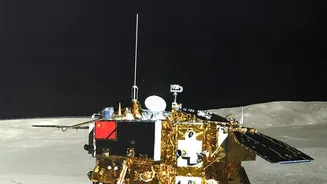
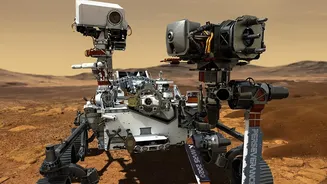
a direct line of sight to Earth. On the Moon's vast and uncharted surface, especially the far side which never faces us, this dependency is a critical vulnerability. A rover exploring a crater can't just 'check its phone' for its location; it relies on this painstaking, long-distance dialogue. This not only slows down the pace of exploration but also makes autonomous operations and rapid response to discoveries or hazards nearly impossible. For future astronauts and robotic explorers, this is like trying to map a new continent while having to radio home for every single turn.
A GPS for the Moon
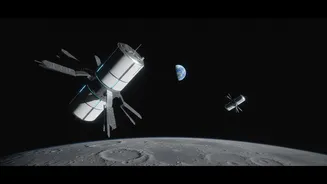
NASA's solution is a suite of technologies that essentially creates a 'GPS for the Moon'. Payloads like the Lunar GNSS Receiver Experiment (LuGRE) are designed to do something remarkable: use signals from the Global Navigation Satellite System (GNSS) — the same system our phones use on Earth from GPS and Galileo satellites — but at the Moon, nearly 400,000 kilometers away. These signals are incredibly faint at such a distance, but highly sensitive receivers like LuGRE have proven they can lock onto them to calculate a position autonomously, without phoning home to Earth. Another part of the solution is the Lunar Node-1 (LN-1), a radio beacon that acts like a local lighthouse, providing a fixed reference point on the surface for other craft and astronauts to navigate by.
How It Actually Works
The technology, including payloads like the NavCube3-mini, is incredibly advanced. These compact receivers are engineered to detect the weak 'sidelobe' signals that spill out from Earth's GNSS satellites. While the main signal is directed at Earth, these faint extensions travel far into space. By locking onto signals from multiple satellites, the lunar receiver can triangulate its position in real-time, just like your car's navigation system does on a highway. The LN-1 complements this by creating a localized network. It broadcasts its own signal, allowing rovers or astronauts to determine their position relative to the beacon, providing a layer of ground-truth data that makes navigation faster and more precise. This combination means that for the first time, assets on the Moon will have situational awareness independent of Earth.
Unlocking Lunar Exploration
The ability to navigate autonomously will fundamentally change how we explore the Moon. Rovers will no longer need to stop and wait for instructions from Earth, enabling them to cover more ground and conduct science more efficiently. They could autonomously navigate treacherous terrain, like the shadowed craters of the lunar south pole, which may hold water ice. Astronauts venturing far from their lander will have a reliable, real-time map showing their exact position, significantly enhancing safety. This also enables precision landings, allowing future missions to touch down within meters of a specific scientific target or a pre-established base, rather than within a landing zone several kilometers wide. This precision is vital for building a sustainable, long-term presence.
Building a Lunar Economy
Beyond pure exploration, this navigation infrastructure is a cornerstone of the future lunar economy. Reliable positioning is essential for any commercial activity, from resource prospecting and mining to construction and logistics. Companies operating on the Moon will need to know where their assets are, guide autonomous machinery, and manage supply chains. This technology is being developed and deployed through NASA's Commercial Lunar Payload Services (CLPS) initiative, where NASA partners with private companies to deliver payloads to the Moon. By creating this foundational utility — a lunar navigation network — NASA is not just enabling its own Artemis missions; it is laying the groundwork for a marketplace where multiple companies and nations can operate. It transforms the Moon from a series of one-off mission destinations into an interconnected economic and scientific continent.