


The World’s Most Critical Chokepoint
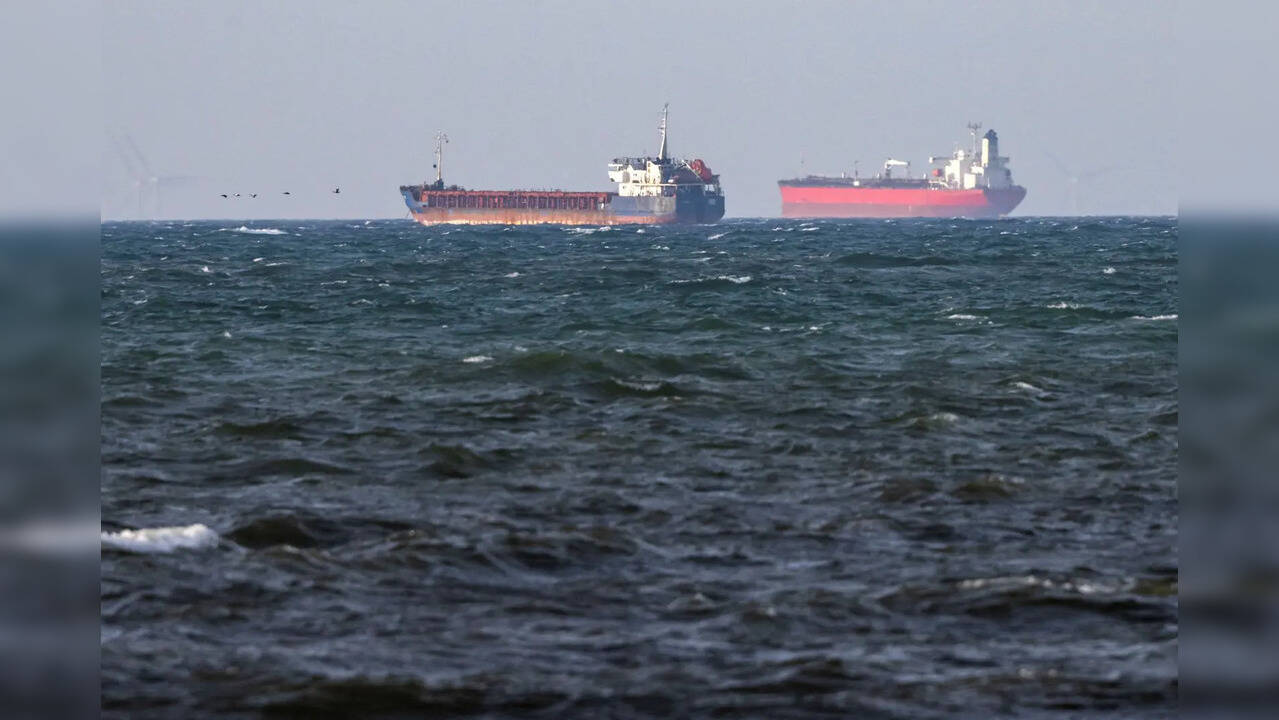
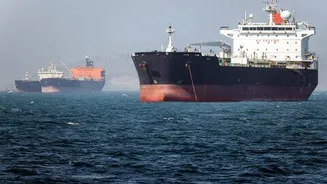
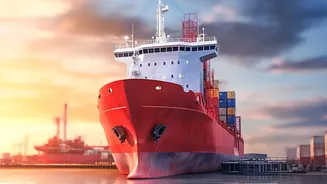
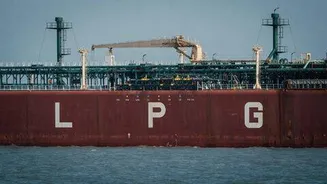
The Strait of Hormuz, a slim passage of water connecting the Persian Gulf to the open ocean, is arguably the world's most important energy chokepoint. Before the current conflict escalated in early 2026, it was a constant hive of activity, with supertankers
forming a conveyor belt of fuel to the rest of the world. The headline figure for Liquefied Petroleum Gas (LPG) is stark: before the disruption, nearly a third of all seaborne LPG passed through the strait. But that's not all. It also accounted for about 20% of global oil consumption and a fifth of global Liquefied Natural Gas (LNG) trade. However, since February 2026, an escalating conflict involving Iran and a US-led coalition has led to an effective blockade. Shipping traffic has plummeted to just over 10% of its normal levels, with attacks on vessels, soaring insurance costs, and direct military threats keeping most commercial tankers away.
More Than Just Cooking Gas
For hundreds of millions, particularly in India, LPG is synonymous with the cooking gas cylinder in their kitchen. It's the fuel that powers daily life. But LPG, a mix of propane and butane, has a far wider range of uses. It is a vital fuel for commercial businesses like hotels and restaurants, industrial processes, and agriculture. It is also used as a petrochemical feedstock to create plastics and synthetic materials, and even as a vehicle fuel known as autogas. This versatility means that a disruption in its supply doesn't just threaten household kitchens; it sends a shockwave through multiple sectors of the economy, affecting everything from manufacturing to food prices.
The Direct Impact on India
Few countries are as exposed to the Hormuz crisis as India. The nation is the world's second-largest LPG consumer and imports over 60% of its total requirement. Historically, India's vulnerability was geographical. Around 90% of its LPG imports came from just four Middle Eastern neighbours—Saudi Arabia, the UAE, Qatar, and Kuwait—with nearly all of it transiting the Strait of Hormuz. The proximity meant a short, 4-day voyage. The conflict changed this overnight. With Hormuz choked, those reliable supply lines vanished, creating what reports called a "severe LPG supply crunch." The crisis exposed a critical weakness: while India maintains strategic reserves for crude oil, it had no equivalent buffer for LPG, holding only about a week's worth of supply.
A Forced and Frantic Pivot
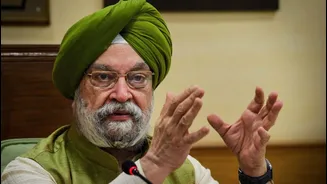
The disruption forced India into a dramatic and rapid realignment of its energy strategy. With Middle Eastern supplies dwindling—imports from the region dropped by an estimated 85% between February and June 2026—India turned to the United States. The US, already a major energy exporter thanks to its shale boom, stepped into the gap. Indian imports of American LPG surged, with the US briefly becoming India's top supplier in mid-2026. By August 2026, the Petroleum and Natural Gas Minister stated that the U.S. accounted for a staggering 67% of India's LPG imports. This shift is not without costs. Voyages from the US Gulf Coast take over 40 days, compared to less than a week from the Persian Gulf, straining supply chains and increasing freight costs. To cope domestically, Indian refiners also dramatically increased their own LPG production by over 30% in March to offset import shortages.