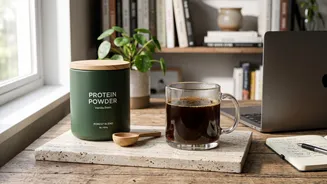







The Appeal of 'Proffee'
Protein coffee, or 'proffee', is exactly what it sounds like: coffee mixed with a scoop of protein powder or a ready-made protein shake. Its popularity stems from its convenience. For those who skip breakfast or are short on time in the mornings, it seems
like an efficient way to get a dose of protein and caffeine simultaneously. Proponents claim it helps them feel full longer, aids in muscle recovery post-workout, and supports weight management goals. With about 60% of people actively trying to increase their protein intake, turning a daily coffee ritual into a nutritional boost is an attractive proposition.
The Protein-Powered Benefits
There is solid science behind the benefits of adequate protein intake, especially in the morning. Protein is crucial for building and repairing tissues, including muscle. Consuming it at the start of the day can promote satiety, helping you feel fuller for longer and potentially reducing overall calorie consumption. Protein also has a higher thermic effect of food, meaning your body uses more energy to digest it compared to fats and carbs. When combined with coffee's own metabolism-boosting and alertness-enhancing properties, it’s easy to see why 'proffee' is seen as a power-packed drink to kickstart the day or prepare for a workout.
The Dark Side: Hidden Sugars
Here’s where the equation gets tricky. The health halo of 'proffee' can be misleading if you're not careful about what's going into your mug. Many flavoured protein powders, particularly those mimicking dessert-like tastes, are loaded with added sugars like sucrose, dextrose, or corn syrup. These can significantly increase the calorie and carbohydrate content of your drink, potentially negating weight management benefits. Even if a powder is low in sugar, the syrups, sauces, and flavoured creamers often added to coffee shop-style drinks can turn your healthy beverage into a sugar bomb, leading to blood sugar spikes and subsequent energy crashes.
Choosing Your Protein Wisely
Not all protein powders are created equal, especially when mixed with hot liquid. Whey, casein, and collagen powders tend to dissolve best in coffee. Collagen, in particular, is known for mixing well without clumping. Plant-based options like pea and soy protein can also work, but some may have a chalky texture. To avoid a lumpy mess, the best method is to first mix your protein powder with a small amount of cool or room-temperature liquid (like milk or water) to form a smooth paste before gradually stirring in your hot coffee. Never put powder and hot coffee in a sealed shaker, as the pressure can build up dangerously.
How to Make a Healthier Proffee
Creating a genuinely healthy protein coffee is simple. Start with an unflavoured protein powder to control the ingredients and sweetness yourself. This gives you a clean slate of 20-25 grams of protein without unwanted additives. Mix one scoop of your chosen powder with about four ounces of cold milk or water in a mug, whisking until smooth. Then, slowly pour in your freshly brewed coffee, stirring as you go. For flavour, skip the sugary syrups and opt for natural additions like a dash of cinnamon, a sprinkle of unsweetened cocoa powder, or a drop of vanilla extract. Always read the nutrition label on your protein powder, paying attention to the added sugars, not just the total sugar content.