




The Ash Cloud That Grounded a Continent
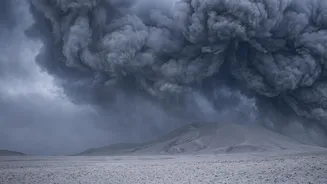
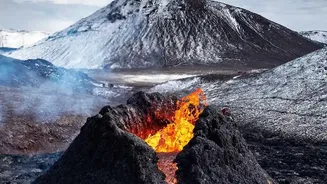
In April 2010, a volcano with a nearly unpronounceable name—Eyjafjallajökull—erupted in Iceland, bringing European aviation to a standstill. While not a colossal eruption in volcanic terms, its impact was immense due to a perfect storm of factors. The
eruption occurred under a glacier, and the interaction between hot lava and cold meltwater created a plume of extremely fine, glassy ash. This ash was then injected directly into the jet stream and carried towards Europe, home to some of the world's busiest airspace. Concerns that the abrasive ash particles could damage and shut down jet engines led to the largest air-traffic shutdown since World War II. Over an eight-day period, more than 100,000 flights were cancelled, affecting around 10 million passengers and stranding travellers worldwide. The economic fallout for the airline industry was staggering, with losses estimated at around $1.7 billion. The event forced a complete re-evaluation of aviation risk assessment, leading to new protocols for flying in areas with volcanic ash concentrations.
The Blast Heard Around the World
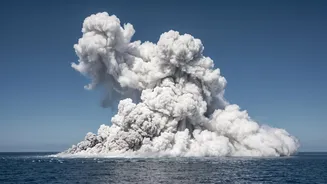
On January 15, 2022, the planet witnessed the most explosive volcanic event of the satellite era: the eruption of the Hunga Tonga–Hunga Haʻapai submarine volcano. The blast was so powerful it generated atmospheric shockwaves that circled the globe multiple times and triggered tsunamis across the Pacific. Unlike Eyjafjallajökull, the primary disruption wasn't from ash in flight paths, but from the sheer force of the explosion and its unique atmospheric consequences. The eruption severed the undersea fibre-optic cable that connects Tonga to the rest of the world, plunging the nation into a communications blackout. What made this event scientifically unprecedented was the colossal amount of water vapor—an estimated 150 million tons—it blasted into the stratosphere. This injection increased the stratosphere's water content by about 10%, with potential long-term, though minor, effects on the ozone layer and a slight cooling influence on surface temperatures. The event provided a stark lesson in the vulnerability of our global communication infrastructure and offered scientists a rare chance to study the atmospheric impact of a massive, water-rich eruption.
The Plume That Circled the Globe
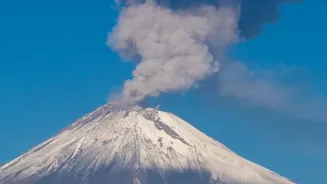
A year after Iceland's aviation crisis, another eruption demonstrated the far-reaching nature of volcanic plumes. In June 2011, the Puyehue-Cordón Caulle volcanic complex in Chile began a powerful eruption, one of the largest of the 21st century so far. It spewed an enormous cloud of ash and pumice that was blown eastwards across Patagonia, burying some areas under thick deposits. But it didn't stop there. The plume travelled across Argentina, forcing flight cancellations in Buenos Aires and Montevideo. Within two weeks, the ash cloud had completely circumnavigated the globe, causing disruptions to air travel across the Southern Hemisphere, affecting flights in South Africa, Australia, and New Zealand. The eruption served as another powerful reminder of how interconnected the world's atmosphere is, where an event in the Andes can ground flights on the other side of the planet days later. It reinforced the global nature of volcanic threats, proving that disruption is not just a risk for those living in the volcano's immediate shadow.