





The Power of the Preliminary Chop
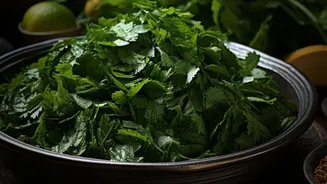
The claim in the headline is not just an old wives' tale; it's rooted in the mechanics of blending. When you toss whole coriander and mint leaves into a blender, the blades often struggle to get a grip. The leaves can form a large, light mass that just spins
around or gets pushed to the sides of the jar, refusing to be pulled down into the blades' vortex. Roughly chopping the herbs first breaks them down into smaller, more manageable pieces. This gives the blades immediate surface area to work with, allowing them to slice and pulverize the herbs efficiently from the very first pulse. It also helps in breaking down the tougher, fibrous stems of coriander, which are full of flavour but can leave stringy bits in the final product if not properly processed. This simple act of pre-chopping reduces strain on your mixer-grinder's motor and is the first, most crucial step towards a flawlessly smooth chutney.
Mastering the Texture
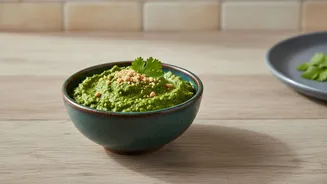
A common downfall of homemade chutney is a runny, watery consistency. This usually happens when too much water is added in an attempt to get the blender moving. The key is to add liquid sparingly. Start with just a tablespoon or two of cold water. Better yet, use a couple of ice cubes instead. The ice not only provides the necessary liquid as it melts but also keeps the mixture cold, which has a surprising benefit for the chutney's colour. If your chutney is still too thick, add more liquid bit by bit. For a creamier, thicker result that prevents water from separating, consider adding a binding agent. A spoonful of roasted peanuts, a few pieces of coconut, or even a tablespoon of roasted chana dal (bhuna chana) can work wonders, lending body and a subtle nutty flavour to the final blend. A dollop of thick yogurt is another excellent choice for both texture and tang.
Preserving that Vibrant Green
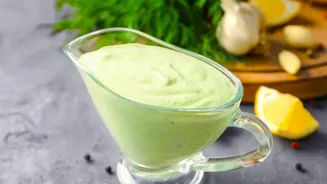
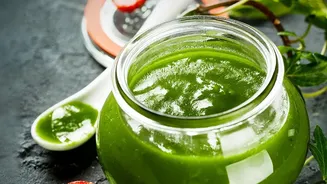
We eat with our eyes first, and a great green chutney must be a brilliant, appetising green. The enemies of this colour are heat and oxidation, which can turn your chutney a dull, brownish-green. The ice cube trick is your first line of defence, as it prevents the blades and the friction of blending from 'cooking' the delicate herbs and destroying their chlorophyll. The second critical element is acid. Adding a generous squeeze of lemon or lime juice towards the end of the blending process helps to stabilise the colour and prevent oxidation. Store the finished chutney in an airtight glass container, pressing a piece of plastic wrap directly onto the surface before sealing the lid. This minimises contact with air, keeping it greener for longer. For immediate storage, refrigerating it promptly slows down the discoloration process.
Balancing the Flavours
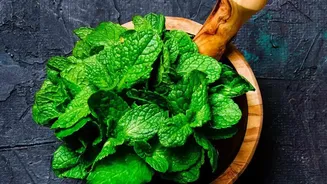
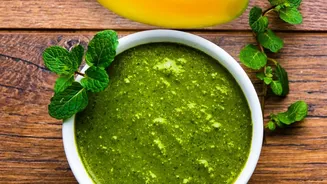
Beyond texture and colour, the soul of a chutney lies in its flavour. A well-made green chutney is a symphony of spicy, tangy, and savoury notes. The foundation is typically a mix of fresh coriander and mint leaves; many experts suggest a higher ratio of coriander, as too much mint can sometimes introduce a bitter taste. Don't discard the tender coriander stems, as they are packed with flavour. For heat, add green chillies to your liking. Ginger and garlic provide a pungent depth, while salt is essential for bringing all the flavours together. To balance the tang from the lemon juice, a small pinch of sugar is often added. It won't make the chutney sweet, but it will round out the sharp edges and create a more harmonious taste profile. Some recipes also call for chaat masala or roasted cumin powder for an extra layer of earthy complexity.