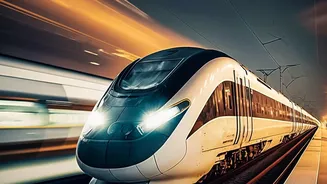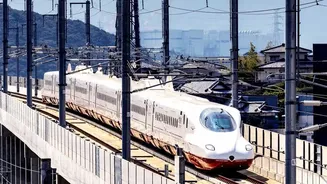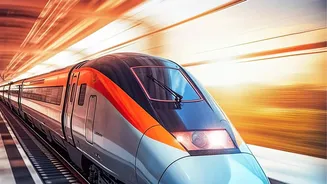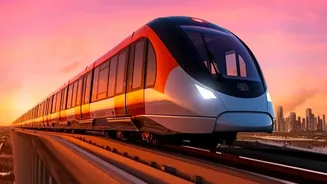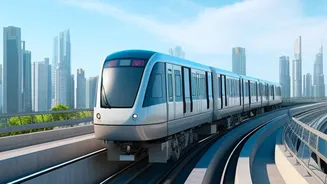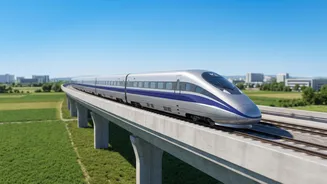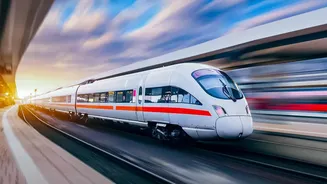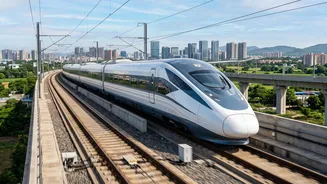

The 2027 Trial Run: What We Know
Union Railway Minister Ashwini Vaishnaw has confirmed that India's first indigenous high-speed train is expected to hit the tracks for testing in May or June of 2027. This crucial trial phase will last between two and four months, after which the service
is expected to be inaugurated. The initial tests will be conducted on a specific stretch of the 508-kilometre Mumbai-Ahmedabad corridor, likely the section between Surat and Bilimora, which is slated for commissioning by August 2027. This phased approach means that passengers will be able to experience bullet train travel on completed sections even before the entire corridor is operational.
A Project of National Importance
The Mumbai-Ahmedabad High-Speed Rail (MAHSR) project is more than just a fast train; it's a statement of India's infrastructure ambitions. The project, being executed with technical and financial assistance from Japan, will be India's first-ever high-speed rail line. Once fully operational, the bullet train will operate at a speed of 320 km/h, cutting the travel time between Mumbai and Ahmedabad from over five hours to just under two. The corridor includes 12 stations, connecting major economic hubs across Maharashtra, Gujarat, and the Union Territory of Dadra and Nagar Haveli.
Current Status: Progress on the Ground
Construction on the massive project is advancing at a rapid pace, particularly in Gujarat. As of late 2026, work on the Surat-Vapi section is nearing completion. Significant progress has been made on building the elevated viaducts, with pier work and girder launching completed over hundreds of kilometres. Stations are also taking shape, with the structure for the Surat station—inspired by the city's diamond industry—already complete and undergoing finishing touches. Meanwhile, complex engineering feats are underway in Maharashtra, including the construction of India's first undersea rail tunnel at Thane Creek.
Overcoming Hurdles and Delays
The journey to this point has not been without its challenges. The project has faced significant hurdles, most notably delays in land acquisition, particularly in Maharashtra. While 100% of the land required for the project has now been acquired, these earlier delays impacted the construction timeline. The COVID-19 pandemic also slowed progress. Despite these setbacks, the pace has accelerated significantly. Officials have highlighted that the project is a key part of the 'Atmanirbhar Bharat' initiative, with a focus on developing indigenous manufacturing capabilities for high-speed rail technology.
What Happens After the Trial Run?
The 2027 trial is the beginning of a phased rollout. Following a successful testing period on the Surat-Bilimora section, services will be opened to the public on that stretch. The full corridor, from Mumbai's Bandra Kurla Complex (BKC) to Sabarmati in Ahmedabad, is expected to be completed by 2029. The development is not just about one train; it is creating a blueprint for a larger high-speed network. Seven other high-speed corridors have been planned, including routes like Delhi-Varanasi and Mumbai-Nagpur, which will leverage the standards and learnings from the MAHSR project.