





1. It Forges New Brain Pathways
One of the most remarkable benefits of dancing is its effect on neuroplasticity—the brain's ability to form new connections and rewire itself. Learning choreography, responding to a partner, and synchronizing movements to music is a complex mental workout.
This combination of physical, cognitive, and social demands stimulates the brain to create new neural pathways. Studies have shown this process can lead to sharper thinking, better problem-solving skills, and enhanced memory. In fact, one landmark study in the New England Journal of Medicine found that among numerous physical activities, only frequent dancing was associated with a lower risk of dementia, suggesting its unique power to build cognitive resilience.
2. Synchronized Movement Builds Social Bonds
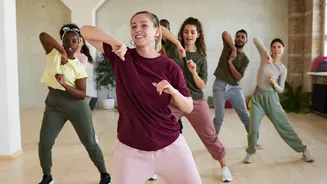
Moving in time with other people triggers a profound psychological effect. This synchrony fosters a powerful sense of connection and community. When we dance in a group, our brains perceive the shared rhythm and coordinated actions as a form of non-verbal communication, which can increase feelings of trust and empathy toward others. This process is believed to release endorphins, the body's natural feel-good chemicals, which not only reduce pain but also play a key role in social bonding. It’s an ancient mechanism that helped our ancestors form cohesive groups, and it works just as effectively on a modern dance floor to combat loneliness and create a sense of belonging.
3. It Sharpens Your Decision-Making Skills
Group dancing, especially styles that involve improvisation or partner work like ballroom or salsa, is a rapid-fire decision-making exercise. Dancers must constantly adjust to the music, anticipate their partner's next move, and navigate a crowded space without missing a beat. This high-speed multitasking engages and strengthens the prefrontal cortex, the part of the brain responsible for executive functions like planning and decision-making. Over time, this mental training can translate into improved focus and quicker, more adaptable thinking in other areas of your life, essentially making you a sharper decision-maker off the dance floor as well.
4. It's a Dual-Action Mood Booster
While exercise or listening to music alone can improve your mood, combining them in dance creates a benefit greater than the sum of its parts. Music activates the brain's reward centers, releasing dopamine, a neurotransmitter essential for pleasure. Simultaneously, the physical exertion of dancing releases endorphins and can lower levels of the stress hormone, cortisol. When you add the social element of a group setting, the effect is magnified. Studies have shown that people who participate in group dance report significant improvements in mood and energy levels, and a decrease in symptoms of anxiety and depression.
5. It Creates 'Inter-Brain Synchrony'
Emerging neuroscience research is exploring a fascinating phenomenon called 'inter-brain synchrony'. When people dance together, their brainwaves can actually start to align. This neural coupling is a biological marker of a deep connection, where individuals are literally 'on the same wavelength'. This shared brain state is hypothesized to be a key mechanism behind the strong feelings of social connection and empathy generated by group dance. By coordinating our movements with others, we are not just moving our bodies in unison; we are training our brains to connect and co-create, enhancing our ability to bond on a socio-emotional level.