






Introducing the SOLVE Rocket
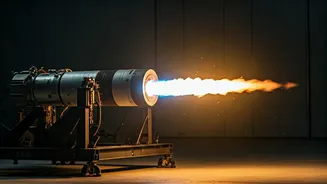
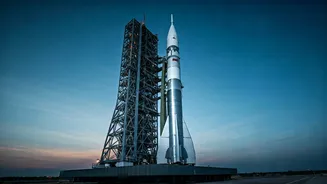
To ensure the safety of its future astronauts, ISRO has developed a new, specialised test rocket named SOLVE, which stands for Sub-Orbital Launch Vehicle for Experiments. This is not a rocket designed to go into orbit, but rather a dedicated platform
for conducting crucial experiments in the upper atmosphere. ISRO confirmed the successful first ground test of the solid motor that will power SOLVE at the Satish Dhawan Space Centre in Sriharikota on July 3, 2026. The vehicle is cleverly adapted from the solid-fuel strap-on motors used in the workhorse Polar Satellite Launch Vehicle (PSLV), but with key modifications. These changes include a slower-burning propellant and a new steering system, designed specifically to meet the unique testing needs of the Gaganyaan program. This new vehicle provides ISRO with a flexible and repeatable way to simulate a wide range of conditions, a critical requirement for human-rating space hardware.
The High-Stakes Parachute Test
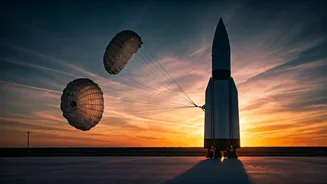
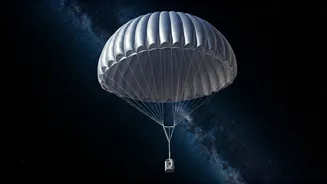
The primary mission for the SOLVE rocket is to test the intricate parachute system for the Gaganyaan crew module. During these tests, SOLVE will carry a payload simulating the crew module to an altitude of between 10 and 17 kilometres. Once it reaches the target altitude, the module will be released, beginning a carefully choreographed sequence to ensure its safe return. The module's deceleration system relies on a total of 10 parachutes of various types working in perfect harmony. This sequence is what stands between the crew module and a high-speed impact, making its flawless operation absolutely non-negotiable. The goal of the SOLVE-based tests is to validate this entire parachute deployment under realistic flight conditions before it is ever used to carry a human being.
A Symphony of Ten Parachutes
Bringing a spacecraft back from high altitude is a complex ballet of engineering. The sequence begins with two apex cover separation parachutes, which are small parachutes that pull away the protective cover over the main parachute compartment. They are immediately followed by two drogue parachutes. These are deployed first to stabilise the rapidly descending module and reduce its velocity significantly. Only after the drogues have done their job and been released are three pilot chutes deployed. These smaller pilot chutes don't slow the module much on their own; their job is to pull out the three massive main parachutes. It is these main chutes that do the final, heavy lifting, slowing the crew module to a safe landing speed for a splashdown in the ocean. The entire system is built with redundancy; just two of the three main parachutes are sufficient for a safe landing, providing a critical safety margin.
A Critical Milestone for Gaganyaan
The development of SOLVE and the upcoming parachute tests are vital steps in India's path to becoming the fourth nation to launch its own crewed spacecraft. The Gaganyaan project aims to send a crew of three astronauts into an orbit of 400 kilometres for a three-day mission and bring them back safely to Earth. Before that historic flight, which is targeted for 2027, ISRO is conducting numerous precursor missions to prove the safety and reliability of every single component. This includes a series of uncrewed test flights, the first of which will carry the humanoid robot Vyommitra. The parachute system is one of the most critical safety elements, as it must assemble itself flawlessly in mid-air to protect the crew. Each successful test, from ground firings of new motors to complex airdrop trials, builds the confidence needed to finally place Indian astronauts atop an Indian rocket.