

The Foundation: Master the Forearm Plank
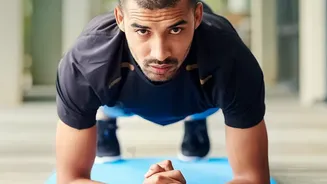
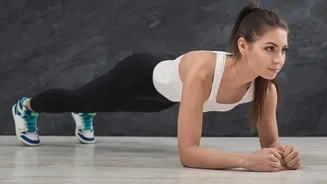
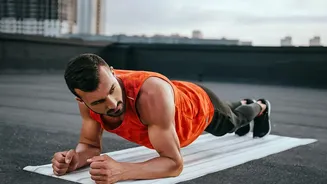
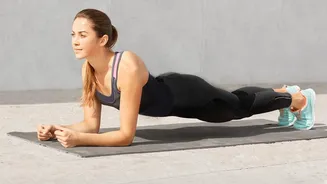
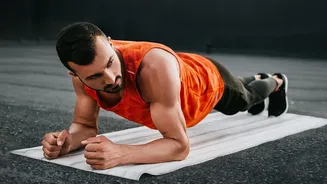
Before you can progress, perfecting the classic forearm plank is essential. This move is the bedrock of core stability, engaging multiple muscles at once. To start, lie facedown and place your forearms on the floor with your elbows stacked directly under
your shoulders. Extend your legs back, resting on your toes. Your body should form a straight, rigid line from your head to your heels. The most common mistakes are letting your hips sag or pushing your butt too high in the air. To prevent this, actively engage your core by pulling your belly button toward your spine and squeeze your glutes. Keep your gaze slightly forward on the floor to maintain a neutral neck. Hold for 30 seconds, focusing on steady breathing rather than holding your breath.
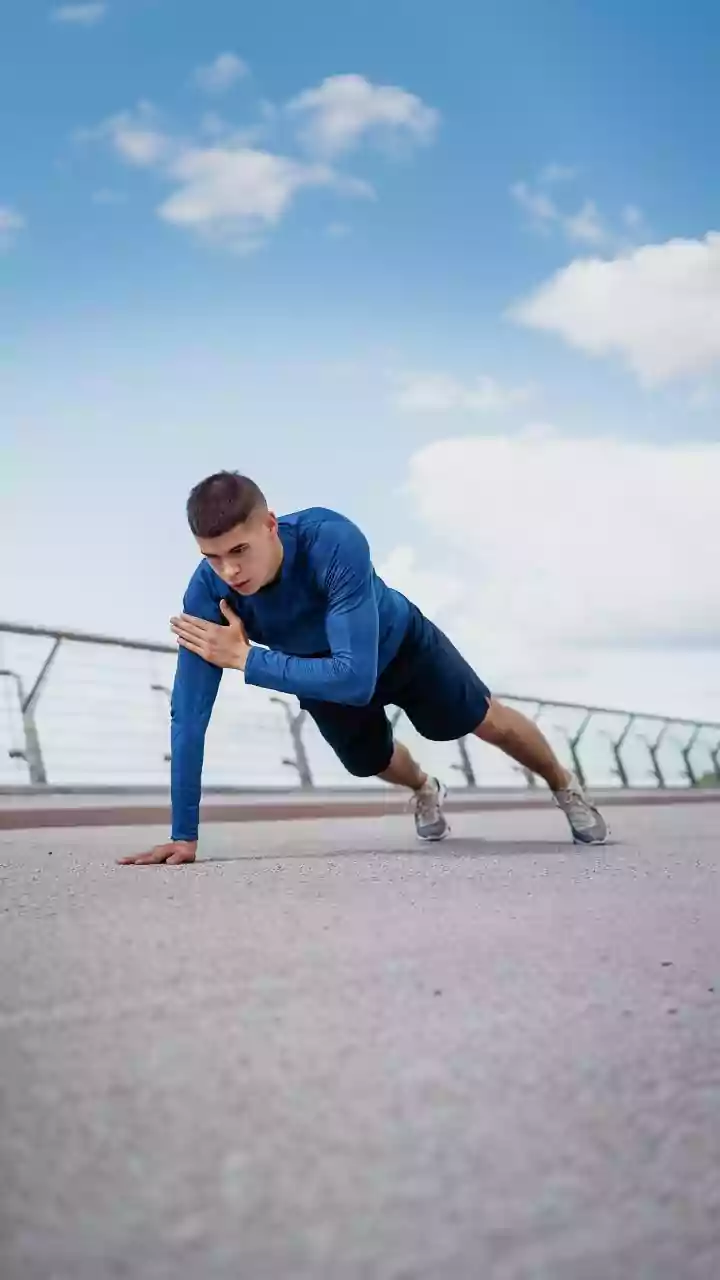
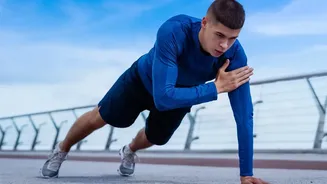
The Stability Test: High Plank with Shoulder Taps
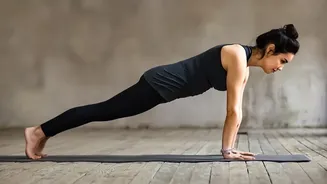
This variation takes the classic high plank (the top of a push-up position) and adds a challenge that forces your core to fight against rotation. Start in a straight-arm plank with your hands directly under your shoulders and feet hip-width apart. For more stability, you can widen your stance. Keeping your hips as still as possible, lift your right hand and tap your left shoulder. Return your hand to the floor and repeat on the other side, tapping your right shoulder with your left hand. The goal is to prevent your hips from rocking side to side, which requires immense core engagement. This move not only strengthens your abs but also improves shoulder stability.
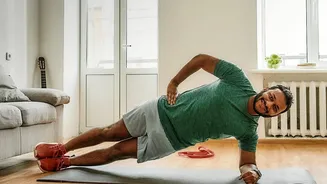
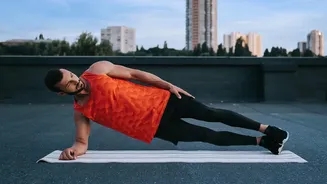
The Oblique Activator: Side Plank
Your core isn't just the muscles in the front; your obliques, which run along the sides of your torso, are crucial for stability and rotational power. The side plank is one of the best exercises to target them. Lie on your side with your elbow directly beneath your shoulder and your forearm flat on the ground. Stack your feet one on top of the other. Lift your hips off the floor, creating a straight line from your head to your feet. Avoid letting your top shoulder roll forward. To make it easier, you can stagger your feet or bend your bottom knee for more support. To increase the difficulty, try lifting your top leg. Hold for 30 seconds on each side.
The Dynamic Challenge: Plank with Leg Lifts
Adding movement to a stable base is a fantastic way to increase muscle endurance. The plank with leg lifts does just that, challenging your core to remain steady while your lower body is in motion. Begin in a standard forearm or high plank position, ensuring your form is solid. Slowly lift one leg straight up about six inches off the floor, keeping your glutes tight and your back flat. Hold for a moment before lowering it back down with control. Alternate legs, performing the movement slowly and deliberately. The key is to not let your lower back arch or your hips twist as you lift each leg. This variation enhances core stability while also targeting your glutes and hamstrings.
The Cardio Infusion: Plank Jacks
Who says planks can't get your heart rate up? Plank jacks combine core stabilization with a cardiovascular element, making for a highly efficient exercise. Start in a high plank position with your hands under your shoulders and your feet together. Keeping your core tight and your upper body stable, jump your feet out to the sides, wider than your hips, similar to a jumping jack. Quickly jump them back to the starting position. Maintain a flat back throughout the movement; don't let your hips bounce up and down. This explosive move will not only fire up your core but also add a metabolic boost to your workout.