









A Major Infrastructure Milestone
In a significant announcement at the India Mobile Congress 2026, a SpaceX executive confirmed that Starlink has built 20 gateway sites across India. Lauren Dreyer, the Vice President of Starlink Business Operations, stated that the company has already
invested in the ground network, which includes hundreds of antennas, and has established the operational framework needed to begin service. This move is seen as a crucial step forward after nearly five years of discussions with Indian regulators and industry stakeholders. The company has also developed specific security controls to ensure Indian user data remains within the country, a key regulatory requirement.
What Exactly Is a Ground Gateway?
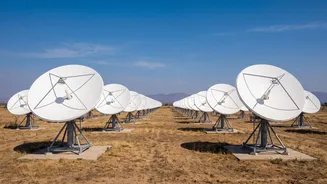
Think of a ground gateway as the bridge between Starlink's satellites in space and the internet on Earth. When a user sends an internet request from their Starlink dish, the signal travels up to a satellite in low-Earth orbit (LEO). That satellite then beams the data down to the nearest ground gateway. These gateways are physical data centres connected directly to the internet's backbone via high-speed fibre optic cables. Essentially, they are the vital on-ramps and off-ramps that allow the satellite network to access the global internet. Without them, the service cannot function. Building 20 of these stations shows a serious commitment to a pan-India service.
The Final Regulatory Hurdles
While the infrastructure is largely in place, Starlink cannot flip the switch just yet. The company is still awaiting final government clearances, most notably regarding spectrum allocation and national security. Although Starlink holds a Global Mobile Personal Communications by Satellite (GMPCS) licence, this does not grant automatic permission to begin commercial operations. Dreyer noted that Starlink is 'standing ready to serve India once India is ready', highlighting that the ball is now in the government's court. Recently, Elon Musk himself has voiced frustration over the delays, alleging that unnamed 'oligarchs' are trying to block Starlink's entry to protect their own market positions.
The Promise for a Connected India
The primary appeal of Starlink is its ability to deliver high-speed, low-latency broadband to areas where traditional connectivity is unreliable or non-existent. This is particularly transformative for rural and remote parts of India where laying fibre optic cable is geographically and financially challenging. As of May 2026, thousands of Indian villages still lacked 4G coverage. While India has over a billion internet subscriptions, a significant gap remains between urban and rural access density. Satellite internet services like Starlink aim to bridge this digital divide, providing a viable alternative for the 'last mile' of connectivity.
A Crowded Sky
Starlink is not the only player eyeing India's satellite internet market. It faces stiff competition from Bharti-backed Eutelsat OneWeb and Jio Satellite Communications, both of which have also secured the necessary licences. Amazon's Project Kuiper is another major global competitor planning its entry into India. Interestingly, Reliance Jio is also exploring the development of its own 'sovereign' LEO satellite constellation, which would position it as a direct competitor to Starlink even as the two have signed MoUs for potential cooperation. This competitive landscape promises to drive innovation and potentially lower costs for consumers once services are fully operational.