

Humanity has discovered thousands of planets, but we've mostly been looking where the light is brightest. NASA's Nancy Grace Roman Space Telescope is about to change that, offering a new way to see worlds hiding in the dark.
A New Eye on the Cosmos
Set to begin its five-year
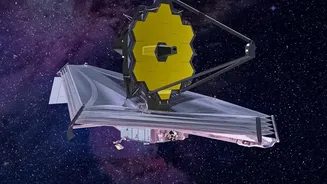
primary mission in early 2027, the Nancy Grace Roman Space Telescope is NASA's next great observatory, following in the footsteps of giants like Hubble and the James Webb Space Telescope. Named after NASA's first chief of astronomy, Roman has a primary mirror the same size as Hubble's but boasts a field of view 100 times larger. This allows it to create vast, panoramic images of the universe with incredible sharpness. While it has several scientific goals, including studying dark energy, one of its most exciting tasks is to conduct a massive census of planets beyond our solar system. The mission is expected to discover thousands of exoplanets, potentially transforming our understanding of planetary demographics across the galaxy.
Looking Beyond the Lamppost
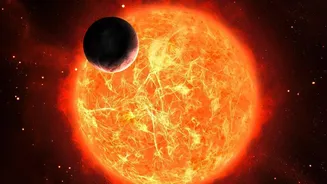
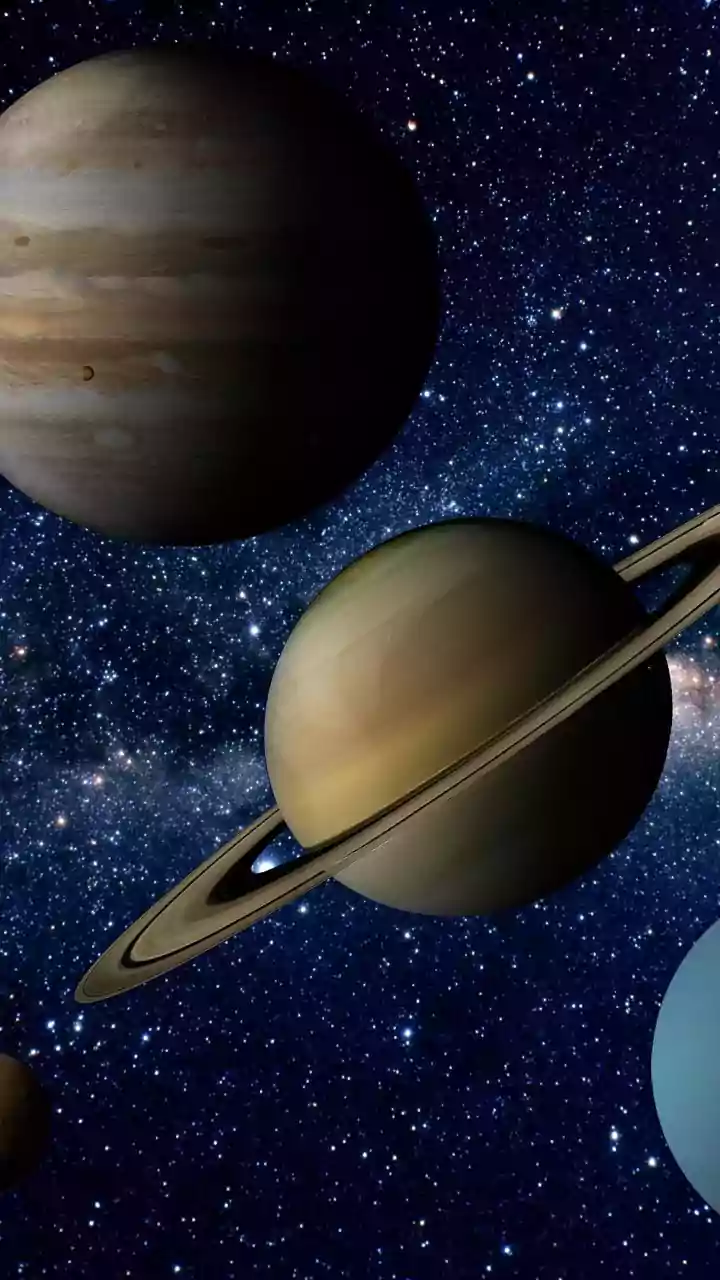
Previous planet-hunting missions like Kepler and TESS have been incredibly successful, but they have a built-in bias. They primarily use the 'transit method', which detects the slight dimming of a star as a planet passes in front of it. This method is most effective at finding large planets in tight, fiery orbits close to their stars. It’s often compared to someone looking for their lost keys only under a lamppost because that’s where the light is. Roman will expand the search area significantly. While it will also detect an estimated 100,000 transiting planets, its main exoplanet survey uses a different technique to find worlds in the colder, outer regions of planetary systems, much like where Jupiter and Saturn reside in our own.
The Power of Gravitational Microlensing
Roman's primary search technique is gravitational microlensing, an effect predicted by Albert Einstein. This phenomenon occurs when a star or planet passes almost directly in front of a more distant star. The gravity of the foreground object acts like a natural magnifying glass, bending and amplifying the light of the background star, causing it to temporarily brighten. If the foreground star has a planet, the planet's own gravity will cause an additional, smaller blip in the light. This method is sensitive enough to find planets down to the mass of Mars and even smaller. Most importantly, it is uniquely suited to finding planets on wide orbits and even 'rogue' planets that wander the galaxy untethered to any star.
A Galactic Planet Census
By repeatedly monitoring hundreds of millions of stars toward the dense center of our galaxy, Roman will conduct a true statistical survey of planets. The data will help scientists answer fundamental questions: Are solar systems like our own, with small, rocky inner worlds and gas giants far out, common or rare? How many planets drift through interstellar space as cosmic orphans? Current estimates for rogue planets range from billions to trillions, and Roman's survey is expected to provide a much more precise count. Finding analogs to nearly every planet in our solar system, from Earth-mass worlds to ice giants, will provide the first comprehensive census of planetary systems, giving us a clearer picture of our own cosmic neighborhood.
Directly Imaging Alien Worlds
In addition to its wide-field survey, Roman carries a technology demonstrator called the Coronagraph Instrument. A coronagraph is designed to block the overwhelming glare of a star, much like using your hand to block the sun, in order to see something faint nearby. Roman's coronagraph is an advanced system of masks, deformable mirrors, and sensors designed to be 100 to 1,000 times more powerful than previous space-based versions. This instrument will attempt to take the first direct images of Jupiter-like planets orbiting nearby stars in reflected starlight. While the microlensing survey finds planets by the thousands statistically, the coronagraph offers a tantalizing glimpse into the future of directly imaging and characterizing alien worlds.