



A Breakthrough Decades in the Making
Scientists have long theorised that the Sun’s turbulent surface should be home to small-scale vortices, but no instrument was powerful enough to see them. That has now changed. Using the National Science Foundation's Daniel K. Inouye Solar Telescope in Hawaii,
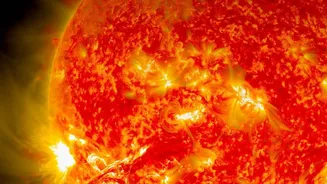
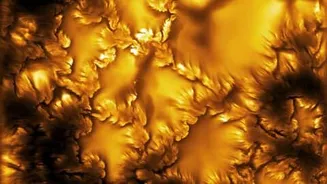
researchers have captured the highest-resolution images ever taken of our star's visible surface, known as the photosphere. Published in the journal Nature, these images finally provide direct evidence of these swirling structures, which were first predicted in the 1870s by physicists Lord Kelvin and Hermann von Helmholtz. The breakthrough solves a long-standing observational challenge and opens a new window into the Sun's complex behaviour.
What Exactly Are These Whirlpools?
The whirlpools are a phenomenon called the Kelvin-Helmholtz instability (KHI). If you’ve ever seen the wind create ripples on the surface of water or watched cream swirl into coffee, you’ve seen this effect in action. It occurs when two fluids, or in this case, super-heated gases called plasma, move past each other at different speeds. On the Sun, the surface is a chaotic landscape of 'convection cells'—roiling patches of rising and sinking plasma, some as large as the distance between Mumbai and Guwahati. At the edges of these cells, where plasma flows at different velocities, the shear force creates these whirlpools, some measuring as small as 20 kilometres across. Before now, images from other telescopes were too blurry at these edges to resolve such fine detail.
The Technology That Made It Possible
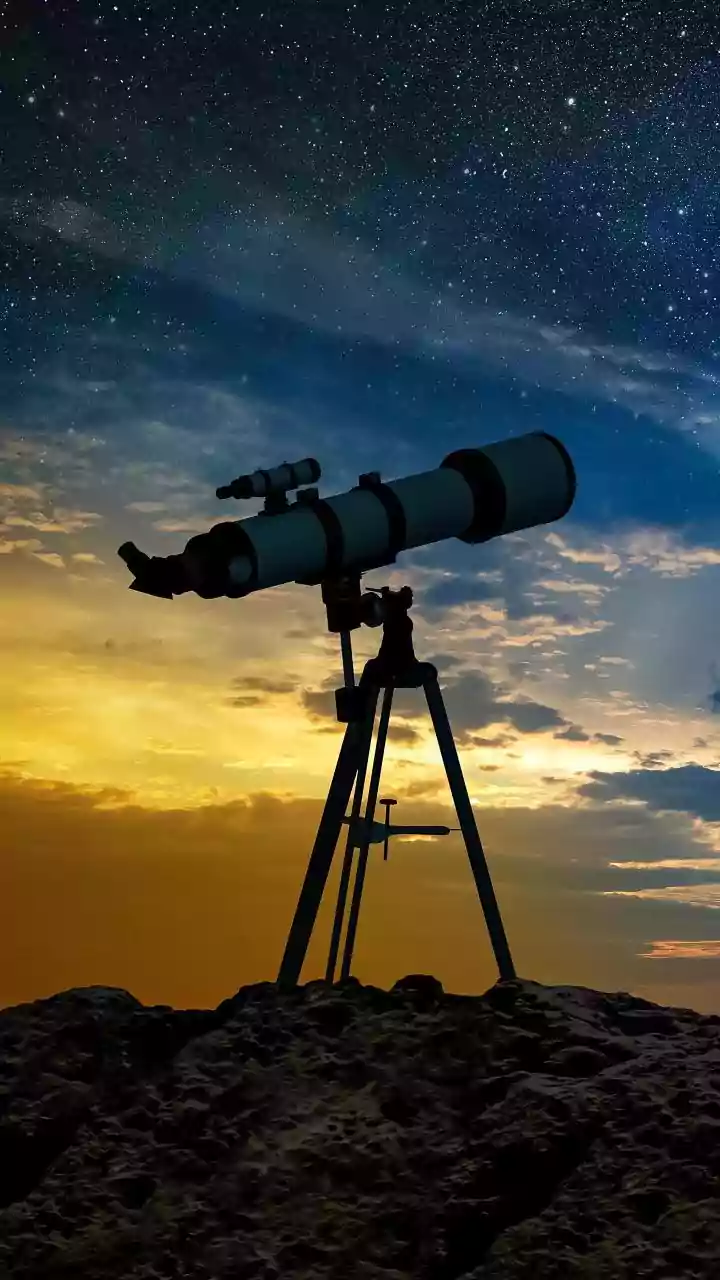
The discovery was made possible by the sheer power of the Daniel K. Inouye Solar Telescope. Perched atop the Haleakalā volcano in Maui, its location provides exceptionally clear views of the sky. With a massive four-metre primary mirror, it is the largest solar telescope on Earth, capable of collecting seven times more sunlight than any other solar instrument. This power allows it to resolve features on the Sun's surface with incredible clarity, turning what once looked like frayed, blurry edges into a landscape of crisp, dynamic vortices. By pairing the telescope with high-speed cameras, scientists could watch these instabilities form and evolve in real-time, confirming what computer simulations had long suggested.
Solving the Sun's Greatest Mystery
These tiny whirlpools could hold the key to one of solar physics' most persistent puzzles: the coronal heating problem. For decades, scientists have been baffled as to why the Sun's outer atmosphere, the corona, is hundreds of times hotter than its visible surface. It defies simple logic, like a fire being cooler than the air around it. The leading theory is that energy is somehow transferred from the surface and released in the corona. Researchers believe these newly observed vortices play a crucial role. Their constant swirling motion is thought to twist and braid the Sun's magnetic field lines, acting like a dynamo that carries magnetic energy upwards into the corona, where it is then converted into intense heat.
Why This Discovery Matters on Earth
A better understanding of the Sun’s magnetic engine has significant real-world implications. The same magnetic forces that these whirlpools influence are responsible for solar flares and coronal mass ejections (CMEs)—massive eruptions of energy and plasma from the Sun. When aimed at Earth, this 'space weather' can have serious consequences, disrupting our GPS systems, damaging communications satellites, and even overwhelming national power grids. By understanding the fundamental physics driving these events, starting with small-scale motions like these vortices, scientists can build better models to predict space weather. This would give us more time to protect the critical infrastructure that our modern, technology-dependent society relies upon.