







A Multi-Horizon Job Strategy
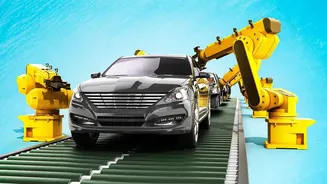
Commerce Minister Piyush Goyal has confirmed the government is developing a multi-layered plan to secure livelihoods in the face of technological disruption. This involves a "short-, medium- and long-term agenda" designed to balance the adoption of new
technologies for efficiency with the urgent need for job creation. While specific policy details are emerging, the short-term focus appears to be on identifying and bolstering sectors that are naturally resilient to automation. The medium-term goal involves upskilling the workforce for a new era, with initiatives like AI-enabled training centres and a planned AI Innovation Hub. The long-term vision aims to position India as a global leader in applied AI, creating new roles and industries altogether. Goyal's approach dismisses fears of mass job losses, comparing the current AI 'ghost' to the Y2K transition, which ultimately spurred massive growth in India's software industry.
Why Tourism Is The Centrepiece
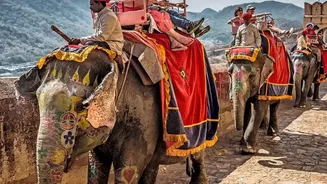
At the heart of this strategy is the tourism sector, which the Commerce Ministry has identified as a key "AI-proof" area for employment growth. The logic is straightforward: while AI can streamline bookings and marketing, the core of hospitality—human interaction, cultural experience, and physical service delivery—cannot be easily automated. Jobs in hotels, restaurants, transportation, and as tour guides require a human touch that technology cannot replicate. The sector is a powerful job multiplier, creating opportunities across various skill levels, particularly in tier 2 and tier 3 cities. With projections indicating the potential creation of 24 million new tourism-related jobs by 2033, the government sees the sector as a vital engine for generating mass employment and driving local economies.
The AI Equation: Threat or Tool?
The government's stance, articulated by Goyal, is that AI should be viewed as an opportunity, not a threat. He argues that AI will ultimately become a job creator for India by generating demand for new products, services, and specialised skills. Professionals will be needed to build practical AI applications, manage complex systems, and counter evolving cyber threats. This perspective reframes the debate from job replacement to job transformation. While some roles may be displaced, the government is betting that technological advancement will create entirely new career paths. Goyal has stressed that India has the raw materials for this new age, including a young population, a massive pool of STEM graduates, and some of the most affordable data costs in the world, positioning the nation to lead rather than follow.
Marrying Hospitality with High-Tech
The strategy is not to shield tourism from technology, but to integrate them intelligently. India is actively seeking to adopt AI to enhance efficiencies and visitor experiences. The Ministry of Tourism has already partnered with tech giants like Google to use AI and data insights for promoting India's destinations and cultural heritage more effectively on a global scale. This includes creating immersive virtual journeys and training tourism officials on digital marketing and content creation. In this model, AI handles the back-end logistics, data analysis, and personalised marketing, freeing up human workers to focus on delivering high-quality, front-facing services that define a memorable travel experience. The goal is to use technology as an enabler that augments human capability, making the tourism sector more competitive and robust.