



The Soul of the Machine
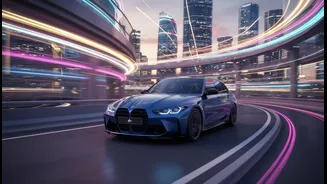
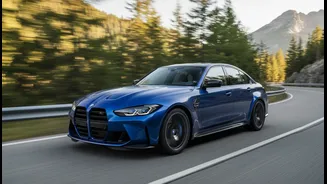
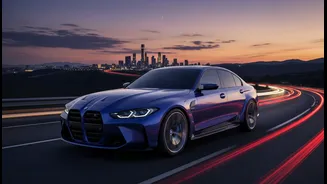
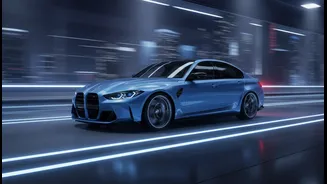
The BMW M3 is more than a car; it's a benchmark. Since its debut, it has defined the sports sedan segment with a formula of high-revving engines, sublime handling, and a direct connection between driver and road. This legacy, however, is deeply rooted
in the internal combustion engine (ICE). For enthusiasts, the specific character of its four, six, or eight-cylinder engines is not just a feature but the very soul of the vehicle. The impending transition to electric vehicles (EVs) therefore poses an existential question: what is an M3 without its traditional heart? Critics and purists have voiced concern, fearing that the silent, instant torque of an EV could never replicate the nuanced, mechanical thrill of a classic M car.
A Philosophy of Performance
In response, BMW and the head of its M division, Frank van Meel, have been clear and consistent. Their strategy is to be "technology-neutral" or "technology-open." Van Meel has repeatedly stated that the M badge represents a promise of a specific performance feel, not a specific type of powertrain. He argues that most customers don't fundamentally care what type of drivetrain is in the car, as long as it drives like a true M vehicle. This philosophy decouples the M brand from combustion. Instead, it defines M performance by a set of core attributes: agility, precision, dynamic handling, and an emotional connection that gives the driver ultimate control. This isn't a new argument for the brand; van Meel often points to the M3's own history of evolving from four- to six- to eight-cylinders and back to six with turbochargers, with each change meeting initial skepticism before proving itself.
Beyond the Powertrain
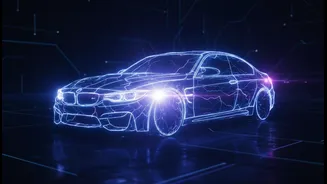
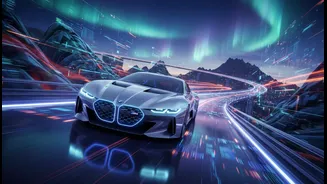
Executing this vision means focusing on the elements that create the M driving experience. For its future electric M cars, BMW is developing a sophisticated, centralized control system—dubbed the 'Heart of Joy'—to manage everything from power distribution to chassis dynamics. With a planned quad-motor setup for the electric M3, this system can control the torque to each wheel with a level of precision impossible in a mechanical system. This allows engineers to finely tune the car's handling characteristics, creating a rear-biased feel that is central to the M identity while using the front motors to enhance traction and stability when needed. The goal is not just to create a car that is fast in a straight line, but one that is communicative, predictable, and faster around a track. Van Meel insists a future electric M3 will be better and quicker than its ICE counterpart.
The Two-Pronged Approach
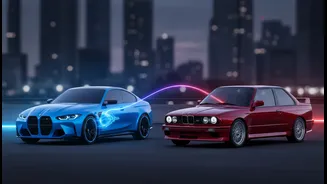
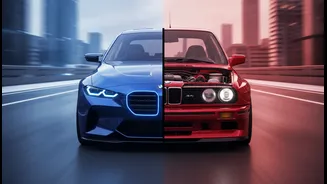
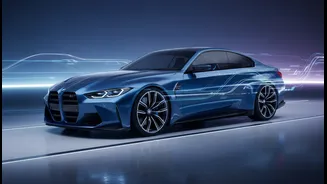
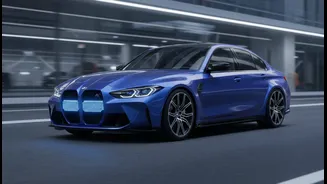
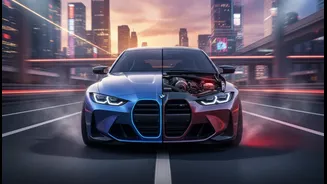
Recognizing that the transition won't happen overnight, BMW is taking a unique dual-path approach for the next M3. The company has confirmed it will produce both a fully electric M3 on its new 'Neue Klasse' architecture and, in parallel, a new M3 powered by a further developed six-cylinder combustion engine. This isn't a hybrid compromise; van Meel has noted the brand will go to the “extremes” with a pure EV and a pure ICE model, avoiding a middle-ground plug-in hybrid for the M3. This strategy allows BMW to cater to its traditional customer base while simultaneously proving its performance credentials in the electric space. It’s a hedge, but also a confident statement that the M division can deliver its signature experience through two fundamentally different technologies.