

Karnataka’s Khara Bath
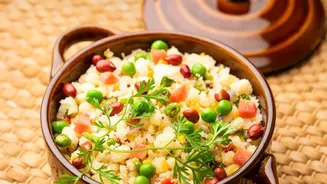
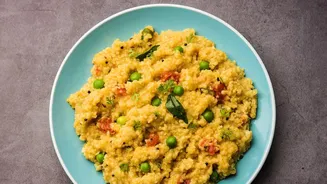
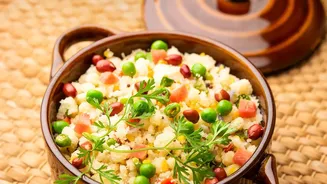
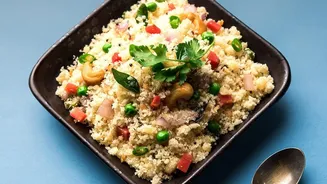
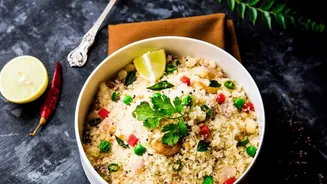
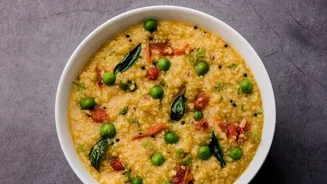
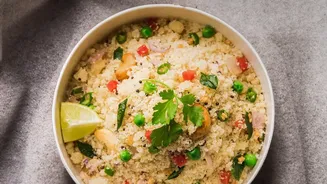
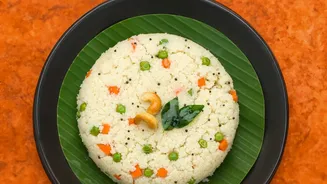
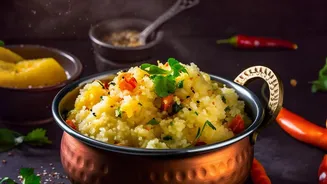
In Karnataka, upma often takes the form of Khara Bath, a spicier and more flavourful version. Its signature taste comes from the addition of a special spice blend, frequently vangi bath powder (used for brinjal rice) or a dedicated 'bath' powder containing
roasted lentils and spices. This gives it a distinct aroma and a reddish-yellow hue. It is typically loaded with vegetables like carrots, beans, and tomatoes, and made richer with a generous amount of ghee. In Bengaluru, it's famously served as part of a 'Chow Chow Bath', a dish featuring a scoop of spicy Khara Bath alongside a scoop of sweet Kesari Bath (a sweet semolina dessert), offering a perfect balance of spicy and sweet on one plate.
Tamil Nadu’s Rava Kichadi
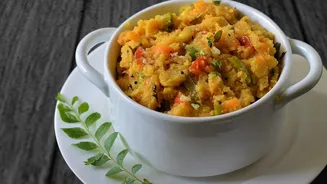
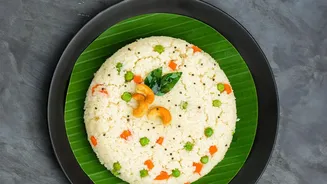
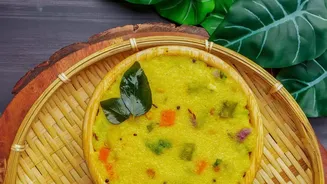
While Tamil Nadu has its own simple white upma, the more celebrated version is the Rava Kichadi. Often found in restaurants and made for special occasions, this variation is richer and has a much softer, more unctuous texture. The key differences are the vibrant yellow colour from turmeric powder and a more generous use of ghee, which contributes to its 'melt-in-the-mouth' quality. Unlike the drier, fluffier upma, Rava Kichadi is cooked with more water to achieve a slightly gooey, porridge-like consistency. It’s also packed with finely chopped vegetables like carrots, peas, and beans, making it a more indulgent and complete meal.
Maharashtra’s Sanja
Moving west to Maharashtra, we find Sanja, a rustic and hearty version of upma. It often uses a coarser variety of semolina (rava), giving it a different texture from its southern counterparts. The base flavour is built on a classic tempering of mustard seeds, cumin, green chillies, and onions, with turmeric powder being a standard inclusion. What makes Sanja unique is that it is sometimes prepared with buttermilk instead of just water, lending it a subtle tangy flavour. It’s also common to find peanuts in the tempering for crunch, and in some households, a little sugar is added to balance the spice, creating a mild sweet and savoury taste profile.
Andhra & Telangana’s Atukula Upma
In the Telugu-speaking states of Andhra Pradesh and Telangana, one of the most popular variations is Atukula Upma, which swaps semolina for flattened rice (atukulu in Telugu, also known as poha). This completely changes the dish. The flattened rice is first rinsed to soften it, then added to a tempering of mustard seeds, cumin, curry leaves, and green chillies. Peanuts and fried chana dal are essential additions, providing a delightful crunch. The end result is much lighter and fluffier than rava-based upmas. A final squeeze of lemon juice adds a fresh, tangy finish, making it a quick, easy, and highly popular breakfast or snack that doesn't feel heavy.
Kerala’s Uppumavu
In Kerala, the version known as Uppumavu is a celebration of coconut. While the base is still roasted semolina, the primary flavour that sets it apart is the generous use of coconut oil for the tempering and the addition of freshly grated coconut mixed into the dish itself. This gives the Uppumavu a distinct fragrance and a richer, moister texture. The tempering is often simple, with mustard seeds, lentils, and red chillies. It’s not uncommon for this savoury dish to be served with a side of ripe banana or a sprinkle of sugar, allowing for a unique combination of sweet and savoury in every bite, a hallmark of many Keralan breakfast dishes.