




The Blueprint for a Lunar Outpost
After the successful Artemis II mission in April 2026 sent astronauts on a flyby of the Moon for the first time in over fifty years, NASA is now moving forward with its next great ambition: a permanent lunar outpost. The agency has outlined a deliberate,
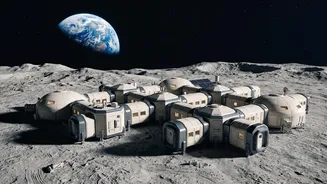
multi-phase strategy aimed at building a sustainable settlement near the Moon's resource-rich South Pole. This isn't just about planting flags and leaving footprints; the objective now is science, infrastructure, and creating a stepping stone for future missions to Mars. The initiative represents a significant shift, focusing resources on surface operations rather than the previously planned Gateway station in lunar orbit, signaling a clear commitment to building a home on the Moon itself.
A Three-Phase Construction Plan
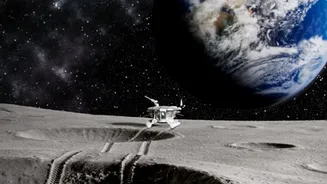
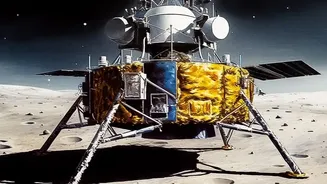
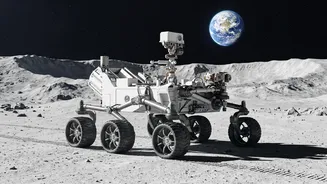
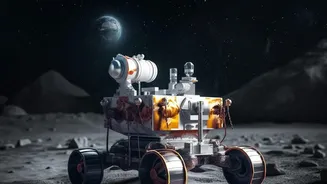
The construction of the moon base will be an iterative process, broken down into three distinct phases. Phase One, which is already underway and runs until 2029, is focused on learning and risk reduction. This involves more than 20 robotic missions through the Commercial Lunar Payload Services (CLPS) program to deliver rovers, science instruments, and critical technology demonstrations to the lunar surface.
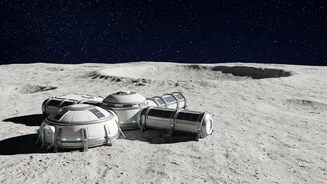
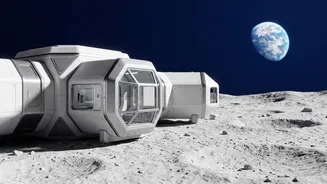
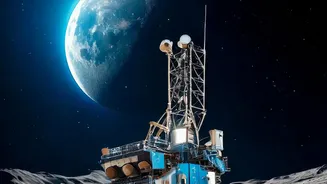
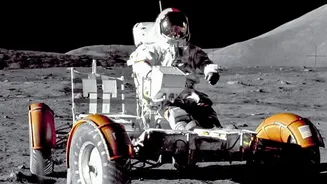
Phase Two, slated for 2029 to 2032, will see the beginning of the base's construction. This phase includes establishing foundational infrastructure such as early power systems, communication tools, and the delivery of heavier cargo, including a pressurized rover from Japan's space agency, JAXA.
Phase Three, beginning in 2032, is when the vision truly comes to life. This final phase will scale up operations to establish a permanent outpost where astronauts can live and work for extended periods, with plans for routine crew rotations and continuous scientific activity.
Tackling Extreme Engineering Challenges
Building a habitat in one of the most hostile environments imaginable requires solving immense technological challenges. To address this, NASA is actively seeking proposals from commercial and academic partners to develop key technologies. A primary hurdle is power; NASA is developing vertical solar arrays and fission surface power systems, including a nuclear reactor planned for 2030, to provide consistent energy during the long, dark lunar nights. Another critical area is In-Situ Resource Utilization (ISRU), which focuses on extracting usable resources like oxygen and water from the lunar soil, or regolith. This would reduce the dependance on expensive resupply missions from Earth. Other focus areas include advanced manufacturing for producing parts on-site and developing new nanomaterials for construction in the extreme lunar environment.
Why a Permanent Moon Base Matters
The implications of a permanent lunar presence are profound. For science, the Moon offers an unparalleled platform for astronomy and geology, allowing us to piece together the history of our solar system. For exploration, the base will serve as a crucial proving ground for the technologies and procedures needed to send humans to Mars. Living and working on the Moon will provide invaluable data on how to sustain human life long-term in deep space. Economically, it lays the foundation for a future lunar economy, driven by commercial partnerships in transportation and resource extraction. For India, a nation with its own proud and ambitious space program, NASA's plan signals a new era of global collaboration in space, moving beyond national competition towards a shared human endeavor to explore the cosmos.