






A Groundbreaking, Imperfect Ascent
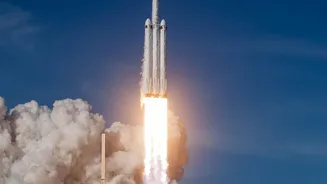
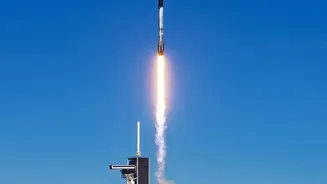
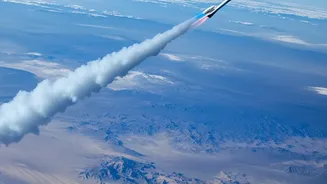
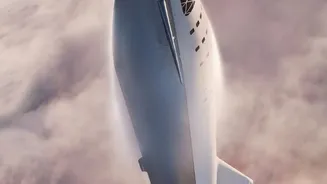
On Monday, September 28, 2026, the colossal Starship rocket lifted off from its Starbase facility in Texas for its most ambitious mission yet: its first orbital flight. The mission, dubbed Flight 14, was a pivotal test, moving beyond previous suborbital
hops to demonstrate the vehicle's capability for sustained orbital operations. However, the ascent was not flawless. During the initial climb, one of the Super Heavy booster's 33 Raptor engines shut down prematurely. Later, as the Starship upper stage fired its own engines to continue towards space, one of its six engines also failed. Despite these anomalies, the onboard systems compensated, and the flight controllers in Texas determined the vehicle was healthy enough to proceed. This decision underscored SpaceX's confidence in the rocket's redundancy and its iterative development philosophy, where learning from anomalies is a core part of the process.
Reaching Orbit and Delivering a Payload
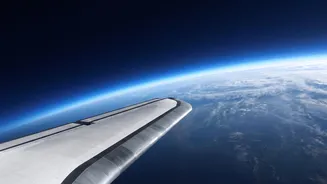
Following the successful separation from the booster, the Starship upper stage fired a single engine to perform its final orbit insertion burn. This pushed the vehicle to an apogee, or highest point, of about 275 kilometers (171 miles), successfully placing it in a stable Earth orbit for the first time in the program's history. This was a landmark moment, transitioning Starship from a test vehicle into an operational spacecraft. Shortly after achieving orbit, the vehicle successfully opened its payload bay doors and deployed 26 next-generation Starlink V3 satellites. This was another crucial first for the program, proving its potential as a heavy-lift launch system for commercial and government payloads. Contact was successfully established with all satellites after deployment.
A Cautious But Controlled Return
The original mission plan called for Starship to complete nearly six orbits in a flight lasting almost 10 hours. However, out of an abundance of caution following the engine shutdowns during ascent, SpaceX's flight control team opted to shorten the mission. About three hours after launch, Starship performed a deorbit burn to begin its fiery journey back through Earth's atmosphere. The spacecraft executed its signature 'belly-flop' maneuver, using its large surface area and steerable fins to slow down as plasma enveloped the vehicle. In the final moments of its descent over the Pacific Ocean, the ship reignited its engines, flipped to a vertical orientation, and performed a controlled splashdown north of Hawaii. While the spacecraft tipped over and was destroyed upon hitting the water, as planned for this test, the controlled descent and pinpoint accuracy of the landing were considered major successes.
What 'Successful Failure' Means for SpaceX
For SpaceX, a flight that experiences problems but still achieves its main objectives is often seen as more valuable than a perfectly clean run. This mission was a prime example of a 'successful failure'. The Super Heavy booster also experienced an engine issue on its return but still managed a soft splashdown in the Gulf of Mexico. The data gathered from how the rocket compensated for multiple engine failures provides invaluable information for improving the system's reliability. This iterative approach of testing, failing, and rapidly improving is central to SpaceX's strategy and has been key to the fast-paced development of its Falcon rocket family. While the engine issues raise questions and will require investigation, they do not seem to derail the program's momentum. The flight demonstrated that the rocket could withstand significant problems and still complete its core tasks, a vital capability for a system intended to one day carry humans to the Moon and Mars.