


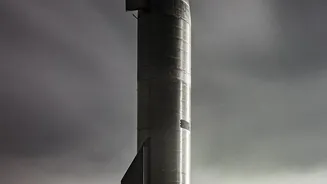
What Happened During Flight 15?
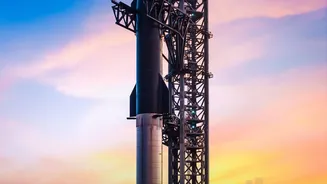
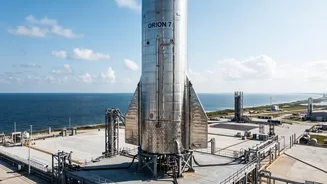
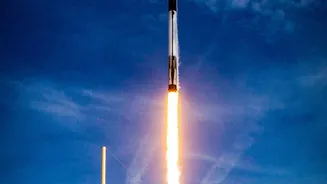
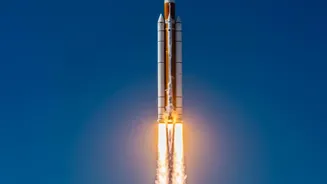
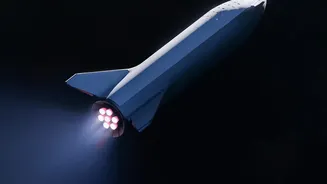
During its fifteenth test flight, SpaceX’s massive Starship rocket launched successfully from its Starbase facility in Texas. The mission's ambitious goal was to recover both the Super Heavy booster and the Starship upper stage using the launch tower's
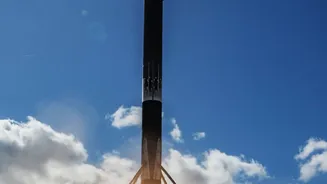
mechanical arms. While the upper stage successfully separated, reached orbit, and later completed a historic catch, the booster’s return did not go as planned. After separating from the Starship, the Super Heavy booster began its journey back to the launch site. However, its onboard computers detected a problem and automatically triggered an abort sequence. Instead of attempting the landing and catch, the booster diverted its course and performed a controlled splashdown in the Gulf of Mexico, where it was intentionally destroyed by its flight termination system just above the water.
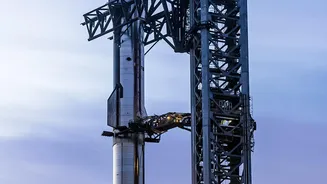
The 'Mechazilla' Catch System Explained
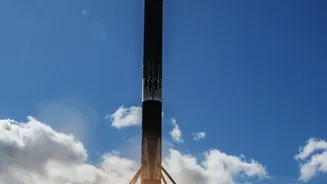
The tower catch is a revolutionary concept central to SpaceX’s vision for rapid reusability. Informally nicknamed 'Mechazilla', the system uses two giant 'chopstick' arms on the launch tower to literally catch the returning rocket stages mid-air. This method eliminates the need for heavy landing legs, which add tons of dead weight to the vehicle. By removing the legs, the rocket can carry more payload or have better performance. Furthermore, catching the booster directly on the launch mount dramatically speeds up the turnaround time between flights. The goal is to refuel, restack the stages, and launch again in a very short period, a key factor in making the Starship system economically viable for missions to orbit, the Moon, and Mars.
Why the Booster Aborted the Catch
The investigation is ongoing, but early indications from SpaceX point to a 'low fuel mass alarm' that caused the booster's boostback burn to end early. This burn is critical for killing the booster's downrange velocity and steering it back toward the launch site. An early cutoff meant the booster was not in the correct position or on the right trajectory to safely attempt a catch. Initially, commentators suggested a guidance, navigation, and control (GNC) issue, but this was later corrected. The GNC system actually worked perfectly; it correctly identified that the booster was outside the safe 'catch window' and initiated the abort to protect the launch tower and ground infrastructure. The abort is a built-in safety feature, and in this case, it did its job by opting for a safe splashdown over a risky landing attempt.
Inside the Investigation
SpaceX engineers are now deep in the data, analyzing telemetry from the booster to pinpoint the exact reason for the low fuel alarm. This process involves examining sensor readings, engine performance, and fuel consumption rates throughout the flight to determine if there was a genuine fuel shortfall, a leak, an issue with one of the 33 Raptor engines, or simply a faulty sensor. The Federal Aviation Administration (FAA) requires and oversees these mishap investigations for any launch anomaly to ensure public safety. SpaceX must determine the root cause and implement corrective actions, which the FAA must approve before the next Starship flight can proceed. This rigorous process is standard procedure and part of the iterative 'test, fail, fix, fly again' philosophy that defines SpaceX's rapid development cycle.
What This Means for Starship
While the aborted booster catch is a setback, the overall mission was a partial success, especially with the historic catch of the Starship upper stage. The failure to catch the booster, a maneuver SpaceX had accomplished on previous flights, highlights the immense difficulty of perfecting a fully and rapidly reusable launch system. The investigation will likely delay the next attempt at a 'double catch', which remains the ultimate goal. Proving they can consistently recover both stages is crucial for achieving the high launch frequency that underpins the business case for Starship, including deploying thousands more Starlink satellites and supporting NASA's Artemis moon missions. For now, the focus is on understanding this failure to ensure the next flight can push the envelope even further.