








Shift Your Mindset from 'Project' to 'Practice'
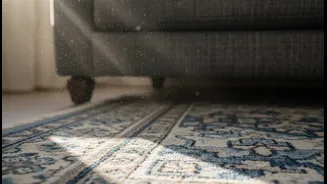
The single biggest mistake we make is treating dust as a weekend project. Dust isn't an event; it's a continuous process. Every day, microscopic particles enter our homes from outside and are generated from within. These include everything from pollen
and soil brought in on our shoes to tiny fibres from clothes, upholstery, and curtains. Thinking you can eliminate it in one go is like trying to empty the ocean with a bucket. The real victory lies in developing small, consistent habits that prevent accumulation. A five-minute wipe-down daily is far more effective than a frantic two-hour cleaning session once a fortnight. This shift in perspective transforms a dreaded chore into a manageable part of your daily rhythm.
Understand What You're Fighting
Household dust is a complex mix. A significant portion consists of shed human skin cells, which serve as a primary food source for microscopic dust mites. These mites and their waste are common allergens that can trigger asthma and other respiratory issues. But that's not all. Dust also contains pet dander, fabric fibres, soil particles, pollen, and even insect fragments. In urban Indian environments, this is compounded by high levels of outdoor pollution and particulate matter that find their way indoors. Knowing this cocktail of ingredients makes it clear why constant management is crucial for both cleanliness and health.
The Right Tools for the Job
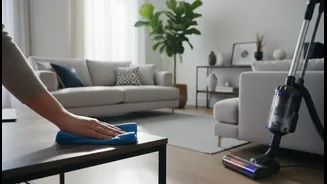
To win the war on dust, you need the right weapons. Ditch the traditional feather duster, which often just pushes particles into the air to resettle elsewhere. Your most valuable ally is the microfiber cloth. Its fine, split fibres create a static charge that attracts and traps dust instead of scattering it. When slightly dampened with water, its effectiveness increases, picking up even more fine debris. For floors, a vacuum cleaner equipped with a HEPA (High-Efficiency Particulate Air) filter is a game-changer. These filters are designed to capture at least 99.97% of airborne particles as small as 0.3 microns, including dust mites, pollen, and dander that other vacuums might recirculate.
Your Daily and Weekly Dusting Ritual
Consistency is built on simple, repeatable actions. Your daily routine shouldn't take more than 10-15 minutes. Focus on high-traffic, high-visibility areas. Wipe down one or two surfaces like a coffee table or kitchen counter, give the main floor area a quick sweep, and use doormats to trap dust at the entrance. Your weekly routine can be more thorough. This is the time to change and wash bedsheets to reduce skin cell buildup, vacuum carpets and upholstery properly, and dust often-forgotten spots like ceiling fans, blinds, and the tops of cupboards. Always work from top to bottom. Dust shelves and fans first so any falling particles can be caught by your vacuuming or mopping at the end.
Reduce Dust at the Source
While cleaning is essential, prevention is even better. One of the most effective strategies is to minimise the amount of dust entering your home. A simple but powerful rule is to leave footwear at the door. Shoes track in a huge amount of soil and outdoor pollutants. Using good-quality doormats at every entrance can trap a surprising amount of dirt. Decluttering your home also helps significantly; fewer objects mean fewer surfaces for dust to settle on and makes cleaning much faster. In areas with high pollution, keeping windows closed during peak traffic hours or windy days can make a noticeable difference. Consider investing in an air purifier with a HEPA filter for bedrooms or living areas to continuously capture airborne particles.