

Ariel's Ambitious Goal
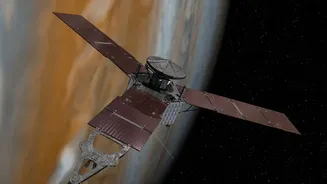
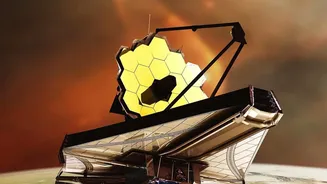
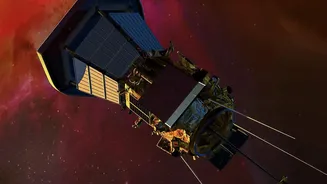
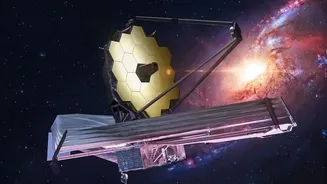
The European Space Agency's Ariel mission is shifting the focus of exoplanet science from simply discovering new worlds to truly understanding them. Scheduled for launch in 2029, the Atmospheric Remote-sensing Infrared Exoplanet Large-survey, or Ariel,
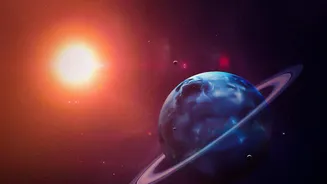
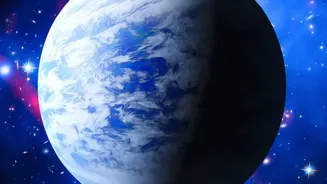
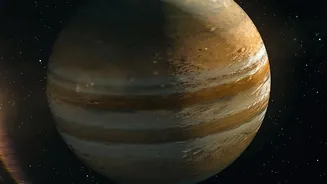
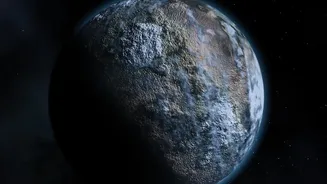
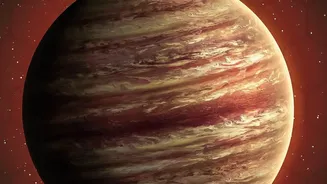
is the first mission of its kind dedicated to measuring the chemical makeup and thermal structures of a huge and diverse sample of exoplanets. Over its four-year mission, the space telescope will systematically study the atmospheres of approximately 1,000 known exoplanets, ranging from fiery gas giants known as 'hot Jupiters' to rocky 'super-Earths'. The goal is to answer fundamental questions about how planets and their solar systems form and evolve.
The Significance of Alien Skies
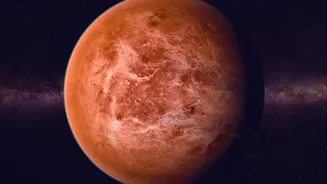
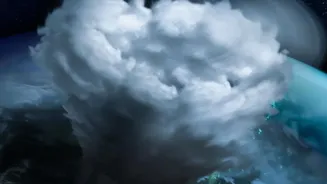
To understand a distant planet, you must first understand its sky. Ariel will focus on three key atmospheric components: hazes, clouds, and water. Just like on Earth, these elements are crucial storytellers. Water vapour is a key ingredient for life as we know it, while clouds and hazes can reveal much about a planet's temperature, climate, and chemical processes. By studying these features across a wide variety of planets—from their composition to their coverage—scientists can begin to piece together the planetary puzzle. They can learn why a planet is the way it is, how it has been shaped by its parent star, and whether the conditions for life might exist.
How to Read an Alien Atmosphere
Ariel will use a technique called transit spectroscopy. As a planet passes in front of its host star from our perspective, a tiny fraction of the starlight filters through the planet's atmosphere. The gases and particles in that atmosphere absorb specific wavelengths of light, leaving a chemical fingerprint that Ariel's sensitive instruments can detect. It's like a cosmic barcode. The telescope's infrared spectrometer will be able to identify the signs of well-known molecules like water vapour, carbon dioxide, and methane, as well as more exotic metallic compounds. NASA is also contributing an instrument called CASE that will specifically observe clouds and hazes, helping to distinguish between different types of atmospheric particles.
A Universe of Possibilities
This mission isn't about looking at one planet in detail, but about understanding the big picture by creating a massive, homogenous catalogue. By comparing the atmospheres of so many different worlds orbiting different types of stars, scientists hope to uncover new trends in planetary evolution. They will be able to classify planets in a more meaningful way, linking the chemistry of a planet to the environment in which it formed. While Ariel will primarily study hot planets that are unlikely to be habitable, the insights gained will be invaluable. The techniques and knowledge developed by studying these extreme worlds will pave the way for future telescopes to investigate smaller, cooler, and potentially Earth-like planets.