


What The Latest Numbers Show
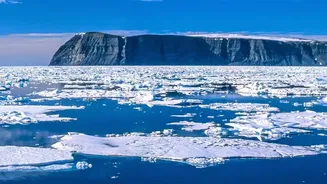
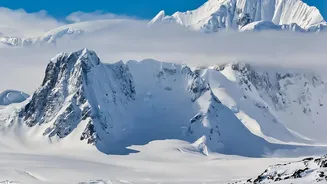
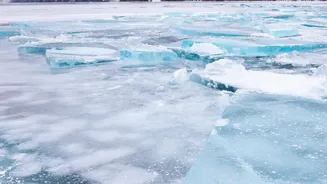
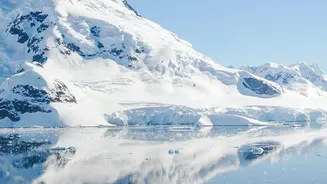
According to the US National Snow and Ice Data Center (NSIDC), sea ice around the southern continent reached its maximum extent for the year on September 14. It covered 17.59 million square kilometres, the third-lowest winter peak since satellite records
began nearly 48 years ago. This is approximately one million square kilometres less than the long-term average—an area roughly twice the size of Spain. Perhaps more alarmingly, this result means that the four lowest winter maximums ever recorded have all occurred in the last four years, from 2023 to 2026. This pattern has convinced many scientists that the continent's sea ice system has undergone a fundamental change.
A Continent of Contradictions
For decades, Antarctica’s sea ice trends were a puzzle. While the Arctic experienced a clear and rapid decline in line with global warming, Antarctic sea ice was variable and even showed periods of slight expansion up until around 2015. This led some to question the impact of climate change on the region. However, since 2016, the trend has reversed dramatically, with sea ice extent plummeting to successive record lows in both summer and winter. Within just a few years, decades of gradual gains were wiped out. This sudden flip has scientists concerned that a new, less stable state has been reached, driven by a combination of factors that are finally overwhelming the system's resilience.
The Forces Driving The Deficit
There isn't one single culprit behind the missing ice. Scientists point to a 'triple whammy' of interacting forces. Stronger winds, potentially linked to climate change and the ozone hole, have been churning the Southern Ocean. This enhanced mixing is pulling warmer, saltier water from the deep ocean up to the surface. This deep water, which has been storing heat for decades, is now melting the ice from below and preventing new ice from forming effectively. This creates a dangerous feedback loop: less ice means the dark ocean absorbs more sunlight, which further warms the water and makes it even harder for ice to recover. Atmospheric factors, such as those related to El Niño, also contribute to regional variations in ice loss.
Why A Frozen Ocean Far Away Matters
The loss of sea ice thousands of kilometres away has profound global consequences. The bright white sea ice acts like a giant mirror, reflecting the sun's energy back into space and helping to cool the planet. When it's replaced by dark ocean water, more heat is absorbed, accelerating global warming. Furthermore, sea ice acts as a protective buffer for the massive ice sheets on the Antarctic continent itself. Without it, these land-based glaciers are more exposed to ocean waves and warming waters, which can speed up their melt. The Antarctic ice sheet contains enough freshwater to raise global sea levels by a catastrophic 60 metres if it were all to melt. Its stability is critical for coastal communities everywhere.
The View From India
The changes in Antarctica have direct implications for India. With a coastline stretching over 7,500 kilometres, major cities like Mumbai, Chennai, and Kolkata are highly vulnerable to sea-level rise. Even a modest increase can lead to more frequent flooding, saltwater intrusion into freshwater sources, and devastating economic impacts. The massive shifts in ocean temperature and circulation originating from the poles can also disrupt global weather patterns, potentially affecting the delicate balance of the Indian monsoon, which is the lifeblood of the nation's agriculture and economy. The stability of the Antarctic is not a distant problem; it is intrinsically linked to our own environmental and economic security.