






The Golden Spice: What's Inside Turmeric?
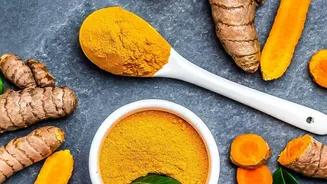
For thousands of years, turmeric has been a cornerstone of Ayurvedic practices, used for everything from respiratory issues to skin health. The vibrant yellow-orange colour and most of its acclaimed health benefits come from a group of compounds called
curcuminoids, of which curcumin is the most active and well-researched. Curcumin is a polyphenol that has been studied extensively for its potential antioxidant and anti-inflammatory properties. It’s the ingredient that gives turmeric its scientific street cred, separating it from being just another flavourful spice.
Curcumin and Inflammation: The Scientific Evidence
Scientific studies, both in labs and in humans, have shown that curcumin can indeed influence the pathways that lead to inflammation. Research suggests it may work by inhibiting molecules like NF-κB, which play a major role in triggering inflammatory responses. Studies on conditions like osteoarthritis have found that curcumin can reduce pain and stiffness, with some results comparable to common anti-inflammatory drugs. However, there’s a significant catch: bioavailability. On its own, curcumin is poorly absorbed by the body. Most of what you consume is quickly eliminated. This is why many studies use highly concentrated curcumin extracts in large doses, often hundreds of milligrams per day, far more than you'd get from your daily dal.
The Power of Pepper: A Bioavailability Hack
To get around the absorption issue, science has a clever trick: pairing curcumin with piperine, the active compound in black pepper. Piperine can dramatically increase curcumin's bioavailability—by up to 2,000% according to some studies—by inhibiting enzymes in the liver that would normally break it down. This allows more curcumin to enter the bloodstream and stay there longer. This is why many curcumin supplements are formulated with piperine and why traditional recipes often pair turmeric and black pepper. It’s a classic example of food synergy, where the combination is more powerful than the parts.
The Pungent Root: Decoding Ginger's Power
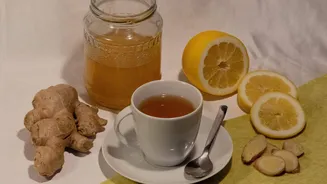
A close relative of turmeric, ginger has also been hailed as a 'universal medicine' in Ayurveda for its digestive and warming properties. Its sharp, pungent flavour and aroma come from its own set of powerful bioactive compounds, primarily gingerols, shogaols, and zingerone. Gingerols are the most abundant of these in fresh ginger and are responsible for many of its anti-inflammatory and antioxidant effects. When ginger is dried or cooked, gingerols can transform into shogaols, which are even more potent in some respects. These compounds have been shown to inhibit the production of inflammatory mediators in the body, much like some non-steroidal anti-inflammatory drugs (NSAIDs).
Hype vs. Reality: A Practical Guide
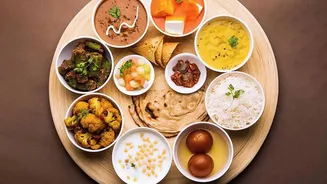
So, can your daily cup of adrak chai or the haldi in your sabzi solve chronic inflammation? The answer is nuanced. While both spices contain powerful, scientifically-backed compounds, the amounts consumed in everyday cooking are unlikely to produce the dramatic effects seen in clinical trials using high-dose extracts. Adding these spices to your meals is certainly beneficial for overall health. They are rich in phytonutrients that protect cells from damage and contribute to a healthy dietary pattern. Think of them as valuable players on a well-balanced team, not solo superstars. They support your body's health and may help manage mild inflammation, but they aren't a replacement for medical treatment for serious conditions. The wellness hype often oversimplifies this, presenting them as miracle cures, but the real magic lies in their consistent use as part of a healthy lifestyle.