






Introducing the Bullet Train
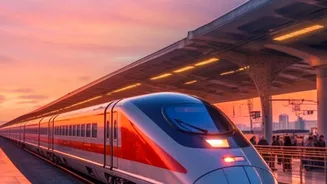
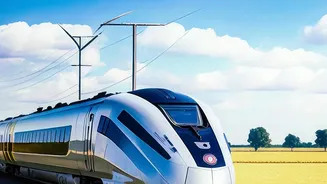
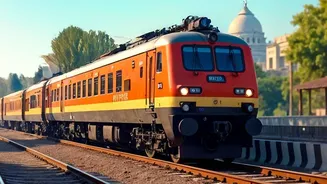
The project transforming this vital route is the Delhi-Varanasi High-Speed Rail (DVHSR) corridor, one of seven new bullet train routes announced in the Union Budget 2026-27. It's India's second major high-speed rail undertaking after the Mumbai-Ahmedabad
line. Overseen by the National High Speed Rail Corporation Limited (NHSRCL), the project involves laying an 865-kilometre track designed for trains operating at speeds of up to 320 km/h. While the project is currently in the pre-construction phase with detailed project reports and surveys being finalised, it is among the most advanced of the newly proposed corridors.
A Revolution in Travel Time
The most significant impact of the DVHSR will be the dramatic reduction in travel time. The journey, which currently takes eight hours on the fastest Vande Bharat Express and over 12 hours on other mail trains, is expected to shrink to just around 3 hours and 50 minutes. This leap turns Varanasi into a potential day-trip destination from the capital, completely altering the calculation for tourists, pilgrims, and business travellers. The corridor will also drastically cut the travel time to other key cities, with the Delhi-Lucknow leg expected to take just over two hours.
More Than Just Speed
Beyond raw speed, the bullet train promises a paradigm shift in comfort, safety, and reliability. The service will use proven Japanese Shinkansen technology, known globally for its punctuality and safety record. The route will be grade-separated, running mostly on elevated viaducts to avoid conflicts with road traffic and ensure smooth, uninterrupted journeys. With around 12 stations planned, including key stops at Noida's Jewar Airport, Agra, Lucknow, and Prayagraj, the corridor will create an integrated transport network linking major economic and cultural hubs across Uttar Pradesh.
The Economic Ripple Effect
The project is being hailed as a 'growth connector' for its potential to catalyse economic development across North India. By making the region more accessible, the corridor is expected to provide a massive boost to tourism in Varanasi, Ayodhya (via a proposed spur line), Agra, and other heritage sites. This enhanced connectivity is also projected to attract investment in hospitality, real estate, and other industries along the route, creating what some officials call a single, cohesive economic zone from Delhi to Varanasi. The integration with Jewar Airport will further establish the region as a major multimodal logistics and travel hub.
A Symbol of a Modernising India
The Delhi-Varanasi corridor is a cornerstone of India's larger ambition to build a 'Diamond Quadrilateral' of high-speed rail connecting the nation's major metropolitan centres. It reflects a strategic shift towards building sustainable, high-capacity public transport infrastructure for the future. As India also begins manufacturing its own high-speed trainsets, with the first models expected for testing in 2027, the project is not just about connecting two cities faster. It represents a significant step in the country's journey towards technological self-reliance and modern infrastructure, promising to redefine mobility for millions.