

Tehran's Calculus of Fear
To understand Iran's assertive and often aggressive foreign policy, one must first look inward. The leadership in Tehran is contending with significant domestic pressures, including a struggling economy battered by sanctions and waves of internal protests.
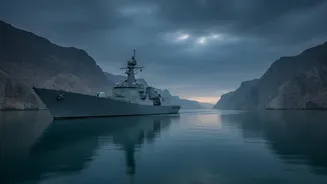
From this perspective, any sign of concession can be interpreted as a sign of weakness, both by rivals abroad and a restless population at home. This fear of appearing weak is a powerful motivator. Therefore, actions that seem aggressive to the West—such as developing ballistic missiles, enriching uranium, and supporting regional proxy groups—are framed internally as essential acts of self-preservation and deterrence. Analysts suggest this strategy is a form of “forward defence,” designed to counter a sense of military encirclement by the United States and its allies. It’s a calculated projection of strength, born from a deep-seated historical insecurity and the constant threat of regime change.
Washington's Enduring Trust Deficit
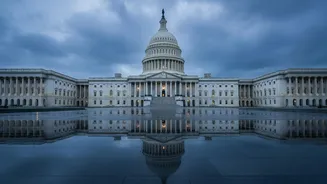
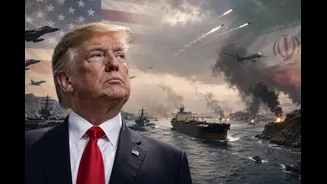
From Washington's viewpoint, Iran's actions are not defensive but destabilizing. The primary concern is Tehran's nuclear program. Despite the 2015 JCPOA agreement, which the U.S. unilaterally exited in 2018, deep suspicion remains. American policymakers argue that past agreements did not permanently dismantle Iran's nuclear infrastructure but only paused its progress, leaving the potential for a future weapons capability intact. This skepticism is compounded by Iran's support for groups like Hezbollah in Lebanon and the Houthis in Yemen, which Washington views as an extension of Tehran's malign influence across the Middle East. President Trump recently labeled the Iranian leadership as “unbelievably duplicitous,” a sentiment that captures the core of the American stance. Every missile test and proxy action is seen not as deterrence, but as proof that Iran’s long-term commitments to regional peace and non-proliferation cannot be trusted.
The Diplomatic Dance of Denial
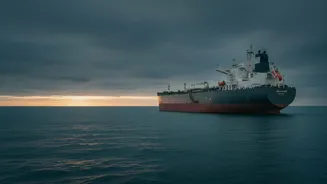
The current diplomatic situation is mired in confusion. In recent days, President Trump has publicly stated that new talks were imminent and that a deal was the “last chance” for Tehran to avoid conflict. His administration has spoken of a two-phase process, starting with reopening the crucial Strait of Hormuz before moving to denuclearization. Yet, Iranian officials have flatly denied these claims, stating there are no direct negotiations with the United States. Tehran insists its only diplomatic engagement is with Oman, focused on ensuring the safe passage of shipping through the Strait, a critical artery for global oil. Simultaneously, anonymous U.S. officials have also downplayed the President's remarks, clarifying that no new formal talks are scheduled. This bizarre public theatre, where leaders announce deals while their governments deny them, showcases the profound lack of common ground and the high-stakes posturing from both sides.
Why This Standoff Matters to India
For India, the tension between the U.S. and Iran is not a distant problem; it has direct and immediate consequences. As one of the world's largest importers of crude oil, India's energy security is highly vulnerable to any disruption in the Persian Gulf. A conflict that threatens the Strait of Hormuz could send oil prices soaring, impacting everything from fuel costs to inflation. In response to recent volatility, New Delhi has already raised export duties on fuels to protect its domestic supply. Beyond energy, the standoff affects India's trade with the entire West Asian region, a key source for fertilizers and other vital commodities. Strategically, India has maintained important relationships with both Tehran and Washington, and a full-blown conflict would force New Delhi into an extremely difficult diplomatic balancing act. The recent appointment of a new Indian Ambassador to Iran underscores how seriously India is monitoring the volatile situation.