






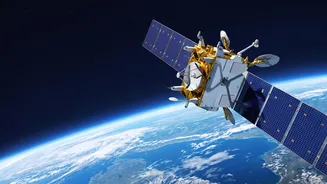
The Rise of NewSpace India
The Indian space landscape is buzzing with new energy. Companies like Skyroot Aerospace, Agnikul Cosmos, and Pixxel are making headlines, developing their own launch vehicles and sophisticated satellite constellations. This surge in private activity is no
accident; it's the result of a deliberate policy shift that began around 2020. The government's goal is to significantly expand India's share of the global space economy, which currently stands at less than 2-3%. The strategy is to allow private players to handle routine and commercial space activities, freeing up ISRO for more ambitious goals. This has led to a boom, with India now home to around 440 space startups. This new ecosystem aims to grow the national space economy from around $9 billion in 2023 to a projected $44 billion by 2033.
From Sole Actor to Enabler
Instead of being sidelined, ISRO is becoming the bedrock of this new commercial frontier. The Indian Space Policy 2023 formally redefined its role, positioning it to transition away from routine manufacturing and operations. The new mandate is to focus on what it does best: advanced research, technology development, and national-interest missions. To manage this, the government established the Indian National Space Promotion and Authorisation Centre (IN-SPACe) as a single-window agency to promote, authorise, and supervise private space activities. ISRO now acts as a mentor and enabler, transferring mature, proven technologies—like the workhorse Polar Satellite Launch Vehicle (PSLV)—to industry. Private companies get access to ISRO's world-class testing facilities, launch infrastructure, and decades of expertise, dramatically accelerating their development.
Powering Frontier Science and Exploration
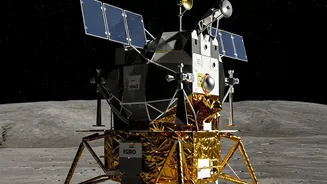
While private firms focus on commercially viable areas like small satellite launches and Earth observation, ISRO is doubling down on the high-risk, high-reward missions that only a national agency can undertake. This includes frontier science, deep-space exploration, and strategic national security projects. Upcoming missions like the Gaganyaan human spaceflight programme, a joint lunar exploration mission with Japan (LUPEX), a Venus Orbiter Mission, and the Mars Orbiter Mission-2 are far beyond the scope and budget of private startups. Furthermore, ISRO is tasked with developing the technologies for India's long-term space ambitions, including establishing the Bharatiya Antariksha Station by 2035 and landing an Indian astronaut on the Moon by 2040. These national prestige projects are critical for scientific advancement and geopolitical standing.
The Indispensable R&D Engine
The long-term success of India's private space sector depends on a continuous pipeline of new technologies. ISRO remains the primary engine for this fundamental research and development. Its work on advanced propulsion systems, reusable launch vehicles, and space-based applications provides the technological foundation upon which future private enterprise will be built. The model is symbiotic: ISRO develops and proves new technologies, after which its commercial arm, NewSpace India Limited (NSIL), helps transfer them to the private sector for large-scale manufacturing and commercialisation. This allows industry to scale up proven systems while ISRO focuses its scientific talent on the next generation of challenges. This structure ensures that India's space capabilities continue to grow in both public and private domains, creating a stronger, more resilient national ecosystem.