





The Immediate Trigger: Intense Rainfall
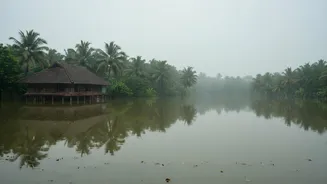
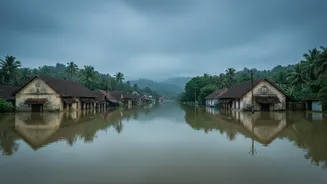
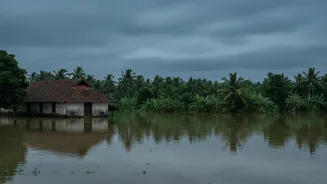
The primary catalyst for landslides is, without a doubt, intense rainfall. However, climate change has altered the nature of Kerala's monsoons. Instead of prolonged, steady showers, the state is increasingly witnessing short-duration, high-intensity downpours.
These cloudburst-like events dump a massive volume of water in a very short period, leaving the ground with no time to absorb it. This rapid saturation dramatically increases soil instability and pore-water pressure, weakening the bond between the soil and the underlying rock and setting the stage for slope failure. Studies have confirmed that human-caused climate change is making these monsoon downpours heavier and more frequent, directly increasing the destructive potential of each rainy season.
A Naturally Fragile Landscape
The Western Ghats region, where districts like Idukki and Wayanad are located, is naturally susceptible to landslides. The terrain is characterized by steep slopes and a thick cap of laterite soil, which can become unstable when saturated. Geologists have also identified a phenomenon called ‘soil piping,’ where underground channels form as water percolates through the soil. During heavy rains, these pipes can grow, carving out cavities beneath the surface and leading to sudden, catastrophic collapses. Nearly half of Kerala consists of hills with slopes greater than 20 degrees, a geographical vulnerability that makes these areas inherently risky during the monsoon.
The Human Factor: A Deadly Combination
While nature sets the stage, human activities have critically amplified the risk. Widespread deforestation for agriculture and development has stripped the hills of their protective green cover. The deep roots of native trees are crucial for binding the topsoil to the bedrock, but these are often replaced by plantation crops like tea and rubber, which have shallower roots and offer less stability. Compounding this is the rampant and often unregulated quarrying for stone and sand. The use of explosives in quarries creates vibrations that destabilize the rock structure, while the removal of surface soil disrupts natural water absorption, making mudslides more likely. Research has shown a strong correlation, with a significant percentage of major landslides occurring near active quarries.
Unscientific Construction and Ignored Warnings
Haphazard construction is another major contributor to the region's fragility. Buildings and roads are often constructed by cutting into the base of slopes, which alters the natural drainage patterns and destabilizes the entire hillside. This kind of unplanned development, often in ecologically sensitive zones, adds immense pressure to an already vulnerable landscape. Experts have been sounding the alarm for years. The 2011 report by the Western Ghats Ecology Expert Panel (WGEEP), led by Madhav Gadgil, called for strict regulations on activities like mining, quarrying, and large-scale construction in ecologically sensitive zones. The report recommended classifying areas into different zones of sensitivity to guide development. However, these recommendations were largely ignored, a decision that many experts believe has had catastrophic consequences.