


What Is a Planetary Fingerprint?
When astronomers talk about a 'planetary fingerprint,' they are referring to the unique chemical signature of a planet's atmosphere, read by analyzing the light that passes through it. This is known as a transit spectrum. Much like your own fingerprint is unique,
the combination of gases in an atmosphere tells a story about that world. The ultimate prize in this cosmic detective work is finding a 'biosignature'—a combination of chemicals that is a strong indicator of biological processes. A classic example on Earth is the simultaneous presence of oxygen and methane. Oxygen is highly reactive, and methane is quickly broken down by sunlight. Finding both together in large amounts suggests something is constantly replenishing them, and on our planet, that something is life.
The Surprising Role of a Star's Light
For years, the intense ultraviolet (UV) radiation from stars was seen as a major obstacle. The conventional wisdom held that this harsh light would quickly break down delicate biosignature molecules like methane, effectively erasing the evidence of life before our telescopes could ever detect it. However, recent photochemical models have turned this idea on its head. Research shows that the specific type and intensity of a star's light can be a double-edged sword. While some UV wavelengths are destructive, others can trigger chemical reactions in a planet's upper atmosphere that actually protect or even enhance the very biosignatures we're looking for. Instead of just destroying clues, the star's chemistry can, under the right circumstances, help preserve them.
It All Depends on the Star
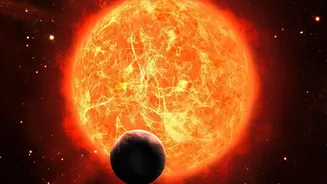
The new research highlights that not all stars are created equal when it comes to fostering detectable signs of life. The key is the star's spectral energy distribution (SED)—essentially, its unique recipe of light across different wavelengths, from high-energy UV to infrared. M-dwarf stars, which are smaller and cooler than our sun, are a major focus of this research. These stars emit less of the near-UV radiation that is particularly effective at producing destructive molecules in an atmosphere. As a result, gases like methane, a potential biosignature, might build up to far more detectable levels around an M-dwarf planet compared to an identical planet orbiting a sun-like star. This means the star itself plays an active role in what biosignatures might be visible from light-years away.
The Key Qualification to Keep In Mind
This brings us to the crucial qualification: this preserving effect is highly dependent on the type and age of the host star. This isn't a universal get-out-of-jail-free card for biosignatures. The effect only works for planets orbiting certain types of stars, like M-dwarfs, whose specific light spectrum is conducive to this preservation. For planets around other stars, the old problem of UV radiation destroying biosignatures may still hold true. This adds a critical layer of complexity to the search for extraterrestrial life. It’s not enough to find an Earth-sized planet in the habitable zone, where liquid water could exist. Astronomers must now also consider the specific chemistry and light profile of its parent star. A promising planetary candidate orbiting the 'wrong' kind of star might be a dead end for detection, even if life is present.
A Smarter Search for Tomorrow
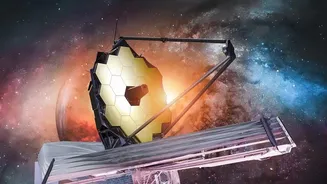
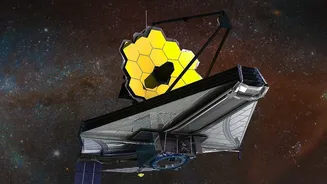
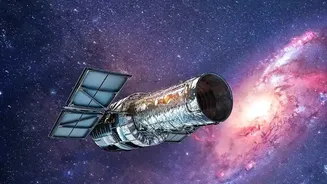
This research has profound implications for the strategy behind the search for life. It's a classic case of 'good news, bad news.' The bad news is that the search is more complex than previously thought. The good news is that these findings provide a much-needed filter, allowing scientists to use precious and expensive telescope time more efficiently. Future powerful instruments, like the James Webb Space Telescope and its successors, can be aimed not just at promising planets, but at promising systems—where the star and planet make a perfect pair for potential biosignature detection. It narrows the search field, but in a way that sharpens our focus, helping us understand not just where life could exist, but where we might actually be able to see it.