





A Market in High Gear
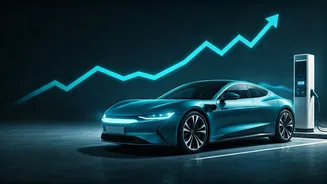
The latest figures from the Vahan portal reveal a market that is not just growing, but accelerating rapidly. The 82,737 electric passenger vehicle (PV) registrations between April and June 2026 represent a staggering 89.3% increase compared to the 43,710
units registered in the same period last year. This near-doubling of sales in just twelve months is a clear indicator that electric cars are moving from a niche interest to a mainstream consideration for Indian families. The momentum was consistent throughout the quarter, with sales climbing each month from just under 25,000 in April to over 30,000 in June, showing sustained and growing consumer appetite.
Tata Motors Dominates, Competition Heats Up
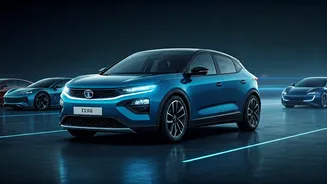
While the market is expanding, it is not a level playing field. Tata Motors continues to dominate, solidifying its leadership by retailing 32,283 EVs in the quarter. This figure is more than double what it sold in the same period last year and gives it a commanding market share of around 39%. However, the competition is intensifying. Mahindra & Mahindra has firmly secured its position as the number two player, nearly doubling its own registrations to 20,112 units. The market is also being reshaped by new entrants. Maruti Suzuki, a longtime giant of the internal combustion engine (ICE) world, made an immediate splash with 4,894 EV registrations following its market entry. Vietnamese manufacturer VinFast also showed strong initial traction with nearly 4,000 units registered in its first full quarter. This rising tide of competition did see one player lose ground, as Hyundai Motor India's EV registrations saw a year-on-year decline.
What's Fuelling the Surge?
Several factors are converging to supercharge EV sales. Industry executives point to simple economics as a primary driver. With elevated petrol and diesel prices, the significantly lower running costs of an EV have become a compelling proposition for many buyers. The market is also maturing beyond early adopters. According to Shailesh Chandra, Managing Director of Tata Motors Passenger Vehicles, the segment has evolved to include mainstream buyers. This shift is supported by a growing variety of models, improved vehicle range, and innovative warranty schemes that help build consumer confidence. The once-significant barriers to entry are slowly being dismantled by a combination of market forces and consumer-friendly product strategies.
The Real Volume Story: Two-Wheelers
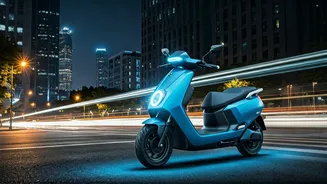
While the growth in electric cars is impressive, the true scale of India's EV revolution is happening on two wheels. To put the 82,737 electric cars sold in a quarter into perspective, consider this: in the single month of June 2026, over 190,000 electric two-wheelers were registered. This segment is where the bulk of India's transition to electric mobility is taking place. The leaderboard here looks different, with brands like TVS Motor, Bajaj Auto, and Ather Energy leading the charge. TVS, for instance, held the top spot in June with nearly 47,000 registrations. This highlights a dual-track EV adoption in India, with passenger cars gaining momentum while electric scooters and motorcycles are already achieving mass-market volumes.
The Road to 2030
The strong Q1 performance has industry leaders feeling optimistic. Projections suggest that EV penetration in the passenger car market could reach 8% by the end of FY27 and cross the 10% mark in FY28. This trajectory is crucial if India is to meet its ambitious target of having EVs make up 30% of all new vehicle sales by 2030. Government support remains a critical part of this equation. Policies like the FAME (Faster Adoption and Manufacturing of Electric Vehicles) scheme, with a third iteration widely anticipated, provide essential incentives for both manufacturers and consumers, helping to bridge the price gap and encourage investment in charging infrastructure.