


It All Begins with the Bean
Long before it reaches your cup, the journey of coffee flavour begins at its origin. Just like with wine, the concept of 'terroir' is crucial. This term describes how a coffee bean's taste is shaped by its environment: the soil, climate, and altitude.
Beans grown at higher elevations, for instance, tend to mature more slowly, which allows complex sugars and acids to develop, resulting in a brighter, more nuanced flavour profile. The specific variety of the coffee plant, whether it's a floral Gesha or a sweet Bourbon, also plays a foundational role in its inherent taste. A bean from the volcanic soils of Colombia will carry a different chemical fingerprint than one from the highlands of Ethiopia, setting the stage for a unique sensory experience.
The Transformative Power of the Roast
If the bean's origin provides the raw potential, the roasting process is where that potential is unlocked and shaped. Roasting is a chemical transformation where heat causes sugars to caramelize and triggers the Maillard reaction, developing the rich, brown character we associate with coffee. The roaster's skill lies in manipulating time and temperature to craft a specific flavour profile. A light roast will preserve more of the bean's original, delicate characteristics, highlighting fruity or floral notes. A medium roast creates a more balanced body and sweetness. A dark roast, however, brings forward bold, smoky, and chocolatey flavours, largely overpowering the bean's subtle origin notes in favour of roast-derived character. This means the same bean can be made to taste dramatically different depending on the roaster's choices.
Your Brew, Your Choice
The final, and perhaps most personal, stage is the brewing. The method you choose has a profound impact on the final taste. A French press, which involves full immersion, allows more of the coffee's oils to remain in the final cup, resulting in a heavier body and rounder mouthfeel. In contrast, a pour-over with a paper filter traps many of these oils, producing a 'cleaner,' lighter-bodied cup that can highlight a bean's delicate acidity and nuanced flavours. Espresso, a method using finely ground beans and high pressure, creates a concentrated, intense shot. Even factors like grind size, water temperature, and brew time can completely alter the taste. A grind that's too fine can lead to a bitter, over-extracted coffee, while one that's too coarse may taste weak and sour.
A Matter of Culture and Connection
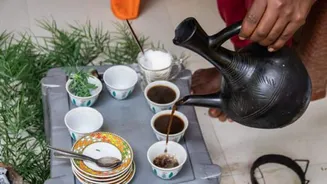
The idea of a perfect coffee is also deeply cultural. In Italy, the day is punctuated by quick, strong shots of espresso, often enjoyed standing at a bar. In Sweden, the 'fika' ritual involves slowly savouring a medium-roast filter coffee alongside a pastry, with the emphasis on connection and relaxation. Vietnamese iced coffee, made with a dark roast and sweetened condensed milk, offers a completely different profile, prized for its sweet, strong character. In Ethiopia, the birthplace of coffee, an elaborate ceremony involving roasting beans and multiple servings is a symbol of hospitality. These traditions shape what is considered a 'good' or 'normal' cup of coffee in different parts of the world.
The Personal Science of Taste
Ultimately, the final judge is your own palate. Flavour perception is a complex interplay of taste and smell. In fact, most of what we perceive as flavour is actually aroma, which is why a fresh grind is so impactful. Our brains integrate signals from taste buds detecting sweetness, sourness, and bitterness with thousands of aromatic compounds to create a complete flavour experience. This process is influenced by everything from our genetics, which can make us more or less sensitive to bitterness, to our mood and environment. Research has even shown that factors like the colour and weight of your mug can influence perceived taste.