





A Gateway in the Clouds
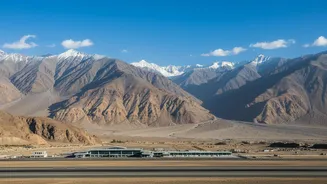
At 3,256 metres (10,682 feet) above sea level, Leh's Kushok Bakula Rimpochee Airport (IXL) holds the title of India's highest commercial airport. It serves as the primary gateway to Ladakh, a region known for its stark, breathtaking beauty. For several
months a year, when heavy snow blocks road access, this airport becomes the sole lifeline connecting Ladakh to the rest of India and the world. Named after the revered spiritual leader and statesman Kushok Bakula Rinpoche, the airport is a dual-purpose facility, serving both civilian passengers and the Indian Air Force, highlighting its immense strategic importance due to the region's proximity to international borders. This dual role makes it not just a tourist entry point but a critical asset for national security.
The Pilot's Ultimate Test
Flying into Leh is considered one of the most difficult approaches in the world, and pilots require special training to navigate its challenges. The airport is situated in a narrow valley, forcing a one-way approach and takeoff. The high altitude is the biggest factor; the thin air reduces engine thrust and aerodynamic lift, meaning aircraft need to approach at higher speeds and require longer runways to stop. Compounding this is the unpredictable mountain weather. Flights are almost exclusively scheduled for the early morning. As the day progresses, the sun heats the surrounding mountains, creating strong, turbulent winds that make landings and takeoffs dangerously unstable. These difficult conditions mean that only specially trained pilots are certified to fly into Leh, making every safe arrival a testament to their skill.
An Unforgettable Arrival for Passengers
For passengers, the journey into Leh is nothing short of spectacular. The flight offers a dramatic aerial tour of the Himalayan range, with snow-capped peaks stretching as far as the eye can see. The approach often involves weaving through mountain valleys, giving travellers a unique perspective of the rugged landscape they are about to enter. Upon landing, the first thing many visitors notice is the altitude itself. The air is noticeably thinner, and authorities advise travellers to spend at least 24 to 48 hours acclimatising before undertaking any strenuous activity to avoid acute mountain sickness (AMS). This initial period of rest is a small price to pay for access to the stunning monasteries, serene lakes, and unique culture of Ladakh that the airport makes accessible.
Infrastructure Built for Extremes
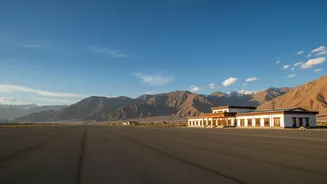
Operating an airport in such a demanding environment requires robust and specialised infrastructure. While the runway is shorter than those at many sea-level airports, it is designed to handle the specific types of aircraft cleared for high-altitude operations, primarily smaller commercial jets. The airport has historically been a modest facility, but it is currently undergoing a major expansion. A new, modern terminal building is under construction and slated for completion in 2025. This new terminal aims to serve up to two million passengers annually and will be equipped with modern amenities like 18 check-in counters and an in-line baggage system, significantly enhancing the passenger experience. The expansion reflects the growing importance of Ladakh as a global tourist destination and the need for infrastructure that can support this growth sustainably.