


A Decision That Redefined the Solar System
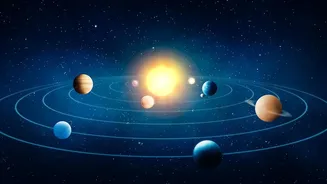
For 76 years, schoolchildren learned that our solar system had nine planets, with Pluto being the small, icy outlier discovered in 1930. That all changed on August 24, 2006. At a meeting in Prague, the International Astronomical Union (IAU), the global
body responsible for cosmic naming conventions, voted to formally define the term "planet" for the first time. The decision came after discoveries of other large objects in the outer solar system, most notably Eris in 2005, which appeared to be even more massive than Pluto. Astronomers faced a choice: either add a growing list of new planets or create a more exclusive definition. They chose the latter, and in the process, Pluto was reclassified as a "dwarf planet."
What Makes a Planet, Anyway?
The IAU established three criteria a celestial body must meet to be considered a planet. First, it must orbit the Sun. Second, it must have enough mass for its gravity to pull it into a nearly round shape. Pluto checks both of these boxes. The third rule, however, proved to be its downfall: a planet must have "cleared the neighbourhood around its orbit." This means it needs to be gravitationally dominant, having swept its orbital path clear of other objects of comparable size, aside from its own moons. Pluto shares its orbital space with many other icy bodies in the Kuiper Belt, a vast ring of objects beyond Neptune. Because it hasn't cleared its path, the IAU determined it couldn't be a full-fledged planet.
The Case for Planet Pluto
The decision was immediately controversial and remains so two decades later. Many planetary scientists, most notably Alan Stern, the principal investigator for NASA's New Horizons mission to Pluto, have strongly opposed the definition. Stern argues the "clearing the orbit" rule is poorly defined and would exclude Earth, Mars, and Jupiter if applied strictly, as they all share their orbits with asteroids. He also points out that only a small fraction of the world's astronomers were present for the 2006 vote. The counterargument is that if Pluto is a planet, then so are Eris, Ceres, and dozens of other dwarf planets, which could lead to a solar system with over 100 planets. Proponents of Pluto's planethood say that's perfectly fine, arguing for a geophysical definition: if a body is large enough to be round, it's a planet.
A World More Complex Than We Imagined
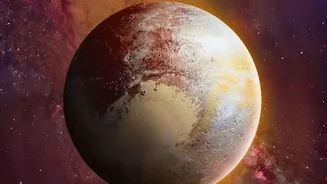
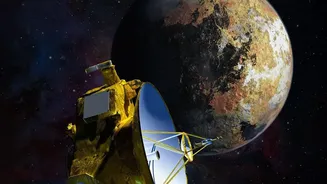
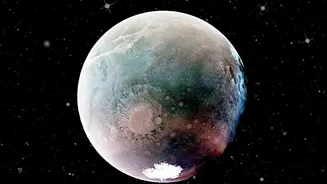
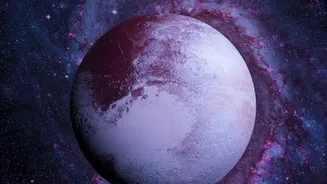
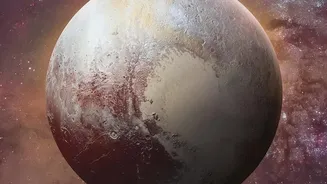
The debate was supercharged in 2015 when the New Horizons spacecraft flew past Pluto, revealing a world of stunning complexity. Instead of a simple, frozen rock, the probe showed a geologically active body with vast nitrogen glaciers, towering mountains of water ice, a hazy blue atmosphere, and a massive, heart-shaped plain. These discoveries showed Pluto to be a dynamic world, much like Earth or Mars, strengthening the argument that it is a significant celestial body worthy of planet status. To its defenders, the flyby proved that Pluto is a complex world that is far from being a minor object.
Why We Still Care About a Distant World
Beyond the scientific arguments, the demotion of Pluto struck a cultural nerve. For many, it felt like losing a familiar piece of the cosmic family. Pluto held a special place as the underdog—the smallest and most distant planet, discovered by an American astronomer, Clyde Tombaugh. The nostalgia and emotional connection have kept the debate alive in the public sphere, with prominent figures occasionally calling to "make Pluto a planet again." This enduring fascination highlights how scientific classifications can sometimes clash with our human need for simple, established narratives about the universe around us.