






The Hidden Force of a Single Drop
It’s a concept found in ancient wisdom: ‘Dripping water hollows out stone.’ We intuitively know that persistent, small forces can have massive effects over time. But the actual physics of how a soft liquid drop can wear away hard rock or displace soil
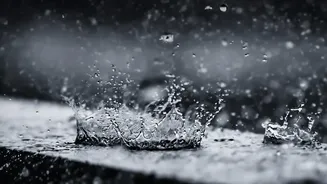
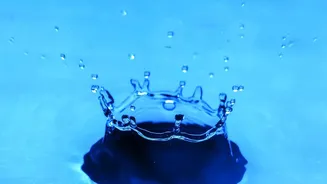
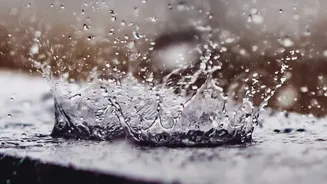
has been surprisingly difficult to pin down. For years, scientists studied this phenomenon, known as splash erosion, mostly in controlled laboratory settings. They used high-speed cameras to watch what happens at the moment of impact, but the underlying forces remained invisible and hard to quantify. This initial stage of water erosion is critical, kicking off a process that can lead to significant soil loss and reshape entire landscapes. The inability to measure these forces in a real-world context has been a major barrier to accurately predicting long-term weathering.
A Breakthrough in Seeing the Unseen
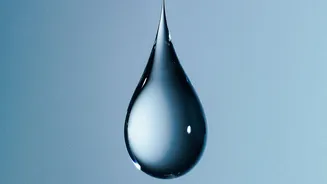
Researchers at the University of Minnesota have pioneered a new technique that solves this long-standing mystery. Led by Associate Professor Xiang Cheng, the team developed what they call 'high-speed stress microscopy.' This method allows them to directly measure the hidden shear stress and pressure that a liquid droplet creates upon impact. What they discovered was astonishing. Instead of the force being concentrated at the centre of the drop, it spreads out explosively. For a brief moment, the spreading droplet moves faster than the speed of sound, creating a tiny shock wave across the surface. “Each droplet behaves like a small bomb, releasing its impact energy explosively and giving it the force necessary to erode surfaces over time,” Cheng explained. This finding fundamentally changes our understanding of the mechanism, revealing a far more violent interaction at the micro-level than previously thought.
From Tiny Bombs to Shifting Landscapes
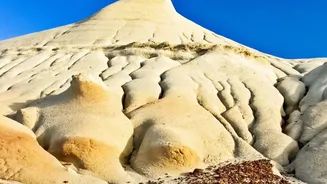
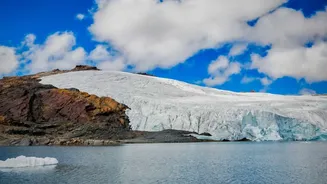
The ability to quantify the force of a single raindrop is more than just a scientific curiosity. It’s the key to unlocking more accurate models of large-scale geological processes. Water erosion is responsible for everything from the loss of valuable agricultural topsoil to the carving of valleys and mountains over millions of years. Previous models often had to rely on estimates and observations made in artificial lab environments. With this new data, scientists can create more robust simulations that reflect what truly happens in nature. By understanding how different soil types, rock surfaces, and slopes react to the measured force of rainfall, we can better predict how landscapes will evolve, especially in the face of changing climate patterns and more extreme weather events.
Why This Matters for India
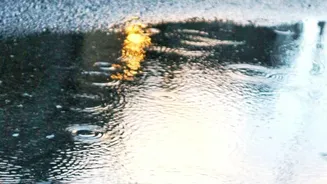
For a country like India, with its powerful monsoon seasons and diverse topography, these findings are particularly relevant. The immense annual rainfall subjects vast areas of agricultural land to the risk of splash erosion, which clogs soil pores, reduces water infiltration, and washes away nutrient-rich topsoil. This directly impacts crop yields and food security. Furthermore, understanding the precise mechanics of weathering can aid in the preservation of India's countless ancient stone monuments and temples, which are slowly being worn away by the elements. It can also inform better infrastructure planning, especially in hilly and mountainous regions prone to landslides, where the slow erosion of softer rock layers by rainfall can destabilise entire slopes. This research provides a powerful new tool for managing and protecting our land and heritage.