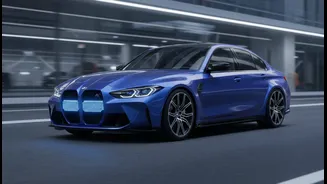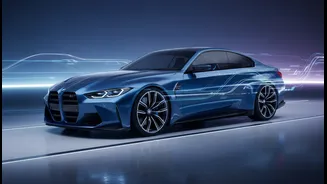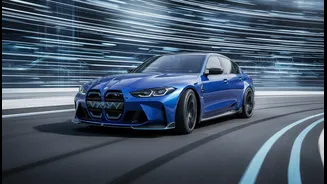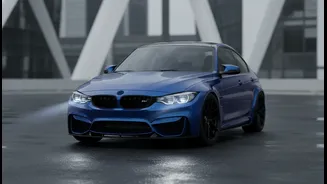



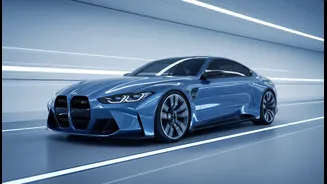
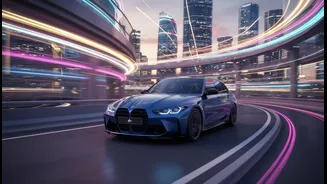
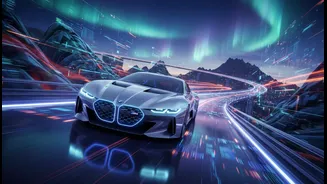


A Legendary Nameplate Reimagined
The BMW M3 is more than just a car; it's a benchmark for sports sedans. Since its inception, it has represented the pinnacle of BMW's engineering prowess, evolving through generations with four, six, and eight-cylinder engines. Now, the M division is undertaking
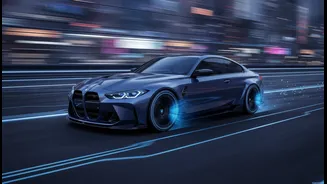
its most significant evolution yet: a fully electric M3. BMW M CEO Frank van Meel has confirmed that the upcoming electric performance sedan will simply be called the M3, just like its predecessors. The decision underscores a philosophy that an M3 is defined by its driving dynamics, not its powertrain. However, make no mistake—while the name remains, the technology powering the next chapter of this icon is a complete departure from everything that has come before. This isn't just an electric motor in an old chassis; it's a ground-up revolution.
The 'Neue Klasse' Foundation
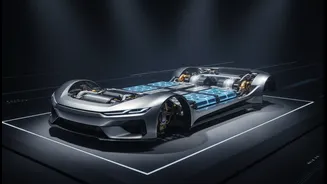
At the heart of the electric M3 is BMW's 'Neue Klasse' (New Class) architecture. This is not a modified platform shared with gasoline cars but a dedicated EV architecture designed for maximum performance, efficiency, and packaging flexibility. This purpose-built foundation allows for significant advancements that wouldn't be possible on a compromised, multi-powertrain chassis. The Neue Klasse platform is designed to be incredibly versatile, supporting single, dual, and even quad-motor setups. For the M3, BMW is leveraging the most extreme application of this technology. The platform also integrates the battery housing as a structural element, increasing chassis stiffness, which is crucial for delivering the sharp handling M cars are known for.
Four Motors and a Megawatt of Potential
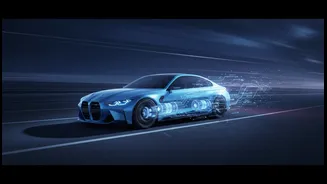
The upcoming electric M3 will feature a quad-motor setup, with one electric motor dedicated to each wheel. This configuration unlocks a new level of performance and control, enabling instantaneous and precise torque vectoring that no mechanical differential could ever hope to match. The system can adjust power delivery at each corner in milliseconds, optimizing traction, agility, and stability under all conditions. While BMW executives have been careful not to focus on raw horsepower, the Neue Klasse architecture can technically support up to one megawatt of power, equivalent to 1,341 horsepower. However, M CEO Frank van Meel has emphasized that the goal isn't to win a numbers game but to deliver sustainable, repeatable performance on the track without overheating—a common issue with high-output EVs.
Heart of Joy: A New Digital Brain
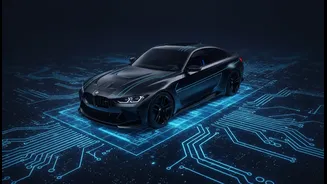
Controlling this complex quad-motor system is a new, centralized super-computer that BMW has dubbed the 'Heart of Joy'. This single control unit replaces multiple separate ECUs and manages all aspects of the car's driving dynamics, including the motors, braking, stability control, and energy recuperation. Developed entirely in-house, this system processes information up to ten times faster than previous systems. This dramatic reduction in latency allows for a more direct, intuitive connection between the driver's inputs and the car's response. It's this software and processing power, as much as the hardware, that BMW believes will define the M experience in the electric era, ensuring the car feels agile, responsive, and, above all, emotionally engaging.