



Ukraine's military has reported another successful maritime strike, this time targeting Russian naval assets far from the Black Sea. As Kyiv celebrates a symbolic victory, the full extent of the damage remains clouded by the fog of war.
A Daring Strike in the Mediterranean
On November 22,
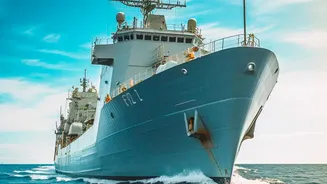
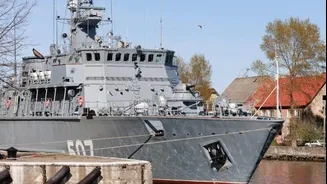
explosions rocked the port of Benghazi, Libya, targeting Russian naval vessels docked thousands of kilometres from the main theatre of war. Ukrainian President Volodymyr Zelensky and the Security Service of Ukraine (SBU) quickly claimed responsibility, stating that seven domestically produced naval drones were used in the operation. The primary targets were identified as the Russian corvette 'Merkury' and the sanctioned cargo vessel 'MV Angara'. The attack represents a significant expansion of Ukraine's maritime operations, demonstrating an ability to project force well into the Mediterranean and challenge Russia's logistical networks supporting its presence in Africa and the Middle East.
Ukraine's Official Claims
According to official Ukrainian statements, the strike was an unqualified success. President Zelensky announced that the 'Merkury', a modern corvette commissioned in 2023, was sunk in the attack. He also stated that a Ka-27 military helicopter aboard the warship was destroyed. The SBU added that the 'MV Angara', a cargo ship under international sanctions for transporting military equipment for Russia, was also successfully hit. Kyiv has framed the operation as a legitimate act of self-defence, arguing that any vessel contributing to Russia's war effort is a valid military target, regardless of its location. The SBU noted that the drones were launched from a 'mothership' in a complex, long-range operation.
The Challenge of Verification
Despite the confident announcements from Kyiv, key claims are still pending independent verification. While Ukraine asserts the 'Merkury' was sunk, satellite images have so far shown the vessel capsized and heavily submerged at its pier, but not fully sunk on the seabed. Russia's Ministry of Defence has remained largely silent, a common tactic when faced with significant losses, neither confirming nor denying the incident. Local Libyan authorities in Benghazi, who are allied with Russia, confirmed an explosion aboard a Russian vessel that had stopped to refuel, but have not provided a detailed damage assessment. Analysts caution that while the ship is clearly out of action, determining whether it is a complete loss or potentially salvageable requires further intelligence.
Expanding the Naval Battlefield
This strike is not an isolated event but part of a broader Ukrainian strategy to counter Russia's naval power wherever it operates. Without a conventional navy of its own, Ukraine has masterfully leveraged unmanned sea drones to inflict billions of dollars in losses on the Russian fleet. Recent weeks have also seen a confirmed Ukrainian drone strike on the Russian transport ship 'Sparta II' in the Gulf of Finland, near the Baltic Sea. These attacks demonstrate a clear intent to disrupt Russian military logistics far beyond the Black Sea. By targeting ships in the Mediterranean and the Baltic, Ukraine forces Moscow to expend more resources on protecting its assets, restricts its operational flexibility, and sends a powerful message that no Russian military vessel is truly safe.
Strategic and Diplomatic Fallout
The attack in a third country's port has created new diplomatic ripples. The internationally recognized government in Tripoli, a rival to the Benghazi-based administration, condemned the use of Libyan territory for foreign conflicts. Italy, a key regional power, has also expressed alarm over the potential for the war to spread further into the Mediterranean and destabilize Libya. However, Ukraine maintains its actions are a justified response to Russia's aggression. For Russia, the strike is a major embarrassment, exposing the vulnerability of its naval presence in supposedly 'safe' foreign ports and complicating its strategic objectives in Africa.