






The Primary Goal: Full Reusability
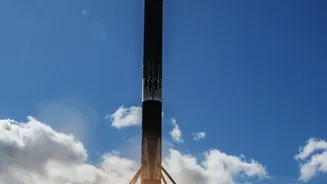
For decades, rockets have been expensive, single-use machines. SpaceX changed the game by landing its Falcon 9 first-stage boosters, but the upper stage was always discarded. The Starship program aims to change that by making the entire launch system—both
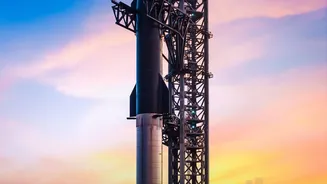
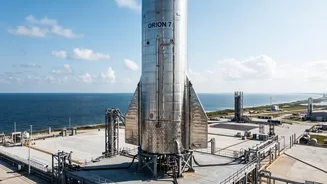
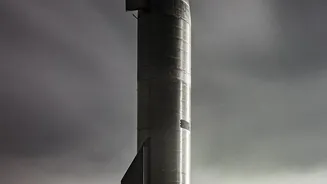
the Super Heavy booster and the Starship spacecraft—fully and rapidly reusable. Flight 15 was a critical test of this vision, focusing on the most challenging part: recovering the Starship upper stage after it had reached orbital speeds. The plan was ambitious: after deploying a batch of Starlink satellites, the spacecraft would endure a fiery reentry and fly itself back to the launch site.
What Happened During Flight 15
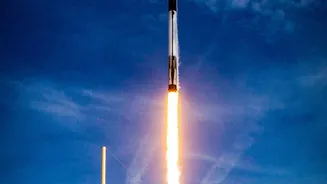
The mission began on November 13, 2026, with a successful liftoff from Starbase, Texas. The Super Heavy booster performed its job before separating and beginning its own return journey. However, the booster's automated systems detected an issue, causing it to abort its planned catch at the launch tower and divert for a splashdown in the Gulf of Mexico, where it was destroyed. The main event, however, was the Starship upper stage. It successfully reached orbit, completed its mission of deploying 26 Starlink satellites, and spent nearly a full day in space, circling the Earth 14 times.
The Dramatic Return From Orbit
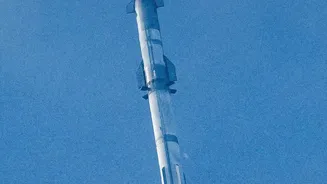
After more than 22 hours in orbit, Starship began its journey home. Returning from orbital velocity of over 26,000 km/h is far more difficult than a booster's return from a lower altitude and speed. The spacecraft had to survive the intense heat of atmospheric reentry, using its thermal protection tiles to shield it. It then used its aerodynamic flaps to control its descent, performing a unique 'belly-flop' maneuver before firing its Raptor engines to flip into a vertical position for the final approach. This precision flying brought the massive vehicle directly back to the launch tower from which it had departed.
A Historic Catch
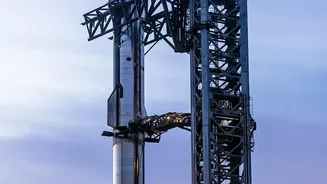
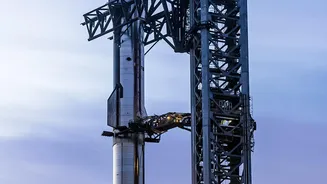
In a moment that looked like science fiction, the launch tower's giant mechanical arms—nicknamed 'Mechazilla'—closed in and caught the descending Starship, securing it in mid-air. This marked the first time in history that an orbital-class upper stage was recovered this way. While the booster recovery was unsuccessful, the successful demonstration of the Starship's controlled return and catch was a massive victory for SpaceX. It proved that the core concept—flying an orbital spacecraft back to its launch pad for reuse—is viable.
Why This Demonstration Matters
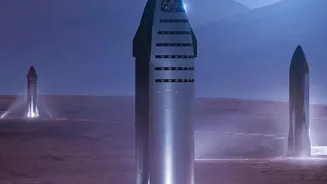
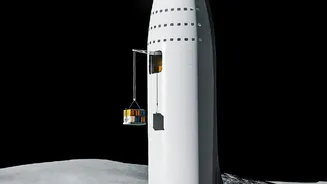
Achieving full reusability is the key to drastically lowering the cost of access to space. Instead of building a new rocket for every mission, SpaceX aims to refuel and relaunch its vehicles, much like commercial airplanes. A successful upper-stage recovery system brings this vision closer to reality. It is a critical step for enabling more ambitious missions, such as building a sustainable base on the Moon for NASA's Artemis program and, eventually, sending humans to Mars. While challenges like orbital refueling still need to be solved, Flight 15's recovery demonstration is a foundational achievement that changes the economics of space exploration.