






The Triple-Check for Astronaut Safety
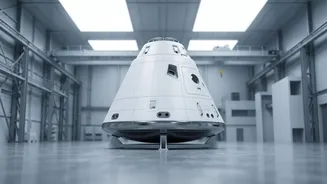
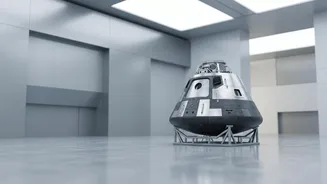
Before the Gaganyaan capsule can carry humans into space, every single component must be proven to be flawless and reliable, especially those critical to crew safety. ISRO recently completed a crucial phase of this process by successfully conducting three
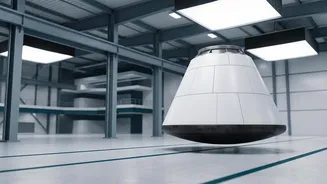
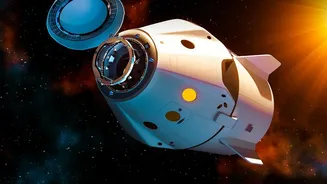
major ground-based qualification tests on the crew module. These weren't just routine checks; they were designed to simulate some of the most stressful and uncontrollable moments of a space mission: the splashdown in the ocean, the separation from the service module before re-entry, and the deployment of the life-saving parachutes. Passing these ground trials validates the intricate systems that will protect the astronauts when they are thousands of kilometres from home, ensuring the hardware is ready for the next stage of flight-based testing. This successful push clears a significant hurdle on the path to the first uncrewed flight.
Mastering the Fiery Re-entry
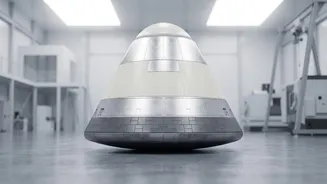
A successful space mission ends with a safe return, and two of the recently completed tests focused on exactly that. The first was a test of the umbilical separation mechanism. During its time in orbit, the crew module is connected to the service module, which provides power and propulsion. For a safe re-entry, these connections must sever cleanly at the precise moment. The test successfully demonstrated this clean break, ensuring the capsule can begin its journey back to Earth without a hitch. The second test focused on what happens after the capsule hits the water. To guarantee astronauts can be recovered safely, the module must float upright. ISRO engineers successfully tested the Crew Module Up-righting System (CMUS), which uses stored gas to inflate flotation bags and automatically orient the capsule correctly, even in rough seas.
Perfecting the Parachute Sequence
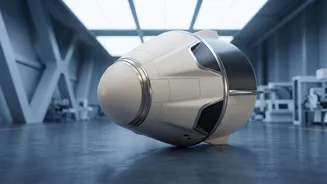
Slowing a capsule from orbital velocity requires a perfectly executed parachute deployment sequence. The third major ground test focused on the Apex Cover, a protective shield over the parachute compartment. This cover must be jettisoned with explosive force at the right altitude to allow the parachutes to deploy. The test confirmed that the crew module's structure could easily withstand loads nearly twice as high as expected during this violent event, proving the design's integrity. Building on this, ISRO also recently conducted the second Integrated Air Drop Test (IADT-02). In this test, a full-scale module was dropped from a helicopter to validate the complex ten-parachute deceleration system in a real-world scenario, further ensuring a gentle splashdown.
The Ultimate Insurance Policy
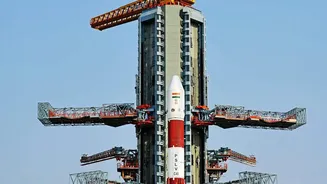
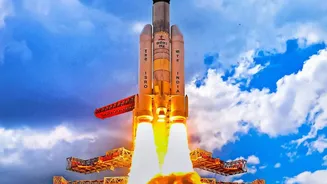
While engineers work to make every part of the mission reliable, they must also plan for the worst-case scenario: an emergency during launch. This is the job of the Crew Escape System (CES), a rocket-powered tower designed to pull the crew module and its astronauts away from a failing launch vehicle in milliseconds. Having already completed static tests of the escape motors, ISRO is now in advanced preparations for the first of four planned abort missions, known as the Test Vehicle Abort Mission-1 (TV-D1). This upcoming test will see a test rocket launch from Sriharikota to demonstrate the performance of the escape system in flight, a critical step that must be perfected before any human is placed on top of the rocket.
What This Means for the Gaganyaan Timeline
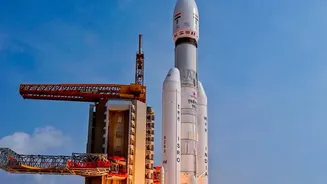
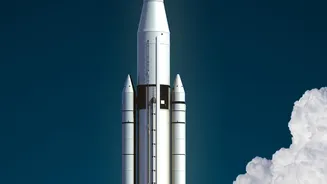
Each successful test is another box checked on a long and complex list, bringing the entire mission into clearer view. The successful ground qualification of the crew module's critical systems, combined with progress on the Human-Rated Launch Vehicle (HLVM3), provides a solid foundation for the next steps. With preparations for the TV-D1 abort test and other key activities underway, ISRO is methodically building confidence in the spacecraft's design and systems. According to recent statements from ISRO officials, the first uncrewed Gaganyaan mission, designated G1, is targeted for the end of 2026 or early 2027. This flight will serve as a full dress rehearsal, testing all systems in an orbital environment before India takes the historic step of launching its own astronauts into space.