
The Soul of the Batter
The magic of jalebi begins with its batter, and the secret to its signature taste is fermentation. Traditionally, a simple mixture of all-purpose flour (maida), a little gram flour (besan) for crispiness, and water is left to ferment for several hours,
sometimes overnight. This process develops a subtle, tangy flavour that beautifully contrasts the sweetness of the syrup. The fermentation creates natural yeasts that produce bubbles, resulting in a jalebi that is light and airy. For those short on time, an 'instant' version can be made using yoghurt or baking soda to mimic the fermented taste and texture, but traditionalists swear by the slow, natural method. A well-beaten, smooth batter with a thick, flowing, ribbon-like consistency is crucial; if it's too thin, the jalebis will be flat, and if it's too thick, they'll be difficult to pipe.
Perfecting the Sugar Syrup
While the batter is the soul, the sugar syrup is the heart of the jalebi. This isn't just sugar and water; it's a fragrant concoction often infused with saffron, which lends a beautiful golden hue and aroma, and green cardamom pods. The key is achieving the correct consistency, known as the 'one-string' or 'single-thread' consistency. To test this, a drop of the cooled syrup is placed between the thumb and index finger; when pulled apart, it should form a single, delicate thread without breaking immediately. If the syrup is too thin, the jalebis will become soggy quickly. If it’s too thick, it will crystallise on the outside instead of being absorbed. A few drops of lemon juice are often added at the end to prevent this crystallisation and add a subtle brightness.
The Art of the Swirl
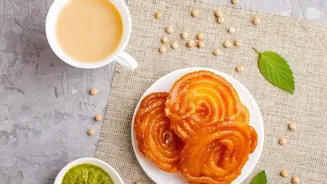
This is the most theatrical and skillful step. The fermented batter is poured into a special cloth with a hole or, more commonly at home, a plastic squeeze bottle. The oil, often ghee for a richer flavour, must be at the perfect medium temperature. If the oil is too hot, the jalebis will brown too quickly and won't cook through; if it's not hot enough, they will soak up too much oil and become greasy. With a steady hand, the batter is piped into the hot oil in continuous, overlapping concentric circles, starting from the centre and spiralling outwards. It’s important not to overcrowd the pan, as this can lower the oil temperature and cause the jalebis to cook unevenly. They are fried for a minute or two on each side until they are a light golden colour and delightfully crisp.
The Final Sweet Soak
The transformation from a crispy fried spiral to a juicy sweet happens in seconds. The freshly fried jalebis are immediately removed from the oil, allowed to drain for just a moment, and then plunged into the warm—not boiling—sugar syrup. Keeping the syrup warm is essential; if it's too hot, the jalebis will soften, and if it's cold, they won't absorb it properly. The crispy, porous structure of the fried batter acts like a sponge, soaking up the sweet, fragrant syrup. They are left in the syrup for only a few seconds, just long enough to be fully coated and infused with sweetness. Any longer and they risk losing their coveted crispiness. They are then lifted out, glistening and ready to be devoured.
A Sweet with a Story
Though quintessentially Indian, the jalebi's journey began in West Asia, where it was known as 'zulbiya' or 'zalabiya'. This sweet treat travelled to the subcontinent with Persian and Turkish traders and invaders around the 15th century and was quickly adopted into Indian culinary culture. It found mentions in ancient texts and became a staple for festivals, weddings, and temple offerings. Today, jalebi is enjoyed in many ways—warm on its own, paired with creamy rabri, or even as a popular breakfast item in some regions. From the street-side vendor expertly swirling batter to the home cook carefully preparing it for a festival, the process remains a celebration of simple ingredients transformed into something truly special.