





What Is an Orbital Weapon?
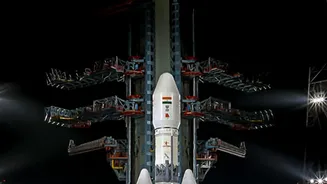
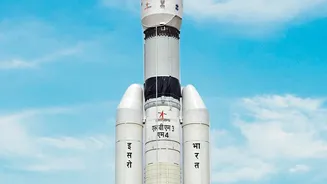
First, it's crucial to distinguish between weapons that travel through space and weapons based in space. An Intercontinental Ballistic Missile (ICBM) travels through space in a predictable arc but doesn't enter orbit. An orbital weapon, by contrast, is a system
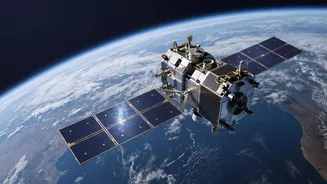
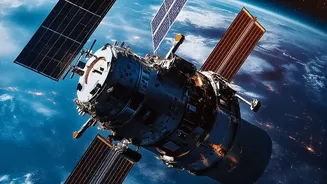
that completes at least a partial orbit around the Earth before striking a target or is permanently stationed in orbit. Concepts range from kinetic bombardment systems—imagined as dropping massive, non-explosive rods from orbit—to satellites designed to attack other satellites. A key historical example is the Soviet Union's Fractional Orbital Bombardment System (FOBS), designed during the Cold War. It would place a nuclear warhead into a low Earth orbit, allowing it to approach a target from an unexpected direction, like over the South Pole, bypassing early-warning radars pointed north.
The Law That Governs Space
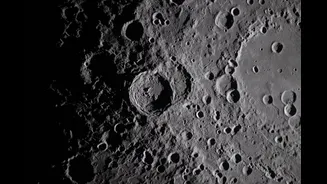
The foundation of space law is the 1967 Outer Space Treaty, a remarkable piece of Cold War diplomacy. The treaty prohibits signatory nations—including the United States, Russia, and China—from placing nuclear weapons or any other weapons of mass destruction (WMDs) in orbit. It also designates the Moon and other celestial bodies for exclusively peaceful purposes. However, the treaty has significant loopholes. It does not explicitly ban conventional weapons in space. This legal grey area has allowed for the development of military support systems like spy satellites and GPS, and more recently, technologies that could be considered weapons, without technically violating the treaty.
Fact vs. Fiction: Today’s Capabilities
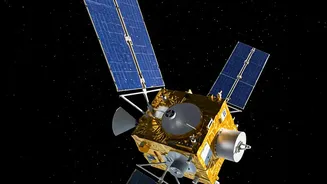
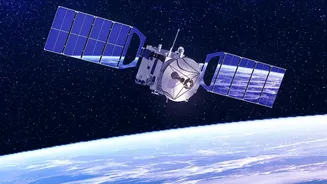
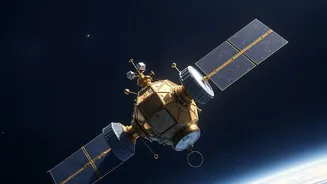
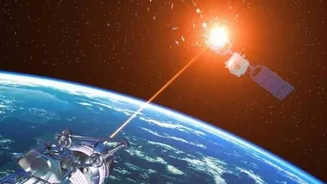
While planet-destroying battle stations remain firmly in the realm of fiction, the weaponisation of space is very real, albeit less dramatic. The primary focus today is on anti-satellite weapons (ASATs). These are not a single type of weapon but a range of capabilities designed to disable or destroy other satellites. The most tested form is the direct-ascent ASAT, essentially a missile fired from the ground to hit a satellite. The US, Russia, China, and India have all demonstrated this capability. Other types include 'co-orbital' or 'inspector' satellites that can manoeuvre close to other satellites for surveillance or to interfere with them, as well as ground-based lasers that can blind satellite sensors and electronic jammers that disrupt communications. In a significant recent development, the United States officially confirmed in September 2026 that it has deployed "on-orbit space control weapons," though specific details were not provided.
A New, More Complicated Space Race
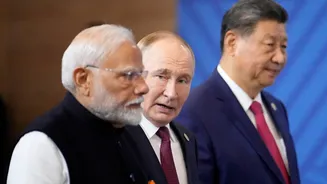
Unlike the two-way Cold War race, today’s competition is multipolar and more complex. The United States, Russia, and China are all developing and deploying advanced counterspace capabilities. The US created its Space Force in 2019, signalling the importance of space as a military domain. China has integrated space, cyber, and electronic warfare into its military doctrine and has tested its own ASATs. Russia continues to develop systems like the Nudol direct-ascent ASAT and has deployed satellites that perform suspicious manoeuvres near other nations' assets. This escalation is driven by a security dilemma: each nation sees its space assets as vulnerable and develops weapons to protect them, which in turn makes other nations feel more threatened, fuelling a cycle of militarisation.
Why This Matters for Everyone
The weaponisation of space isn't an abstract military problem; it poses a direct threat to modern civilian life. A conflict in space could have devastating consequences on Earth. Our global economy and infrastructure are deeply dependent on satellites for GPS navigation, financial transactions, weather forecasting, and global communications. Disabling or destroying satellites—even a small number—would cause widespread disruption. Furthermore, kinetic attacks create enormous fields of space debris that travel at incredible speeds. This junk can trigger a chain reaction of collisions, known as the Kessler Syndrome, potentially rendering entire orbits unusable for generations and trapping humanity on Earth. The recent US admission of having weapons in orbit, and the reactive warnings from China and Russia, suggest this once-theoretical risk is becoming a present-day reality.