



A Quick Refresher on the Mission
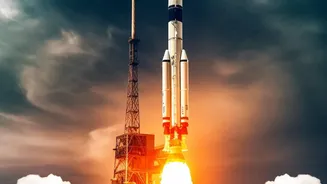
At its core, the Gaganyaan programme is ISRO's ambitious endeavor to demonstrate human spaceflight capability by sending a crew of three astronauts into a Low Earth Orbit of 400 kilometres for a three-day mission and bringing them safely back to Earth.
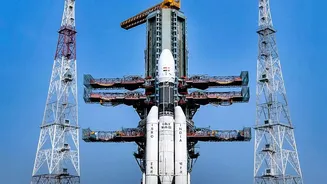
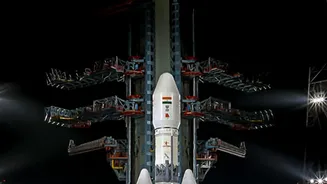
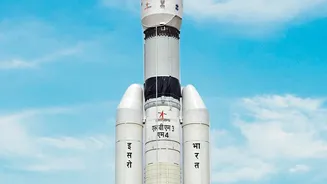
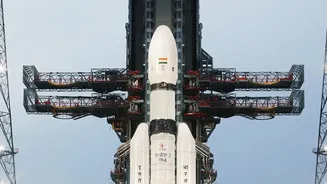
First announced in 2018, its success would make India only the fourth country in the world to independently send humans to space, after Russia, the United States, and China. The mission involves a new human-rated launch vehicle (a modified LVM3 rocket), a sophisticated crew module with life support systems, and a crew escape system to ensure astronaut safety. Four decorated Indian Air Force test pilots have been selected and are undergoing extensive training for this historic flight.
What's Happening Right Now?
While the first crewed flight was initially planned for an earlier date, the timeline has been updated to prioritize crew safety and technological perfection. As of late 2026, the programme is in its final and most critical phase. The immediate focus is on a series of uncrewed test flights. The first of these, the Gaganyaan-1 (G1) mission, is targeted for the last quarter of 2026. This crucial flight will carry a humanoid robot named Vyommitra to validate the performance of all systems, including the life support, propulsion, and re-entry mechanisms, before any astronaut flies. One of the astronaut-designates, Group Captain Angad Pratap, has noted that such delays are a normal part of developing a complex prototype programme, emphasizing that patience is key to ensuring mission success. Following the G1 mission, at least two more uncrewed flights are planned before the first crewed launch, which is now targeted for 2027.
More Than a Geopolitical Trophy
Achieving human spaceflight capability is a significant marker of a nation's technological prowess and elevates its global standing. But Gaganyaan's importance runs much deeper. The project is a massive catalyst for scientific and technological development across the country. The challenges of keeping humans alive in space are forcing innovation in fields like life support systems, materials science, and robotics. These advancements have significant 'spillover' benefits, leading to new technologies and solutions in medicine, water purification, and other sectors that can improve life on Earth. Furthermore, the mission strengthens India's self-reliance, reducing its dependence on foreign technology—a crucial strategic goal given past experiences with technology denial regimes.
Fueling a New Economic Engine
Gaganyaan is also a powerful driver for the Indian economy. ISRO estimates the programme will create around 15,000 new employment opportunities, not just within the space agency but also across the private sector. The mission is expected to source nearly 60% of its components from Indian private industries, giving a major boost to domestic manufacturing and helping to build a robust industrial ecosystem for space technology. This collaboration is crucial for the future. By proving its ability to handle complex human spaceflight, India opens the door for greater participation in the burgeoning global space economy, from commercial space tourism to building future space stations. In fact, ISRO already has plans for a 'Bharatiya Antariksh Station' (Indian Space Station) by 2035, a goal for which Gaganyaan is a foundational step.
Inspiring the Next Generation
Perhaps one of the most profound impacts of the Gaganyaan mission is its power to inspire. Much like the Apollo missions captivated a generation in the West, Gaganyaan serves as a powerful symbol of national achievement and ambition for India. The sight of Indian astronauts launching from Indian soil on an Indian rocket is set to ignite the imagination of millions of young people. This inspiration is vital for encouraging students to pursue careers in science, technology, engineering, and mathematics (STEM), creating a pipeline of talent that will drive India's technological future for decades to come. It moves the needle from abstract scientific principles to tangible, awe-inspiring reality.