




A Familiar Shape, A Different Stance
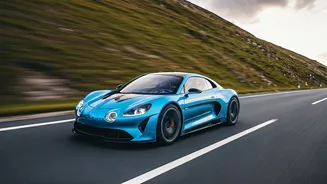
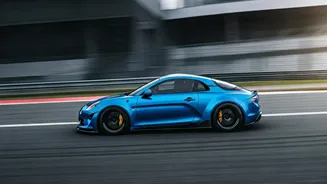
At first glance, the car spotted in recent images looks like the celebrated Alpine A110 we know—a lightweight, mid-engine marvel praised for its agility. Look closer, however, and the changes are impossible to miss. The wheel arches are significantly
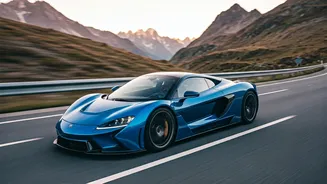
wider, stretched over a track that is clearly broader than the standard car's. This isn't a custom body kit; it's a development mule officially named the 'A110 Future'. This prototype is a purpose-built testbed, designed to wear the old car's skin while hiding the revolutionary technology of its successor. Alpine has confirmed this very car will make its public debut at the Goodwood Festival of Speed, offering a tangible preview of the brand's next chapter.
Decoding the Clues: Arches and Axles
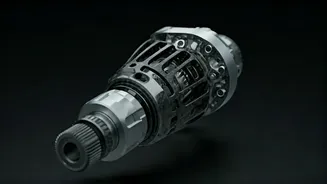
In automotive engineering, wider arches and beefier axles are rarely just for show. They point to a wider track—the distance between the wheels on an axle—which enhances stability, especially during high-speed cornering. More importantly, they are necessary to house a new, more advanced powertrain and suspension setup. Alpine has confirmed the A110 Future is built on its entirely new Alpine Performance Platform (APP), an advanced aluminium architecture designed specifically for electric vehicles. The wider stance is a direct consequence of accommodating a new dual-motor, rear-wheel-drive 'e-axle' that promises exceptional torque and performance. This compact unit combines two motors, a gearbox, and an inverter, allowing for sophisticated torque vectoring to maximize grip and agility.
More Than a Hot Rod: An Electric Testbed
This prototype is the bridge between the petrol-powered past and an electric future. Alpine is billing the next-generation A110 as the “world's first true EV sports car,” a bold claim aimed at preserving the brand's ethos of lightweight performance in the electric era. To achieve this, engineers have adopted an unconventional split-battery layout. Instead of a single large battery pack forming a 'skateboard' floor, the A110's successor will use two separate packs—one at the front and one at the rear. This clever design helps achieve a near-perfect 40:60 front-to-rear weight distribution, mimicking the balance of a mid-engine car and allowing the driver to sit as low as in the current model. The system uses 800-volt technology, ensuring not only potent performance but also rapid charging times.
The Lotus Connection
Alpine isn't developing this new platform in a vacuum. The French firm signed a memorandum of understanding with another legendary champion of lightweight engineering: Lotus. The British brand is developing its own modular electric sports car platform, known as Project LEVA (Lightweight Electric Vehicle Architecture), which is set to underpin its own electric sports car, codenamed Type 135. This collaboration allows both small-volume manufacturers to share the immense cost and engineering challenges of creating a bespoke EV sports car architecture from scratch. The Lotus-developed platform is incredibly light, with its rear structure reportedly being 37% lighter than that of the petrol-powered Lotus Emira. This focus on mass reduction is critical to offsetting the inherent weight of batteries and ensuring the final car remains true to the agile, driver-focused character both brands are famous for.
What This Means for Alpine's Soul
The transition to electric power is the biggest challenge facing sports car makers today. The current A110 is celebrated for its featherlight feel, a quality that is difficult to maintain when adding hundreds of kilograms of batteries. With a target weight of around 1,500 kg, the new electric A110 will inevitably be heavier than its sub-1,200 kg predecessor. However, Alpine is betting that advanced technology can preserve the car's soul. The dual-motor setup, active torque vectoring, all-aluminium suspension, and a fanatical focus on weight distribution are all tools being used to ensure the electric A110 drives like a true Alpine. The company is aiming to outperform current combustion sports cars, proving that an electric future doesn't have to mean compromised fun.