





A Fiery Success on the Ground
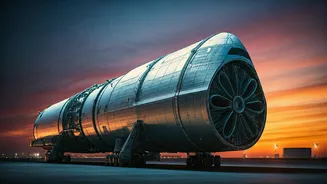
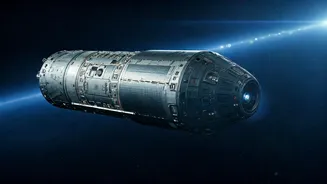
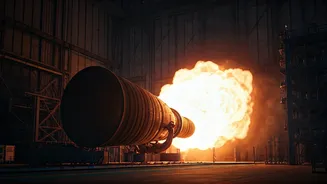
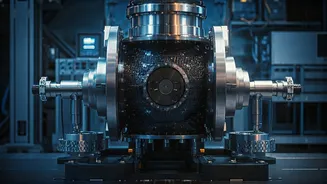
The Indian Space Research Organisation (ISRO) successfully completed the first ground test of a powerful solid motor on July 3, 2026, at the Satish Dhawan Space Centre in Sriharikota. This was not just any engine test; it was for a newly designed Sub-Orbital
Launch Vehicle for Experiments, or SOLVE. ISRO confirmed that the static firing of the motor met all performance expectations, a crucial green light for the ambitious Gaganyaan programme. This test is a foundational piece of the puzzle, validating the propulsion system that will be used to test one of the most critical safety components of the entire mission: the parachute system.
The All-Important Parachute System
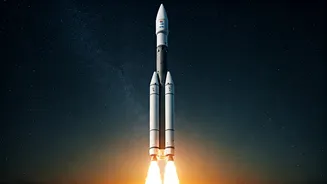
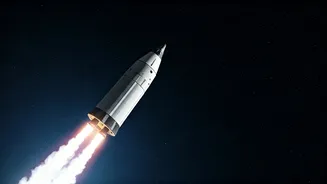
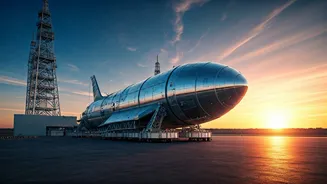
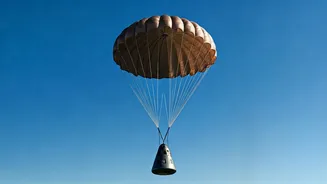
The primary purpose of the new SOLVE rocket is to conduct integrated tests of the parachute-based deceleration system for Gaganyaan's crew module. In future sub-orbital flights, this vehicle will carry a mock crew module to an altitude of 10 to 17 kilometres. Once it separates, a complex sequence involving ten different parachutes will deploy to slow the capsule's descent before it splashes down safely in the sea. Ensuring this system works flawlessly under all possible conditions is non-negotiable for astronaut safety. The recent ground test validates the motor that will get the capsule to the right altitude and speed to begin these critical parachute trials, making it a pivotal achievement.
What is the Gaganyaan Mission?
For those unfamiliar, Gaganyaan is India's historic mission to demonstrate human spaceflight capability. The objective is to launch a crew of three astronauts into a 400-kilometre low-Earth orbit for a three-day mission and bring them back safely to Earth by landing them in Indian waters. Success will make India only the fourth country in the world—after the United States, Russia, and China—to independently send humans into space. The programme is not just about a single launch; it involves a series of extensive tests and uncrewed flights to ensure every system is perfect and every risk is mitigated before astronauts climb aboard.
A Specially Modified Rocket
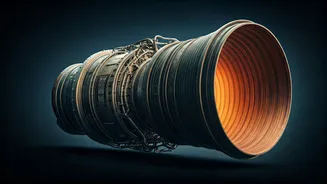
The SOLVE vehicle's solid motor is ingeniously derived from the reliable strap-on boosters used on India's workhorse rocket, the Polar Satellite Launch Vehicle (PSLV). However, ISRO engineers have significantly modified it for its new role. These modifications include using a propellant with a slower burn rate to achieve the specific flight profile needed for the tests, a new straight nozzle design, and a secondary injection system for thrust vector control, which helps steer the rocket. This purpose-built vehicle gives ISRO the flexibility to conduct repeated tests that simulate a wide range of scenarios the crew module might face, ensuring the deceleration system is robust and reliable.
The Road Ahead to Orbit
This successful motor test is one of over 8,000 tests ISRO has completed for the Gaganyaan programme, which is now approximately 85% through its overall testing phase. The path to the crewed launch involves several more crucial steps. Before Indian astronauts, or 'Gaganyatris', make their journey, ISRO plans multiple uncrewed missions to validate all systems in real-world conditions. One of the first uncrewed flights is expected to carry Vyommitra, a humanoid robot, to test life-support and control systems. While timelines can shift, the first crewed mission is currently anticipated around 2027. Each successful test, like this recent one at Sriharikota, builds momentum and confidence, steadily paving the way for India's tryst with human spaceflight.