






An Arrival Eight Years in the Making
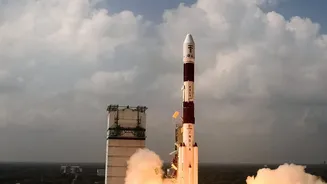
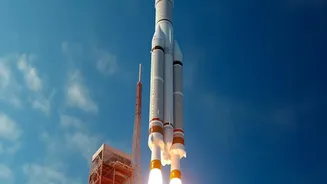
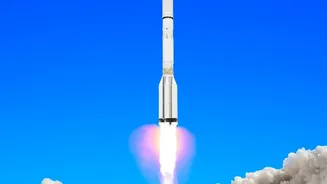
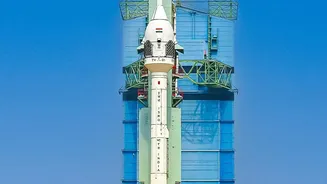
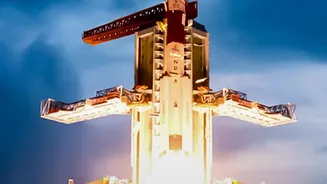
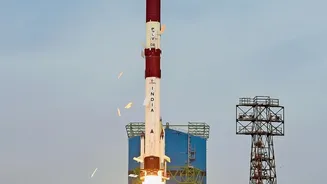
On July 18, 2026, when Skyroot Aerospace’s Vikram-1 rocket successfully reached orbit, it marked a new dawn for Indian industry. For the first time, a privately built Indian vehicle had achieved this feat, placing the country in an elite club with the United
States and China. Founded in 2018 by former ISRO scientists Pawan Kumar Chandana and Naga Bharath Daka, Skyroot had delivered on its ambitious promise to open the heavens to the private sector. The mission, aptly named 'Aagaman' (Arrival), was the culmination of years of relentless engineering and fundraising. Today, Skyroot is celebrated as India’s first space-tech unicorn, a company valued at over a billion dollars with the capacity to build one rocket a month. But its journey to the stars was nearly cut short just a few years ago, not by a technical failure, but by a global pandemic that brought the world to a standstill.
The Pandemic Challenge
In early 2020, as the COVID-19 pandemic swept across the globe, Skyroot Aerospace faced an existential threat. Like countless other businesses, it was navigating unprecedented disruption. But for a hardware-intensive startup trying to build rockets, the challenge was uniquely difficult. Supply chains froze, testing schedules were delayed, and the very act of collaborative engineering became a logistical nightmare. More critically, the financial markets recoiled. Investors grew cautious, shifting their priorities away from long-term, high-risk ventures like space technology and towards safer bets. At this very moment, Skyroot was in a precarious position. The seed capital that had fueled its initial progress was dwindling, leaving the company with only a few months of operational runway. According to co-founder Pawan Kumar Chandana, it was a "very, very tough phase" where it felt like everything the team had worked for could simply break down.
A Lifeline in Lockdown
The story of Skyroot’s survival hinges on a moment that is now part of its foundational lore: a crucial ₹2 crore infusion that arrived at its darkest hour. While the company was struggling to close a larger funding round, this bridge financing acted as an essential lifeline. Reports suggest this timely support came from existing investors and backers like the renewable energy firm Greenko, who saw the long-term vision despite the short-term chaos. In the grand scheme of aerospace financing, where rockets cost crores, this amount may seem modest. But its timing was everything. It was more than just money to cover salaries; it was a vote of confidence. It allowed Skyroot to keep its talented team intact and continue critical development work while larger funding negotiations were stalled by the pandemic’s uncertainty. Chandana has spoken about how existing investors provided loans to help the company navigate this period until their Series A round could be finalized.
From Crisis to a Historic Climb
That crucial injection of funds proved to be the turning point. It provided the stability Skyroot needed to weather the storm and successfully close its $11 million Series A round later in 2020. This round unlocked the next phase of growth, enabling the company to accelerate the development and testing of its proprietary rocket engines and vehicle structures. The faith of its early backers was soon validated. In the years that followed, Skyroot attracted major global investment, including a landmark $51 million Series B round led by Singapore’s sovereign wealth fund GIC in 2022 and a $27.5 million round led by Temasek in 2023. This financial momentum culminated in the company achieving unicorn status in 2026, proving that the vision held by its founders—and the few who backed them during the pandemic—was not just a dream but a viable business model poised for success.