


The Unlikely Hero: Potato
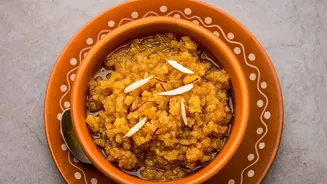
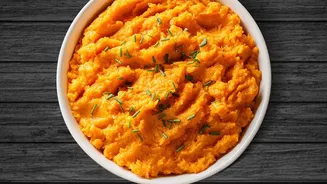
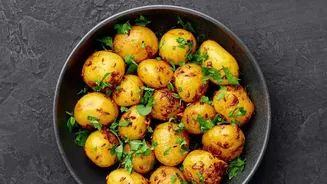
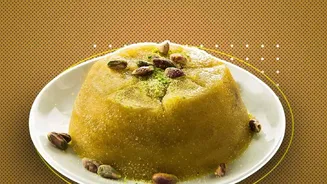
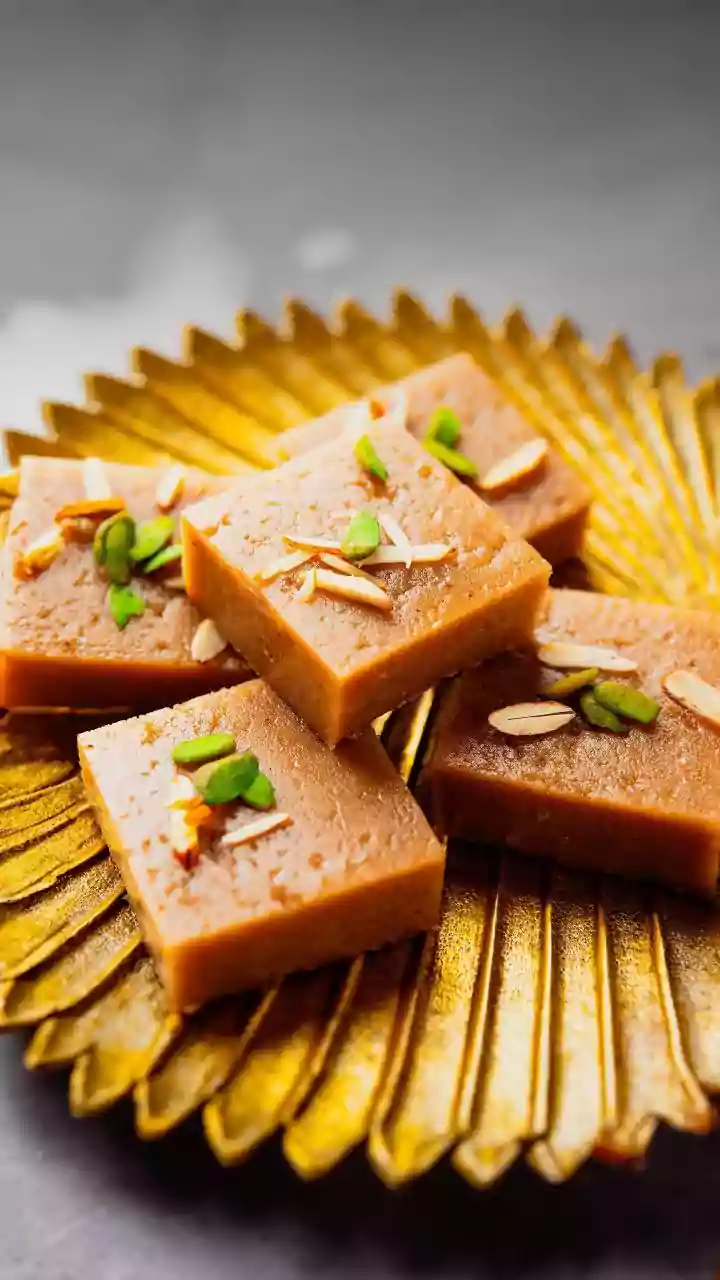
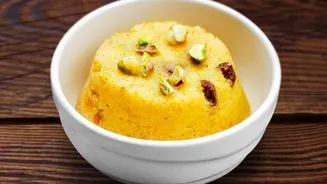
The idea of a potato-based dessert might seem unusual, but one taste of Aloo Halwa makes it clear why it’s a beloved classic, particularly in North India. The magic lies in the texture. When boiled potatoes are mashed or grated and then slow-roasted in ghee,
their starches create a uniquely smooth, fudgy, and melt-in-the-mouth consistency that is unlike any other halwa. This satisfyingly dense and filling sweet is a popular choice during religious fasting periods like Navratri or Ekadashi, providing a quick source of energy. The potato itself offers a neutral, earthy base, making it a perfect canvas for absorbing other, more aromatic, and luxurious flavours.
The Foundation: Ghee and Sugar
Before any spices are introduced, the transformation of potato into halwa begins with two essential ingredients: ghee and sugar. A generous amount of ghee (clarified butter) is crucial. As the mashed potato is sautéed, the ghee not only prevents it from sticking but also imparts a rich, nutty aroma and a glossy sheen. This roasting process is key; it must be done patiently on a low to medium flame until the potato turns a light golden brown and releases its fragrance. Once this stage is reached, sugar is added. As it dissolves, the mixture momentarily becomes looser before thickening again into a cohesive mass that pulls away from the sides of the pan. This simple foundation of potato, ghee, and sugar creates the rich, sweet base ready to be elevated.
The Fragrant Soul: Cardamom
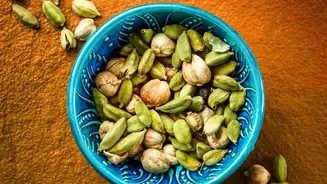
No Indian dessert is truly complete without the fragrance of green cardamom (elaichi), and Aloo Halwa is no exception. Cardamom powder is typically added towards the end of the cooking process to preserve its delicate and volatile oils. Its flavour profile—a complex blend of minty, floral, and slightly spicy notes—beautifully cuts through the richness of the ghee and the sweetness of the sugar. It lifts the entire dish, preventing it from feeling too heavy and adding a layer of aromatic sophistication. For the most potent flavour, freshly ground seeds from green cardamom pods are always superior to pre-packaged powder.
The Golden Touch: Saffron
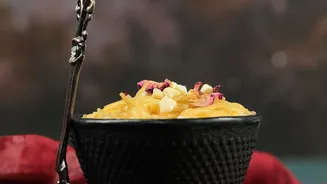
For a truly festive and luxurious version of Aloo Halwa, saffron (kesar) is a must. A few precious strands lend the dish a beautiful, warm golden hue, an unmistakable subtle floral aroma, and a refined flavour. To get the most out of saffron, it should be bloomed before being added to the halwa. This is easily done by gently warming a few strands in a small amount of milk or water. This mixture is then stirred into the halwa as it thickens. The combination of saffron and cardamom is a classic pairing in Indian sweets, creating a symphony of aromas and a dessert that looks as good as it tastes.
The Final Flourish: Dry Fruits and Nuts
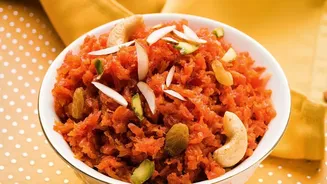
The final element that brings a delightful contrast in texture is a generous garnish of dry fruits and nuts. Chopped or slivered almonds, pistachios, and cashews are common choices. For the best flavour, the nuts can be lightly toasted in a little ghee before being stirred into the halwa or sprinkled on top. This not only enhances their nutty taste but also ensures they remain crisp. Some recipes also include raisins, which plump up when added to the warm halwa, providing little bursts of sweetness. These additions provide a welcome crunch against the smooth, soft texture of the halwa, completing the sensory experience.