






A High-Stakes Gamble Ends
In a solemn announcement, NASA has called off the mission to save its aging Swift Observatory. The telescope, which has been gradually losing altitude, was expected to get a life-extending boost from a commercial spacecraft. However, the rescue vehicle,
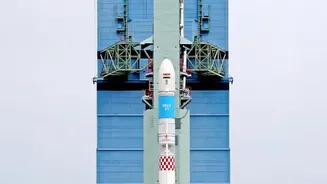
known as LINK and developed by startup Katalyst Space, encountered critical problems of its own. Launched in early July, the LINK spacecraft began spinning uncontrollably in orbit a few weeks after liftoff due to failures in its attitude control system. Despite efforts by engineers to salvage the situation, the craft was deemed too unstable to safely approach and dock with the observatory. This turn of events means Swift's fiery reentry into Earth's atmosphere is now expected before the end of the year.
The Legacy of a Rapid Responder
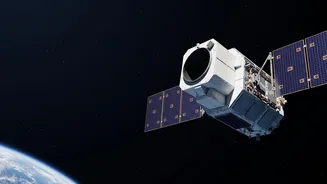
Launched in November 2004 for what was planned as a two-year mission, the Swift Observatory far exceeded all expectations. Its primary purpose was to study gamma-ray bursts (GRBs), the most powerful explosions in the universe, which are often linked to the birth of black holes or the collision of neutron stars. What made Swift so revolutionary was its speed. It was designed to detect a GRB and pivot its three powerful telescopes—observing in gamma-ray, X-ray, and ultraviolet-optical light—towards the event within minutes. This rapid response capability allowed scientists to capture the fleeting afterglow of these cosmic cataclysms for the first time, providing invaluable data. Over its 22-year lifespan, Swift observed nearly 2,000 GRBs, including the most distant one ever detected, which exploded 13 billion light-years away.
A Downward Spiral
Like any object in low-Earth orbit, Swift was subject to atmospheric drag. Though the atmosphere is incredibly thin at that altitude, friction from the sparse gas molecules slowly pulls satellites down. Swift was not equipped with thrusters to counteract this pull. Its orbit, which started at around 600 kilometers, had been decaying for years. This process was dramatically accelerated by an unexpected spike in solar activity in late 2024 and 2025. The increased solar radiation heated Earth's upper atmosphere, causing it to expand and increasing the drag on the observatory, sealing its fate faster than anyone had predicted.
The Ambitious, Ill-Fated Rescue
The rescue mission was a novel and risky collaboration between NASA and private industry. Faced with Swift's imminent demise, NASA awarded a $30 million contract to Katalyst Space to design and launch the LINK servicing vehicle. The mission was developed on an unprecedentedly aggressive timeline of less than a year. The plan was for the robotic LINK craft to rendezvous with Swift, use its three grippers to latch onto the observatory, and then use its own thrusters to push the telescope back into a higher, more stable orbit. A successful mission could have extended Swift's operational life into the 2030s. Unfortunately, just weeks after its July 3 launch, two of LINK's three reaction wheels—devices crucial for controlling its orientation—failed, sending it into an unrecoverable spin.
What Happens Now?
With the rescue attempt officially over, NASA's teams are performing final data downlinks before decommissioning Swift's instruments. The observatory is expected to make an uncontrolled but safe reentry over the ocean later this year. While the physical capture is no longer possible, the mission is not a total loss. NASA plans to use the still-orbiting LINK spacecraft to practice non-contact rendezvous and proximity maneuvers with Swift. The data gathered from this exercise will provide valuable lessons for future satellite servicing and debris-removal missions. In a statement, NASA officials emphasized that while the outcome was not what they had hoped for, the mission was a worthwhile risk that pushed the boundaries of public-private partnerships in space.