







Not Fire, Not a Rainbow
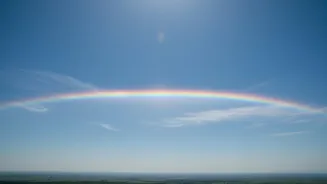
First things first: the breathtaking phenomenon isn't related to fire, nor is it a traditional rainbow. The captivating display that lit up the sky in NASA's Astronomy Picture of the Day for August 2, 2026, is scientifically known as a circumhorizontal
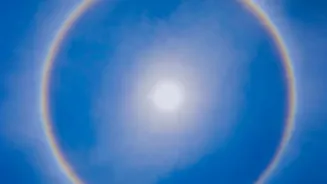
arc. The term 'fire rainbow' is a colloquialism, likely born from the arc’s vibrant, flame-like colours and its wispy appearance within high-altitude clouds. Unlike a true rainbow, which is formed by the reflection and refraction of light in water droplets and always appears opposite the sun, a circumhorizontal arc is an entirely different kind of optical magic. It belongs to a family of phenomena called ice halos, which are created by the interaction of light with ice crystals suspended in the atmosphere.
The Recipe for an Atmospheric Masterpiece
For a circumhorizontal arc to paint the sky, a precise set of ingredients must come together. The first key ingredient is the sun's position: it must be very high in the sky, at an elevation of at least 58 degrees above the horizon. This is why these arcs are most commonly seen during the midday hours in the summer months, particularly in the mid-latitudes. The second ingredient is the presence of the right kind of clouds. Specifically, you need thin, wispy cirrus clouds, which float at high altitudes where temperatures are low enough for water vapour to freeze into ice. But not just any ice crystals will do. They must be tiny, plate-shaped hexagonal crystals, and they must be oriented horizontally, like countless tiny plates floating flat in the sky. When sunlight enters the vertical side face of these crystals and exits through the bottom face, it is refracted, or bent, splitting the light into its constituent colours and projecting a vibrant spectrum parallel to the horizon.
NASA's View From West Virginia
The image that NASA highlighted on August 2nd was a perfect illustration of this phenomenon. While it was featured on this date, the photograph itself was actually captured in 2021 over North Fork Mountain in West Virginia, chosen by NASA to educate the public about this specific atmospheric event. The image shows a brilliant splash of colour within a patch of cirrus fibratus cloud, showcasing how even a small, patchy cloud with correctly aligned ice crystals can produce a stunning, albeit incomplete, arc. The very specific requirements for their formation make circumhorizontal arcs a somewhat uncommon sight, which is why a clear photograph like the one shared by NASA is so valuable for both scientific appreciation and public wonder.
A Skywatcher's Guide to Spotting One
So, what does this mean for you, the avid skywatcher? It means you have a new target for your celestial treasure hunt. To maximize your chances of seeing a circumhorizontal arc, you need to look up when the conditions are right. Focus your efforts during the summer months, especially between late morning and early afternoon when the sun is at its highest point in the sky. Pay attention to weather forecasts that predict high-level cirrus clouds. Geographically, your chances are better if you live in mid-latitude regions; for example, someone in Los Angeles has far more hours of high-sun-angle opportunity than someone in London. In fact, for those living north of 55 degrees latitude, the sun never gets high enough in the sky for a circumhorizontal arc to form. When you're out hunting, remember to look below the sun, not opposite it. And while you're looking, you might spot other related ice halos, like sundogs or a 22-degree halo, but the brilliant, flat rainbow of a circumhorizontal arc is unmistakable once you know what to look for.