







Mission 02: A Bold Leap for Indian Space Tech
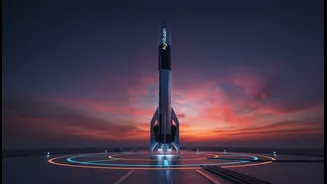
Agnikul Cosmos has announced its next major endeavor, 'Mission 02', which is set to be a significant step forward for India's private space industry. The primary goal of this orbital mission is to launch customer satellites using its Agnibaan rocket.
However, it includes a highly ambitious secondary objective: attempting to recover the rocket's first-stage booster after it separates. This mission represents India's first private-sector foray into orbital-class rocket reusability, a technology that has fundamentally reshaped the global launch market. The announcement has drawn considerable attention, especially with former ISRO chairman S. Somanath joining the company's board as an observer to lend his expertise.
What 'Recovery Attempt' Really Means
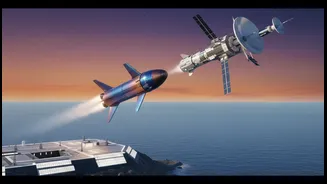
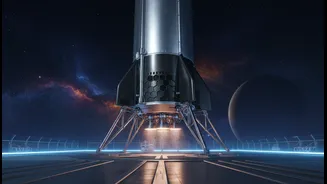
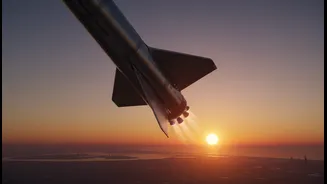
The 'recovery' in question involves the rocket's first-stage booster. After the two-stage Agnibaan rocket launches and the first stage completes its burn, it will separate from the upper stage. The plan is for this booster to then perform a controlled descent and splash down in the ocean for retrieval. This is an incredibly complex maneuver that requires sophisticated guidance, navigation, and control systems to manage the booster's atmospheric re-entry and trajectory toward a specific recovery zone in the Bay of Bengal. The booster will be equipped with specialized hardware like grid fins and its own navigation systems to attempt this controlled flight back. The goal is to prove that the hardware can be retrieved, a crucial first step toward true reusability.
Clarifying the 'First'
While this is a historic attempt for an Indian private company, it's important to understand what it isn't. The headline-making phrase 'first private recovery' needs context. Agnikul is attempting to recover its booster from the ocean. This is different from the propulsive landings on barges or land that companies like SpaceX have mastered, which represent a more advanced stage of reusability. The mission is a vital test of the foundational technologies needed for recovery. Success would provide invaluable data and validate Agnikul's engineering approach, but it is one step on a long road. The company has been clear that this is an attempt—a difficult secondary objective—not a guaranteed outcome or a claim to have perfected reusability on par with established global players.
Building on SOrTeD's Success
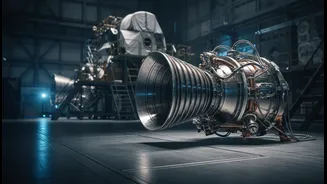
This ambitious recovery attempt is built on the confidence gained from Agnikul's successful 'SOrTeD' (SubOrbital Technological Demonstrator) mission in May 2024. That flight was a landmark achievement, marking India's first launch from a private launchpad and the first controlled flight of a semi-cryogenic liquid engine developed through 3D printing. The SOrTeD mission successfully demonstrated the core propulsion and control systems, giving the Agnikul team the data and experience needed to incorporate a recovery attempt into their very next orbital mission. The Agnibaan rocket itself is powered by the Agnilet engine, the world's first single-piece 3D-printed engine, which highlights the company's focus on innovative and rapid manufacturing.
Why This Mission Matters
Even as a carefully framed 'attempt', Mission 02 is hugely significant. Successfully retrieving a booster would validate India's private capability in a field dominated by a few global giants. The global space economy is rapidly shifting, with reusability becoming a prerequisite for competitive launch services, not just a bonus feature. Agnikul's effort, alongside the work of other startups, signals that India's private sector is serious about competing on this front. Furthermore, Agnikul also plans to test an extension of the rocket's upper stage, converting it into a functional in-orbit platform after deploying its payload, another innovative step towards reducing waste and adding value. This mission is less about claiming a single 'first' and more about demonstrating a comprehensive strategy for sustainable and cost-effective space access.