




The Rocket Equation Problem
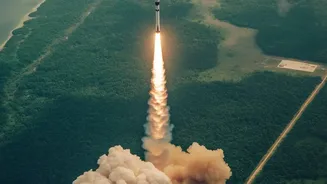
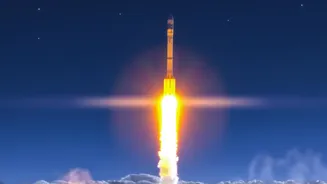
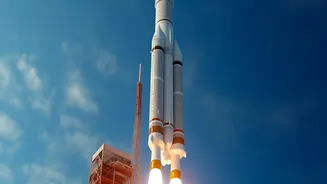
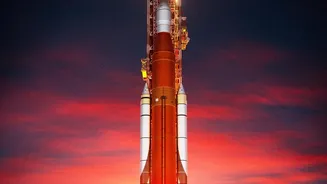
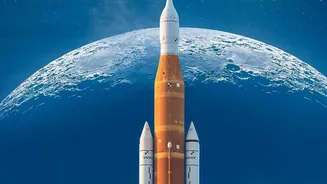
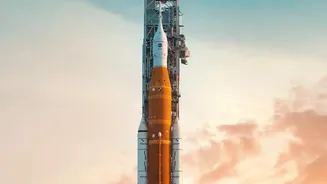
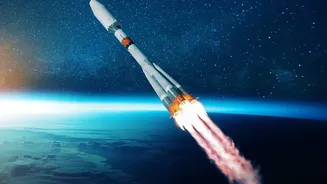
For seventy years, accessing space has meant one thing: rockets. From the V-2 to SpaceX's Starship, the basic principle is unchanged. The overwhelming majority of a rocket's weight is fuel needed simply to lift more fuel. This is the “tyranny of the rocket equation,”
and it’s what makes space launches so expensive. While reusable rockets from companies like SpaceX and Blue Origin have dramatically lowered costs, getting to orbit still costs thousands of dollars per kilogram. Oakland-based startup Longshot Space, founded in 2020 by CEO Mike Grace and CTO Nathan Saichek, is proposing a fundamentally different approach that sidesteps this problem entirely. Their idea is to move the energy infrastructure for launch from the vehicle to the ground.
Meet the 'Space Gun'
Longshot's solution is a ground-based kinetic launch system—essentially, a massive pneumatic cannon. The concept traces its lineage back to experimental ideas like the World War II-era V-3 supergun. Instead of a single, massive explosion, Longshot's accelerator uses a long tube with multiple injection points for compressed gas. As a payload travels down the barrel, precisely timed bursts of gas give it successive pushes, accelerating it to hypersonic speeds. The company has already built and tested smaller prototypes, with one 70-foot version achieving speeds of Mach 4.2, over four times the speed of sound. The ultimate goal is to build a system several miles long, capable of accelerating payloads to Mach 25—fast enough to reach low Earth orbit.
The $10 Per Kilogram Promise
The primary driver for this ambitious project is economics. While a SpaceX Falcon 9 launch costs around $3,000 per kilogram, Longshot's CEO claims their system could eventually get the cost down to just $10 per kilogram. This staggering cost reduction could democratize access to space, opening it up for applications we can't yet imagine. The company's business plan is phased. The first market is providing affordable, high-cadence hypersonic testing for defense and aerospace clients. This would allow them to test materials and vehicle components at speeds above Mach 5 for a fraction of the cost of a rocket launch. This intermediate step provides a revenue stream and a path to prove the technology before tackling the much harder challenge of orbital launch.
Hurdles and Healthy Skepticism
Shooting objects into space with a giant gun presents immense technical challenges. The primary obstacle is payload survivability. Satellites and their sensitive electronics would need to be specifically engineered to withstand the colossal G-forces of acceleration, which could reach tens of thousands of Gs. While smart artillery shells have proven that electronics can be hardened for such forces, it adds complexity and cost to satellite design. Another company, SpinLaunch, is working on a centrifugal kinetic launcher and faces similar payload challenges. Furthermore, the projectile must punch through the dense lower atmosphere at incredible speeds, creating extreme thermal and aerodynamic stress. Longshot believes that as its cannons get longer, the acceleration can be made gentler, but the physics remains a significant hurdle.
The Path Forward
Despite the challenges, Longshot is gaining momentum. The company has raised approximately $20 million from a mix of venture capital—including from OpenAI CEO Sam Altman—and U.S. Air Force contracts. This funding is fueling the development of its next-generation accelerators. The company plans to relocate from its Oakland base to a more remote location, likely in the Nevada desert, to build a much larger system over 500 meters long to push 100-kilogram payloads past Mach 5. Its ultimate vision involves a launch facility, possibly in Northern Australia, with multiple cannons arranged like spokes on a wheel, capable of a high launch frequency. This system would be designed for cargo only; humans cannot survive these launch forces.